Construction & Infrastructure
Construction equipment trailers bring excavators and loaders to site. Material deliveries need different equipment for loose aggregate, dry cement, steel and hot bitumen.
Lowbed & RGN trailers
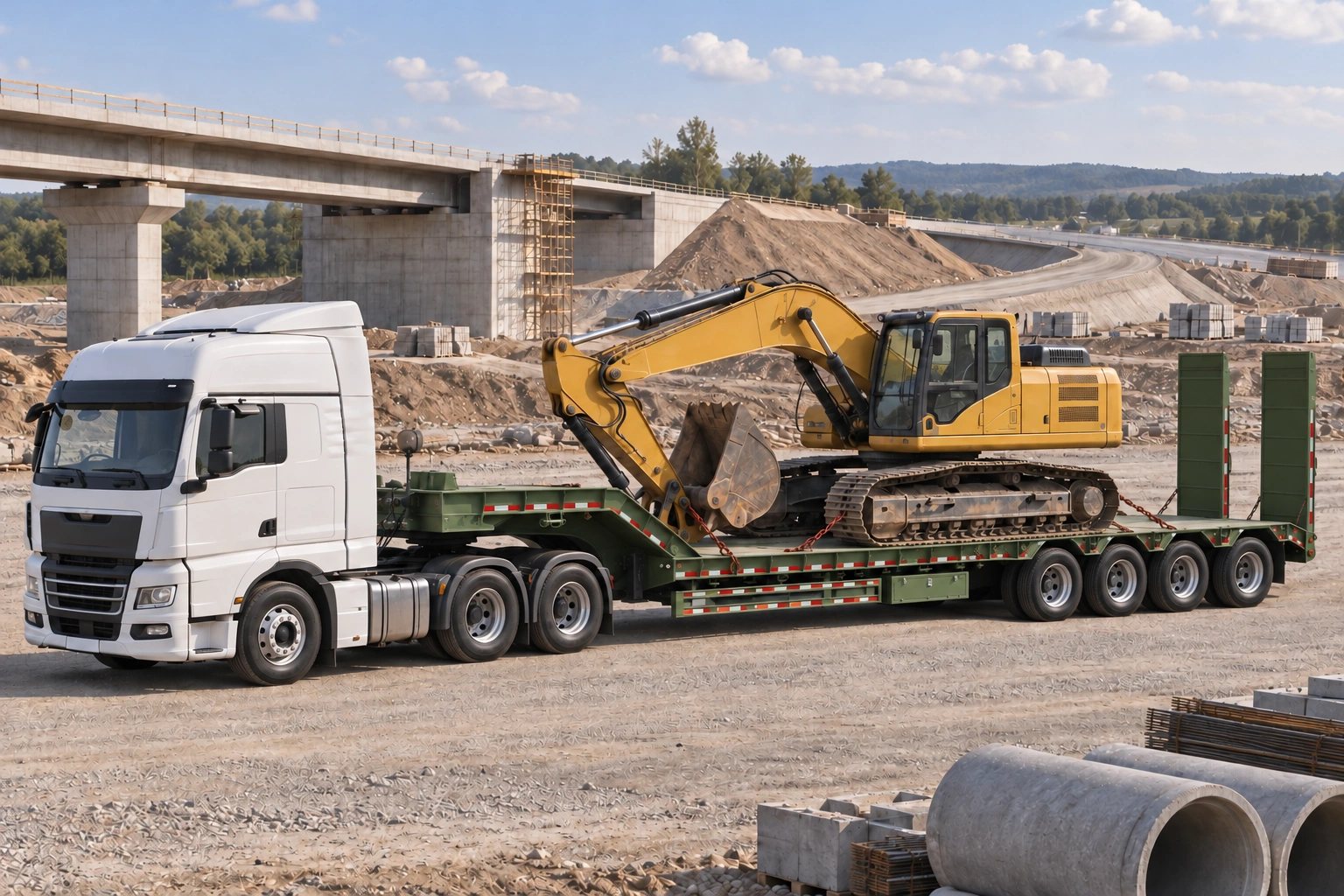
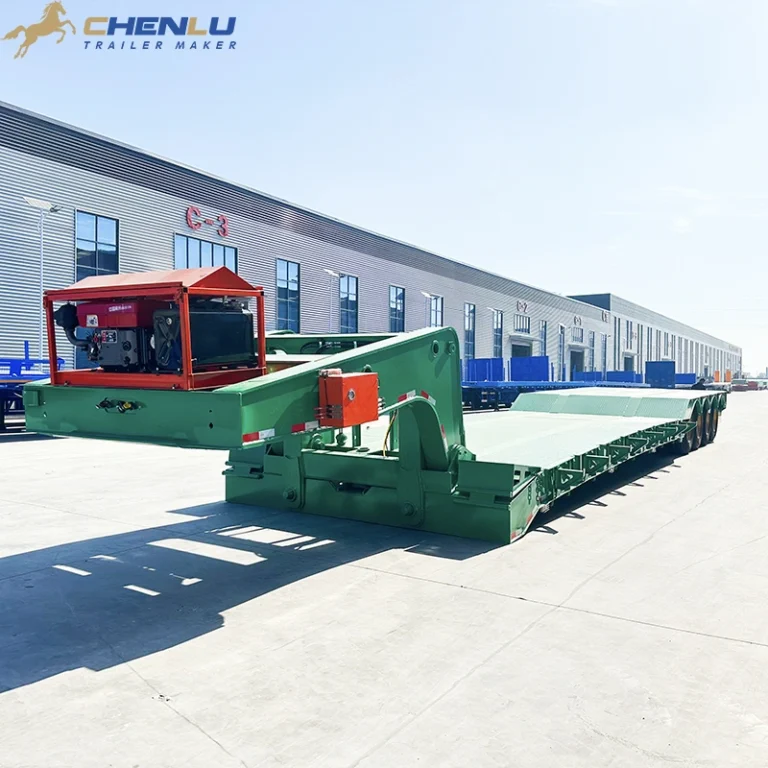
A lowbed keeps tall machinery closer to the road, reducing loaded height compared with a standard flatbed. A removable gooseneck adds front-loading access for suitable tracked and wheeled machines.
Tipper & cement tanker trailers
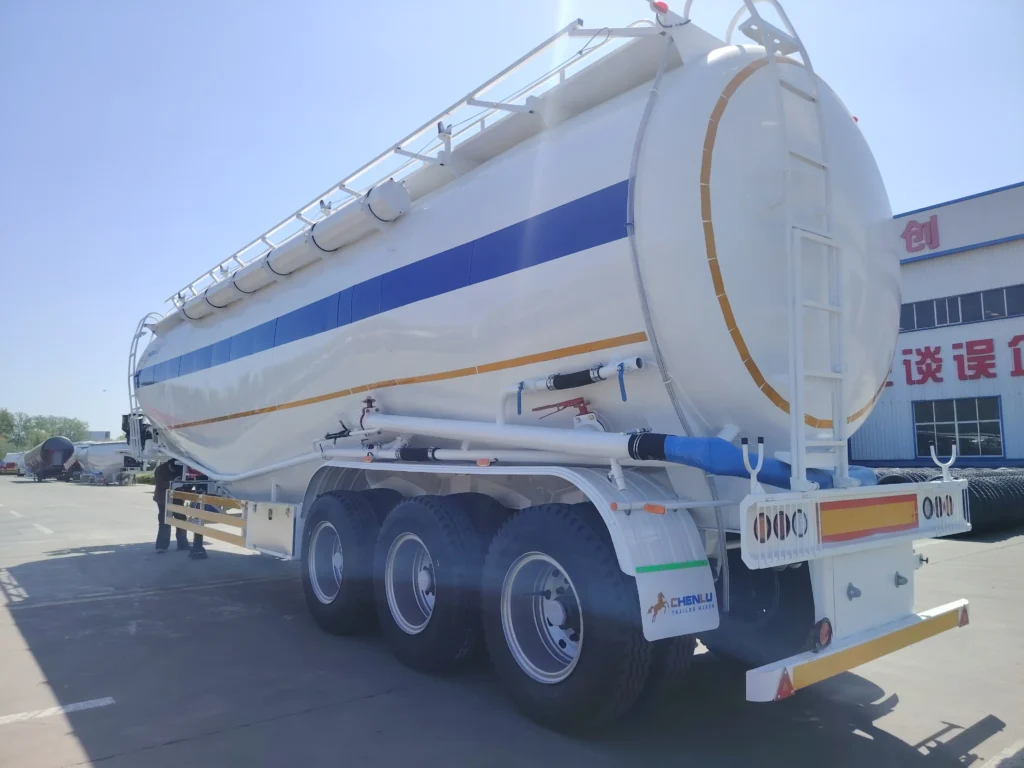
Tippers unload loose sand and stone by raising the body. Cement tankers keep dry bulk cement enclosed and transfer it into a compatible silo, avoiding the handling of individual bags.
Flatbed & extendable trailers
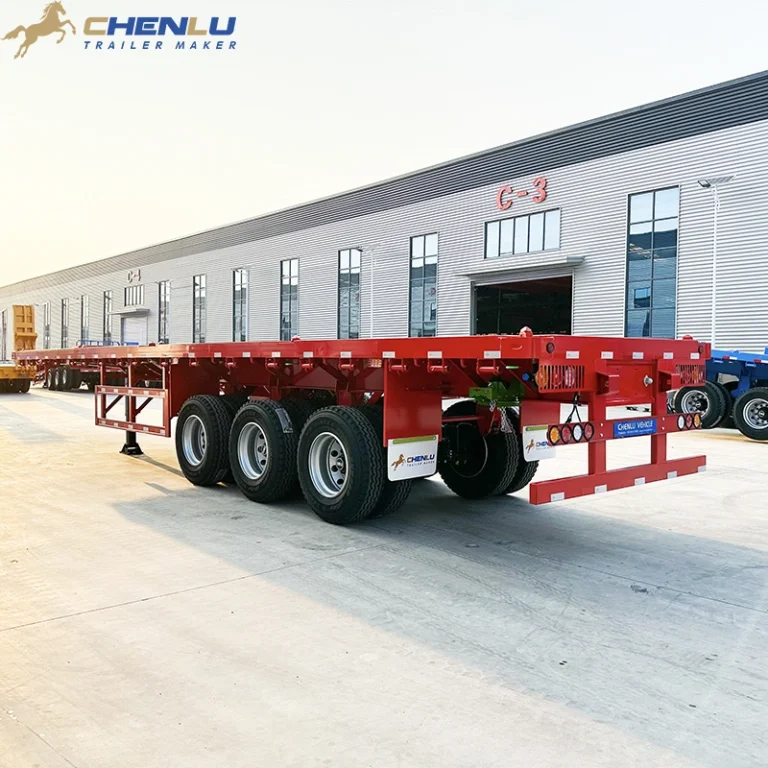
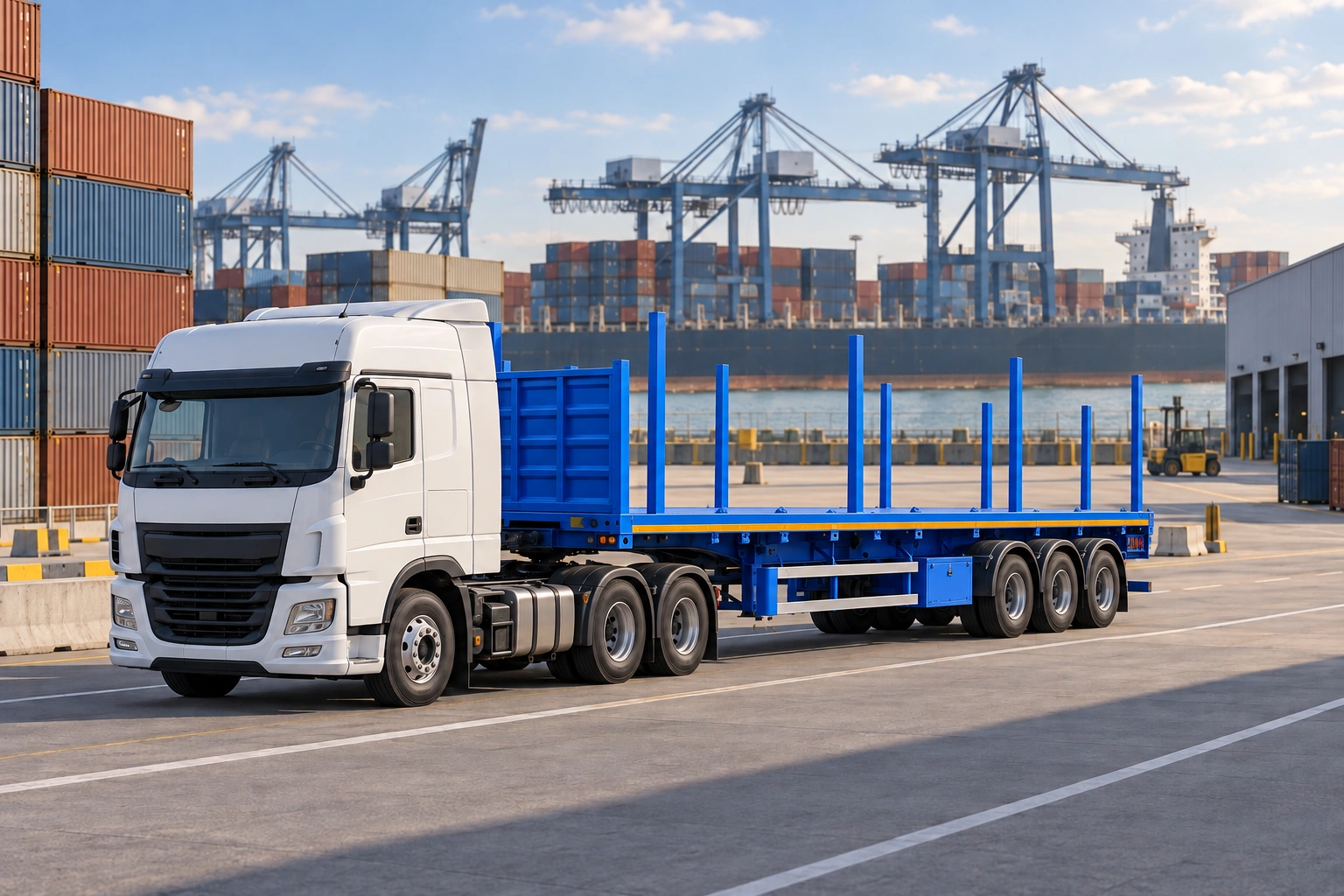
An open flatbed gives cranes and forklifts access to steel, formwork and packaged materials. For long fabricated sections, an extendable deck provides more space between the load's support points.
Bitumen tanker trailers
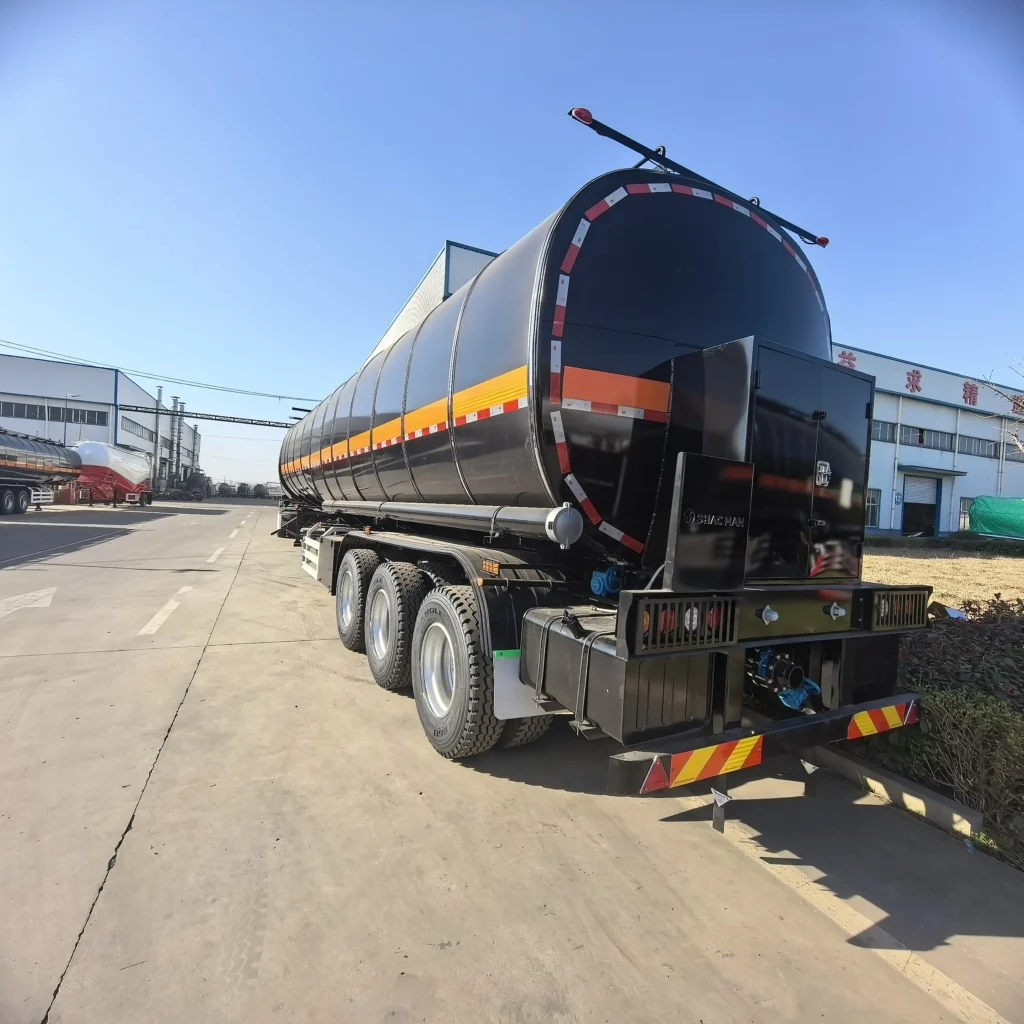
Insulated tankers carry hot liquid bitumen to asphalt plants. Insulation slows heat loss on the journey and helps maintain the product condition needed for unloading.
Mining & Quarrying
Quarry fleets move processed stone and sand to customers while other vehicles relocate machinery and bring supplies to the operation. Each duty benefits from a different body and loading arrangement.
Tipper semi-trailers
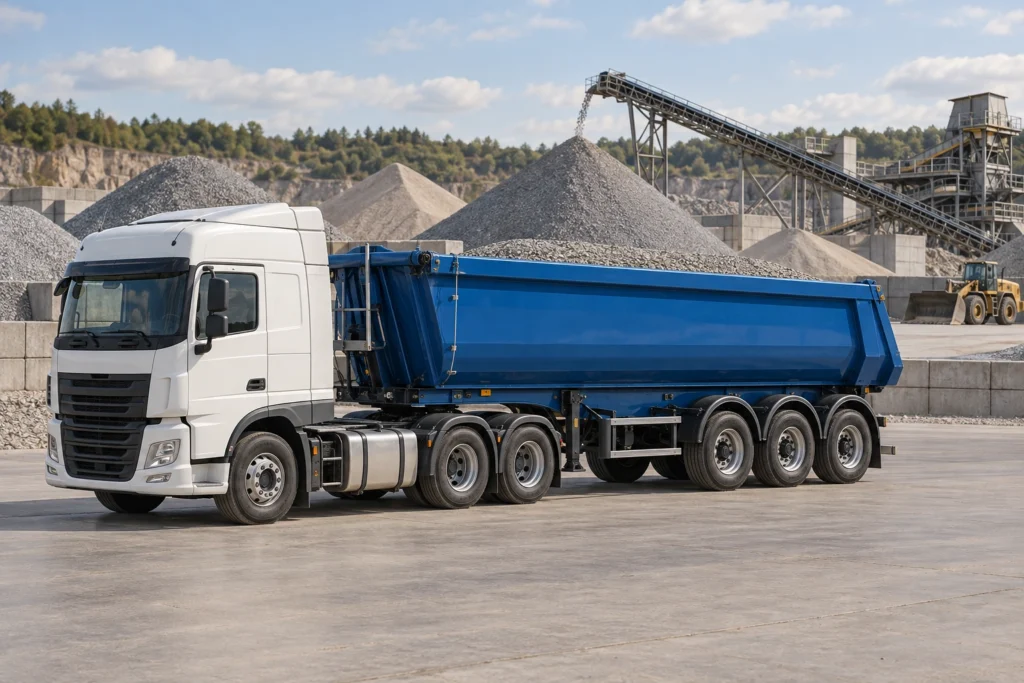
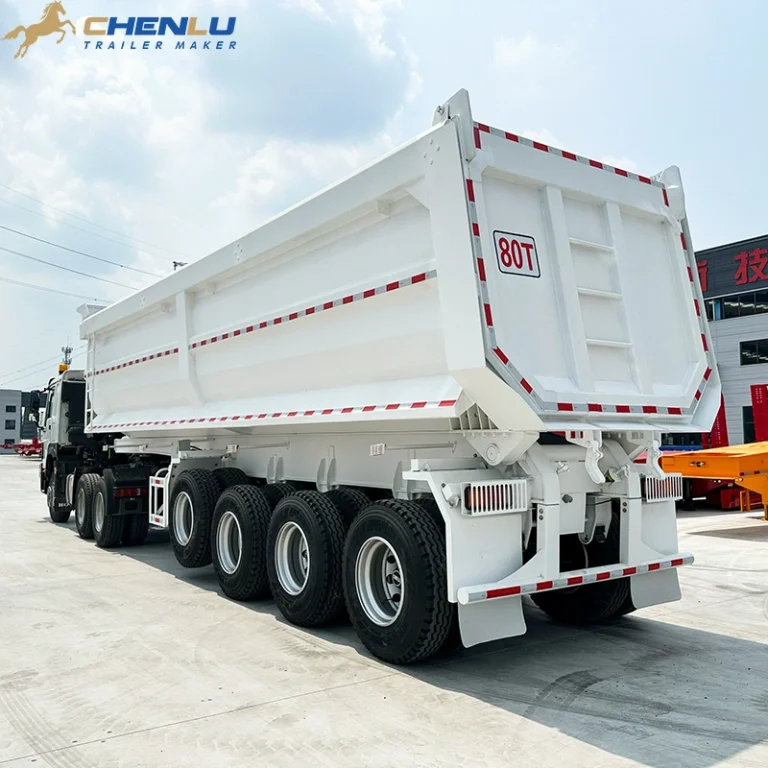
The open body accepts loader-fed sand and crushed stone. Rear tipping releases compatible loose material at the receiving stockpile without a crane or forklift, provided the unloading area is suitable.
Lowbed & RGN trailers
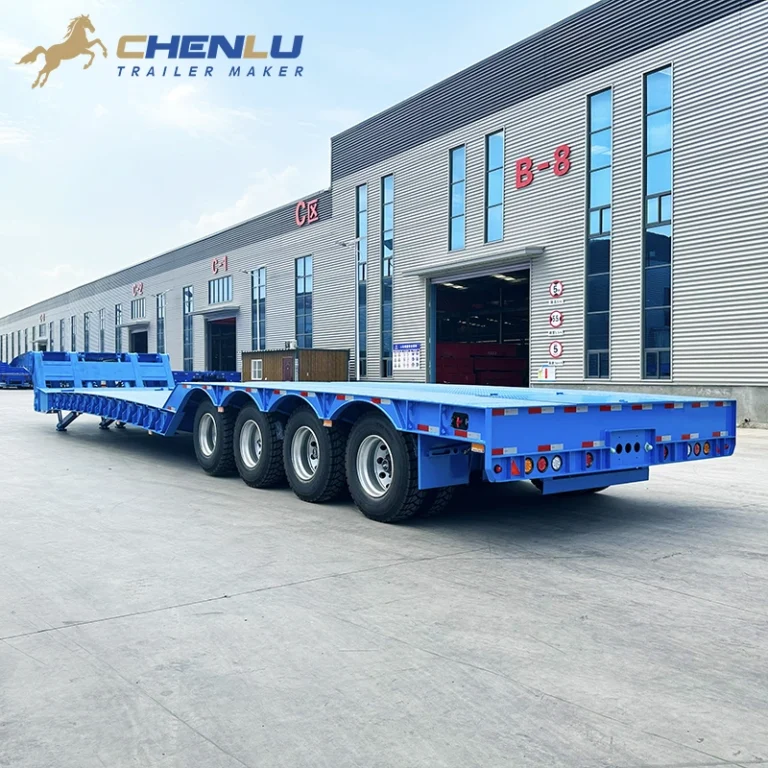
A low deck helps accommodate tall excavators and loaders during site transfers. Front-loading RGN layouts give suitable machines access to the deck without climbing over the rear axle section.
Flatbed semi-trailers
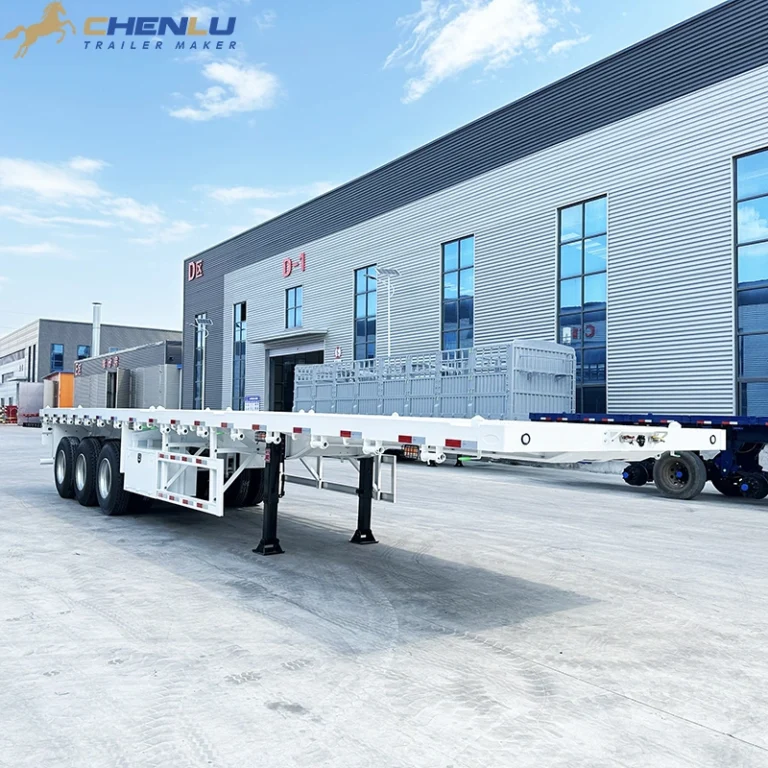
Flatbed semi-trailers carry crated spare parts, steel sections and workshop supplies to site. The open deck allows side or overhead loading, giving forklifts and cranes access to the cargo.
Fuel tanker trailers
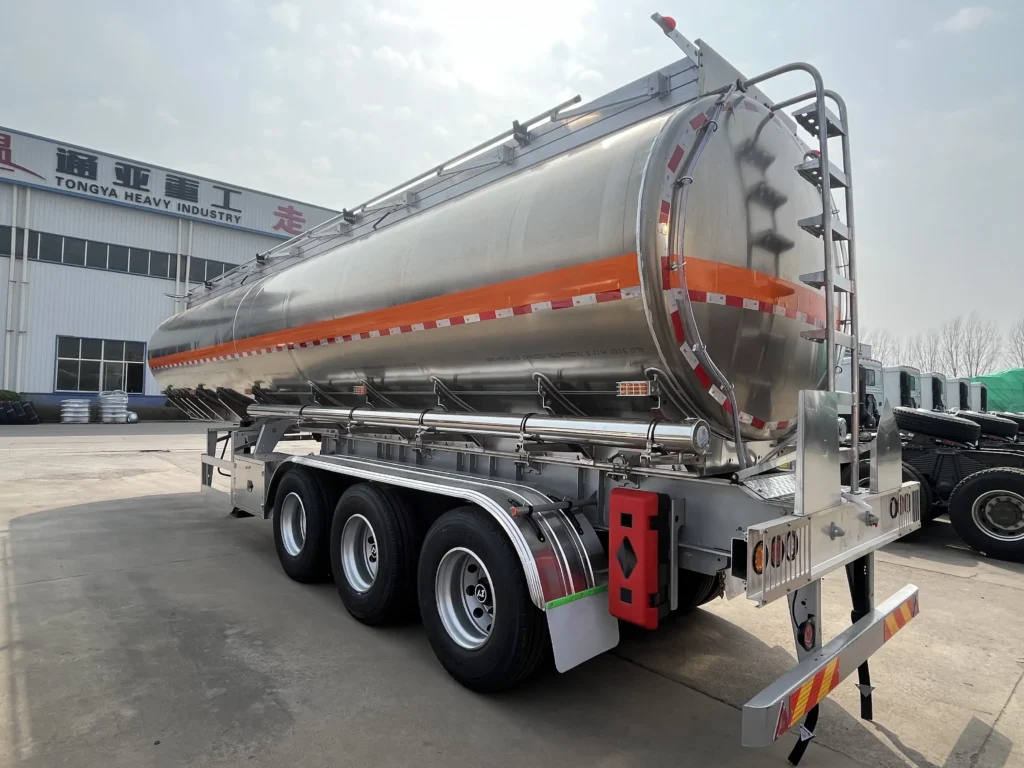
Fuel tanker trailers bring bulk diesel to mine and quarry storage tanks, avoiding the handling of individual fuel drums. Direct refuelling of machines is a different duty and needs its own equipment setup.
These are road-dispatch and site-supply applications. Extraction-face haulage may require dedicated off-highway equipment.
Fuel Distribution
Fuel tanker trailers connect loading terminals with depots, filling stations and industrial storage. Compartment layout and tanker tare weight affect how the fleet can serve those deliveries.
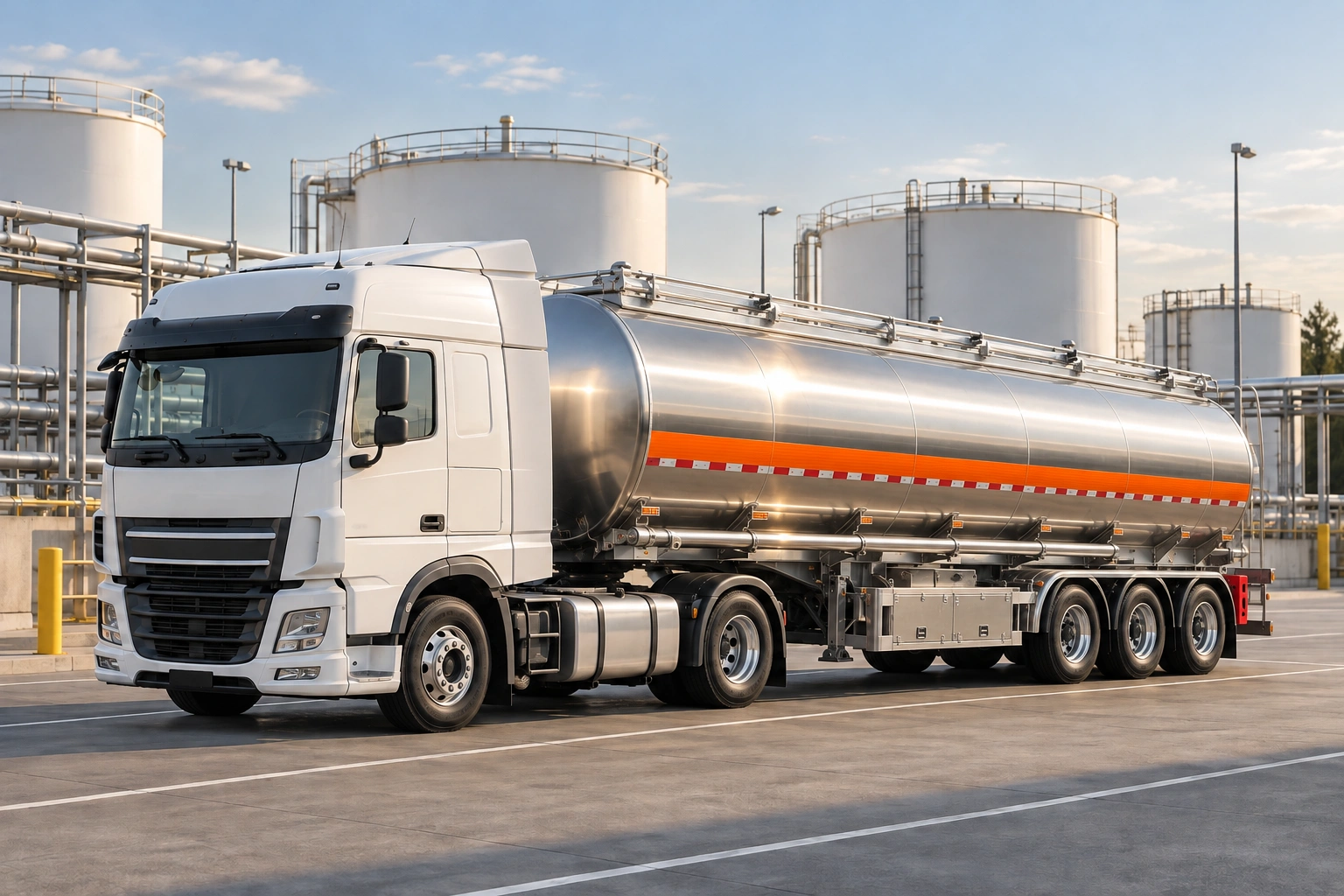
Fuel tanker trailers
A compartmented fuel tanker can deliver separate batches to several filling stations or storage sites on one trip. The compartment layout and discharge connections need to match the fuel grades and the tanks receiving them.
Aluminum fuel tanker trailers
An aluminum tank can reduce empty weight compared with a comparable steel build. On weight-limited routes, this can leave more allowance for fuel. Actual payload still depends on axle limits, tank capacity and the complete vehicle configuration.
Tank material and compartment layout are separate choices: an aluminum tanker can also have multiple compartments.
Port & Inland Logistics
Containers continue inland on a chassis, while unpacked goods need a deck or a covered trailer. Car carriers handle vehicle deliveries from the port to distribution yards and dealerships.
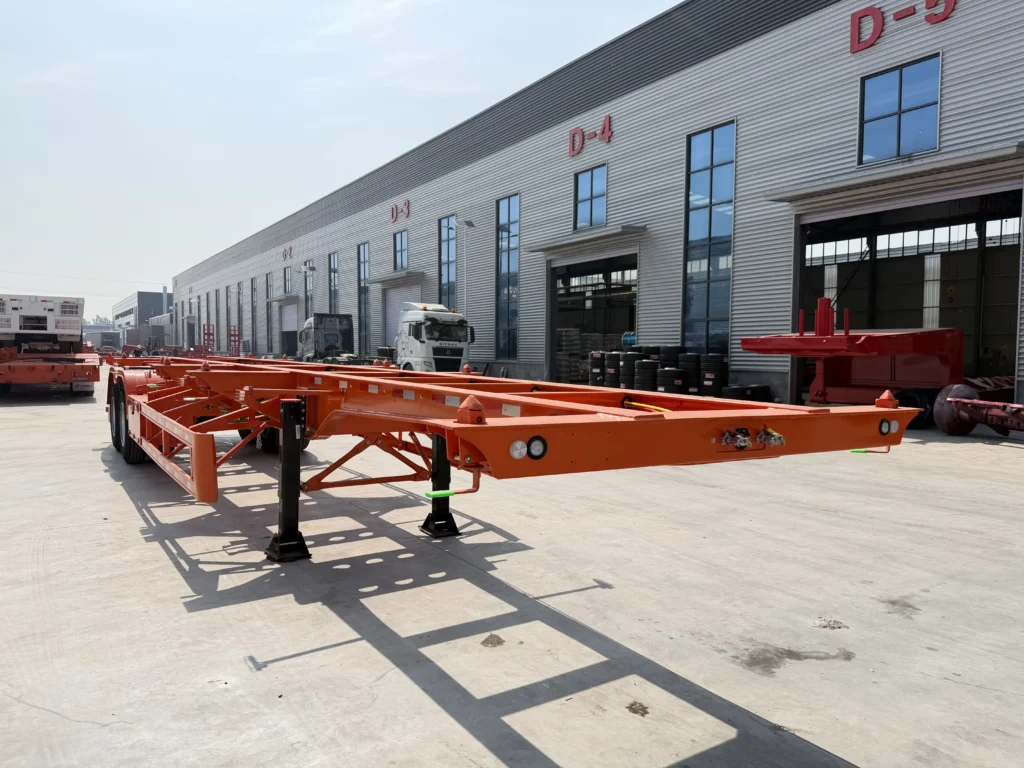
Container chassis / skeleton trailers
Container chassis carry shipping containers between ports, inland depots and warehouses. Matching twist locks secure the container to the frame, so goods can remain packed inside throughout the road journey.
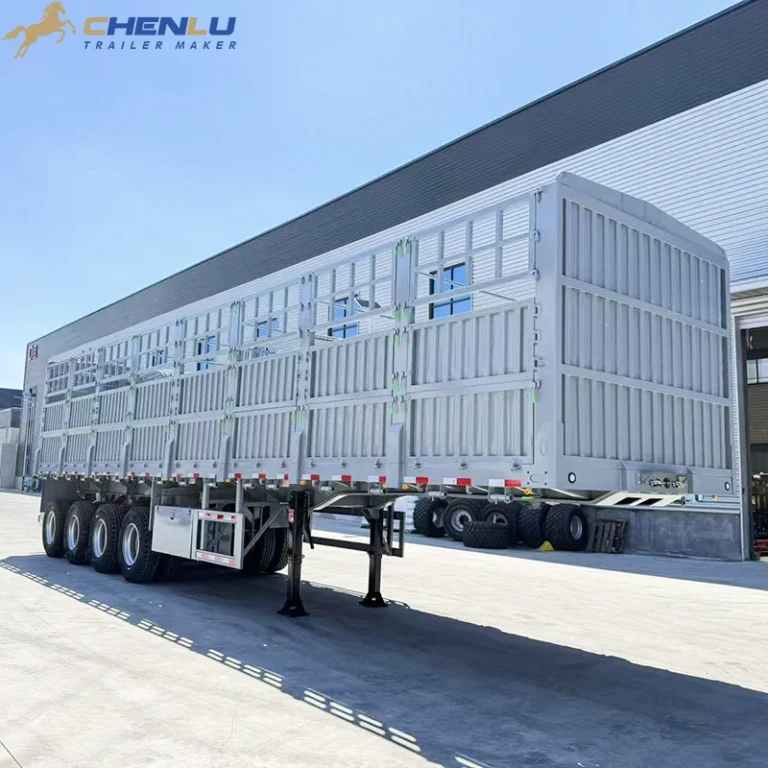
Flatbed & fence cargo trailers
Flatbed trailers give cranes and forklifts access to crates, steel bundles and other unpacked cargo. Fence cargo trailers add sides around suitable bagged or packaged loads; the cargo still needs its own restraints.
Curtain side trailers
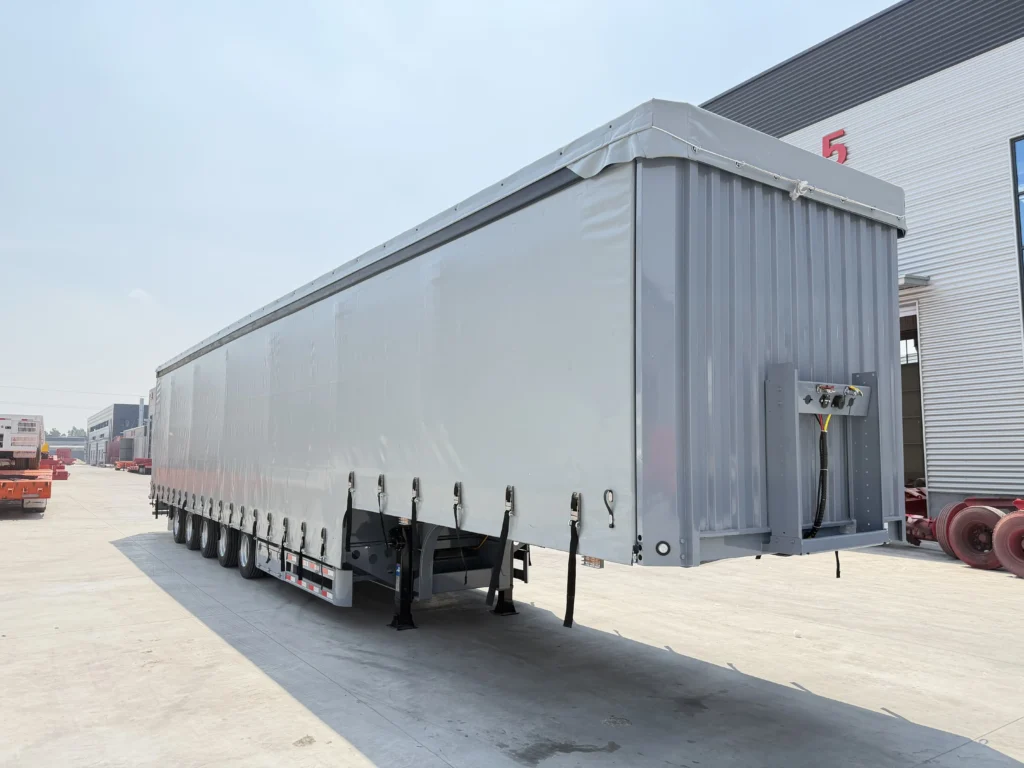
Curtain side trailers suit palletised freight moving from port warehouses to inland customers. Sliding curtains allow loading from the sides and provide weather cover during transport. Standard curtains are not a substitute for load restraints.
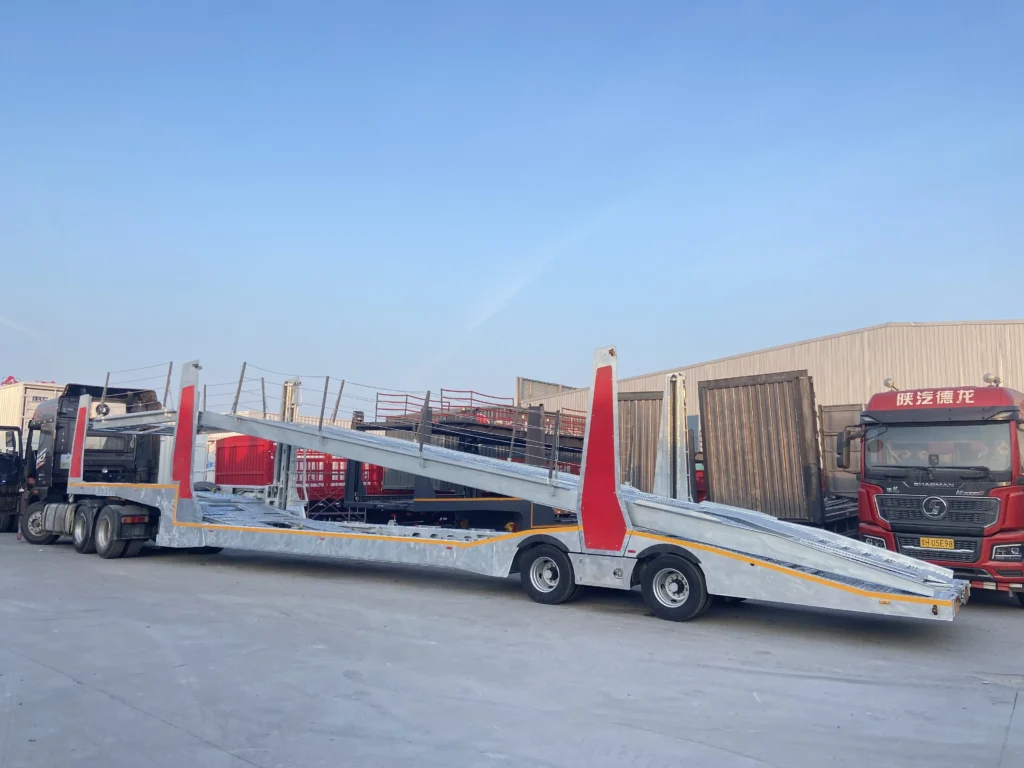
Car carrier trailers
Car carrier trailers move passenger vehicles from port storage to distribution centres and dealerships. Loading ramps and vehicle decks allow several suitable cars to travel together, without adding the delivery distance to each car’s mileage.