
End Dump Trailer Capacity: Why Cubic Metres Do Not Equal Tonnes
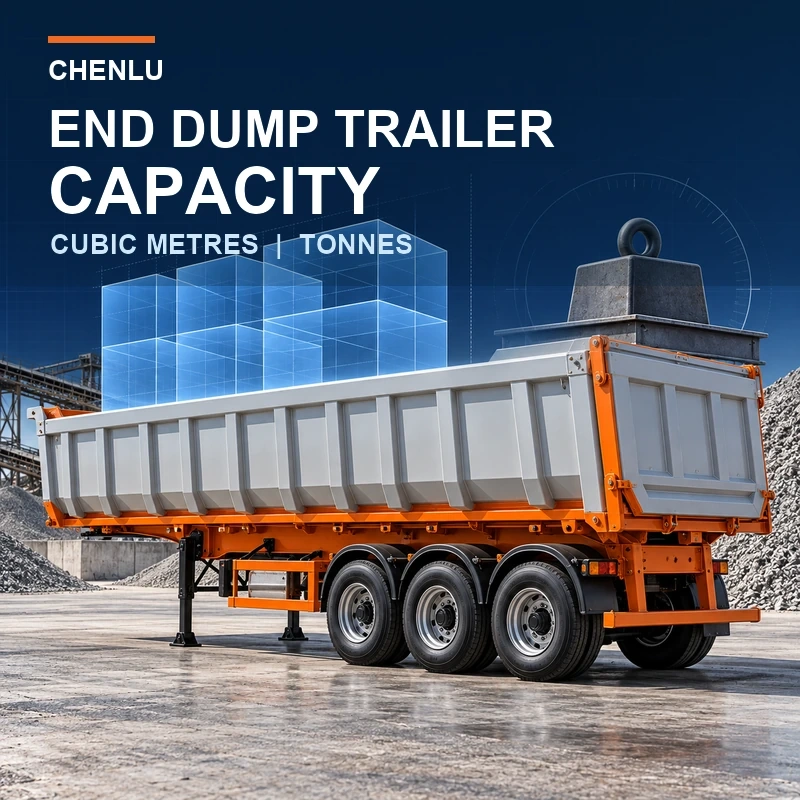
Technical specifications for a rear dump semi-trailer often place figures such as 30 m³ and 40 t next to each other. Both appear to describe capacity, but they answer different questions. Cubic metres describe the space inside the body. Tonnes describe cargo mass. Site bulk density, moisture condition and the way the material is loaded connect the two.
Estimate cargo mass by multiplying loaded volume by the material's site bulk density. The usable loading volume is the lower of the body's effective volume and the available payload divided by bulk density. Then check the tractor, trailer tare mass, axle-load distribution, tyre and suspension ratings, route limits and unloading site. A 30 m³ body does not mean a 30 t payload, and a full body does not establish that the trailer can transport and tip that mass.
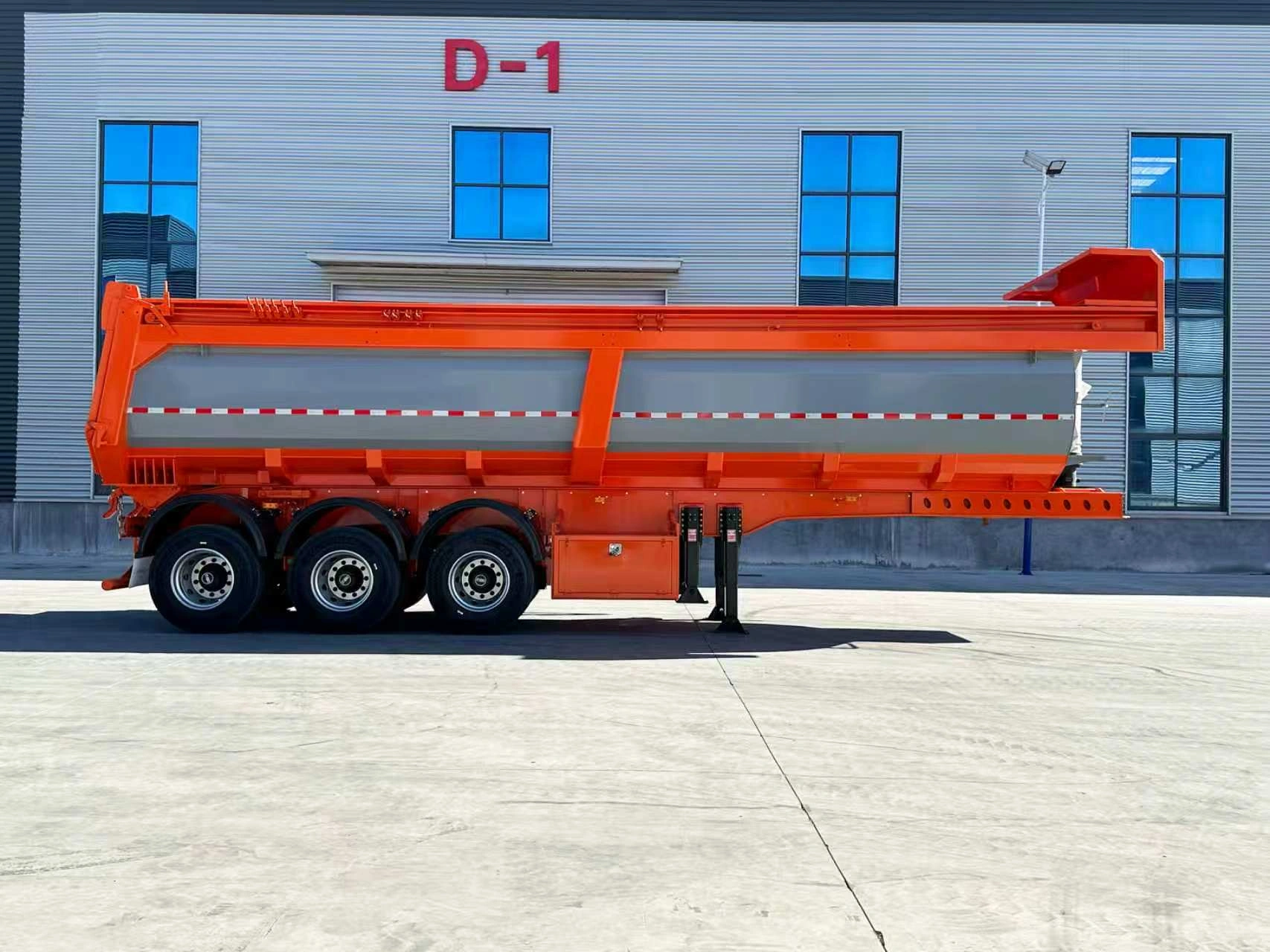
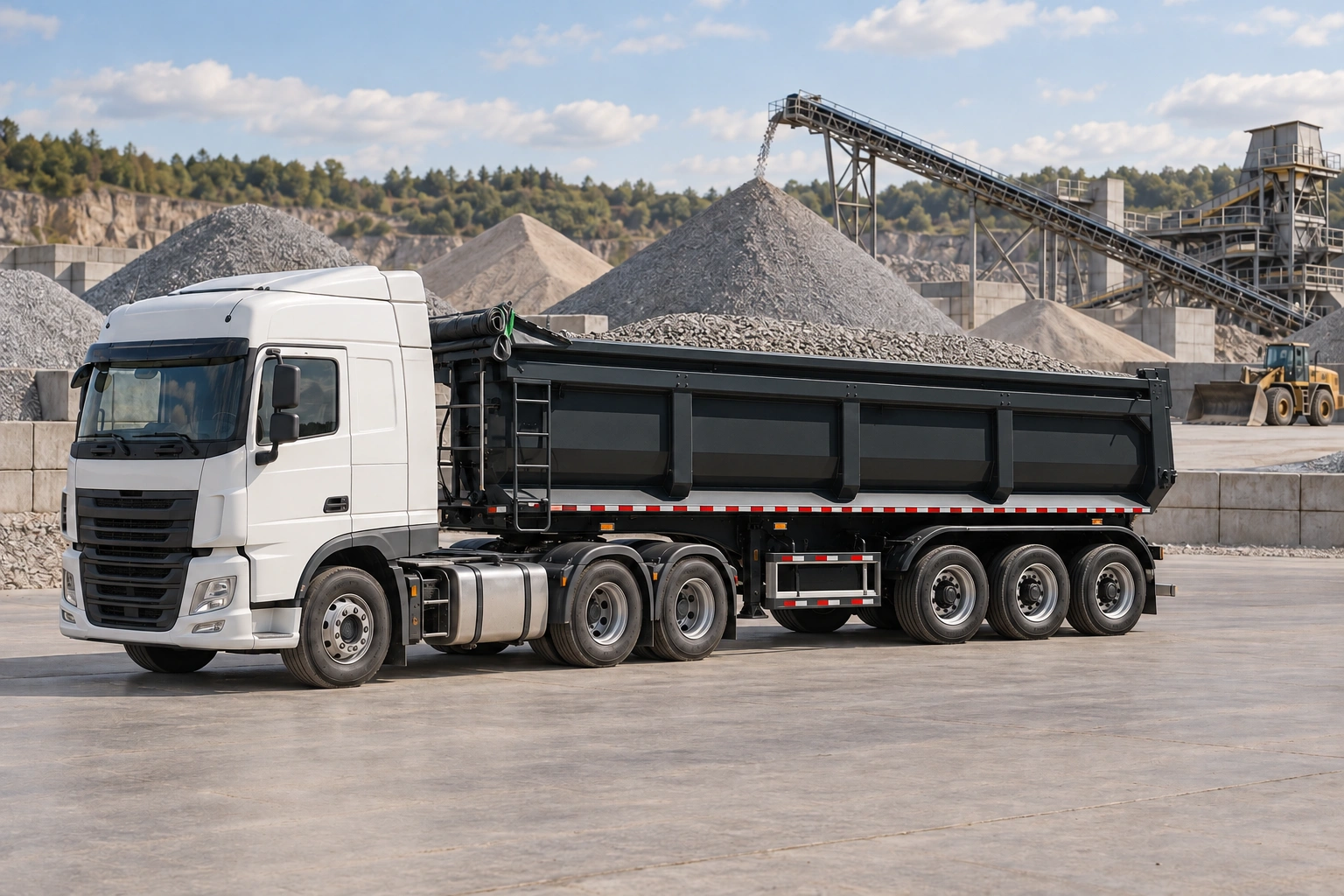
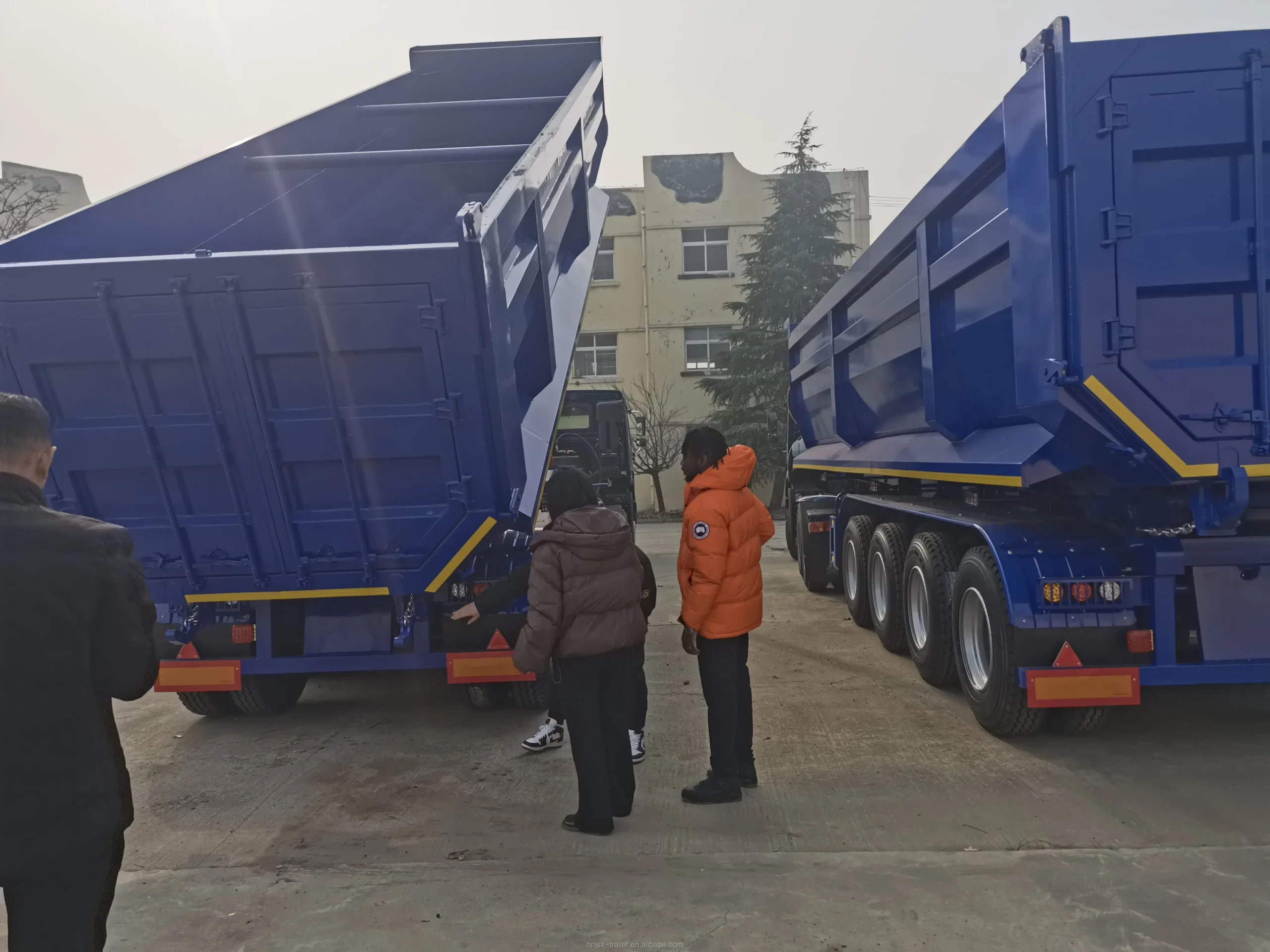
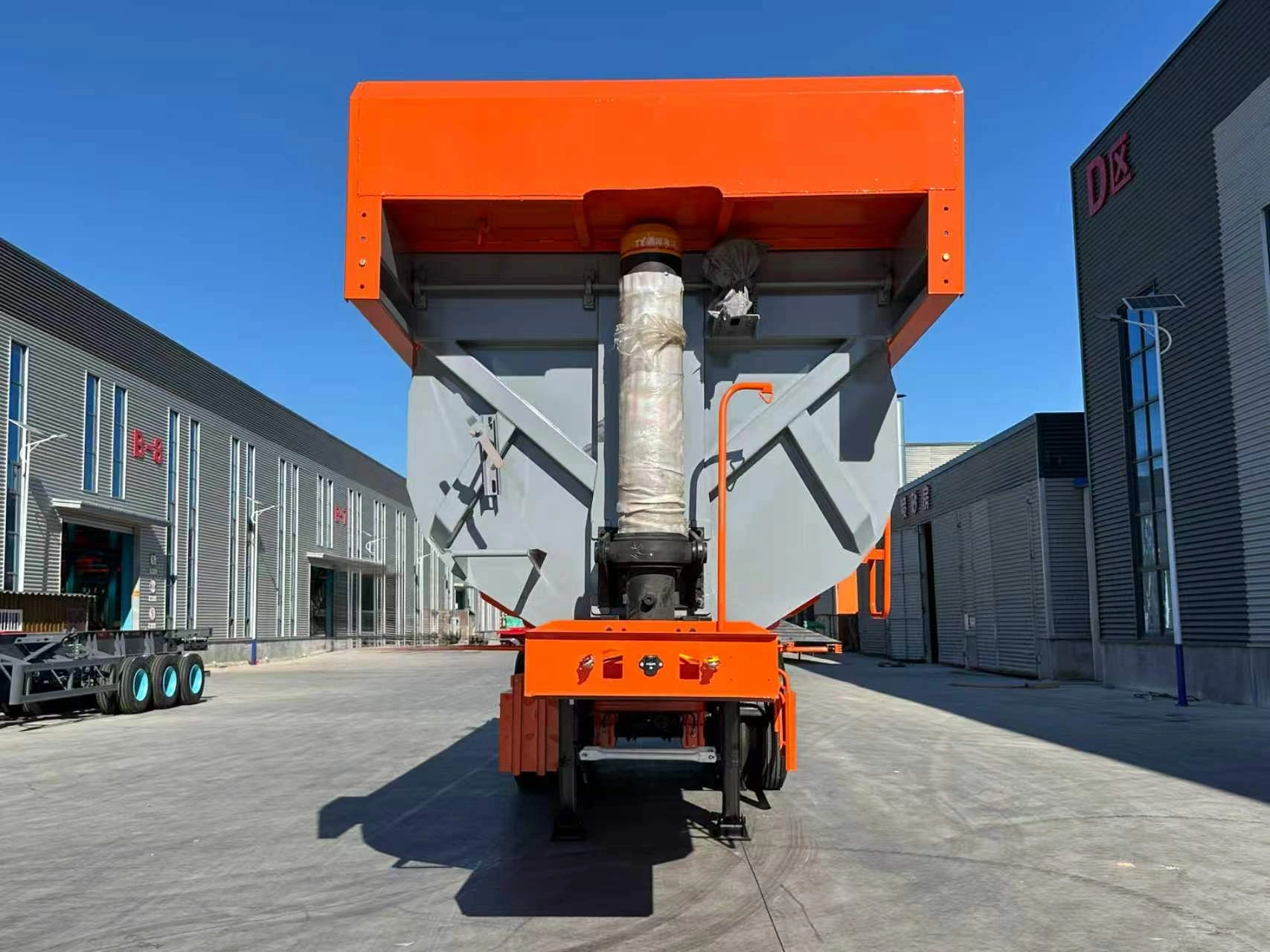
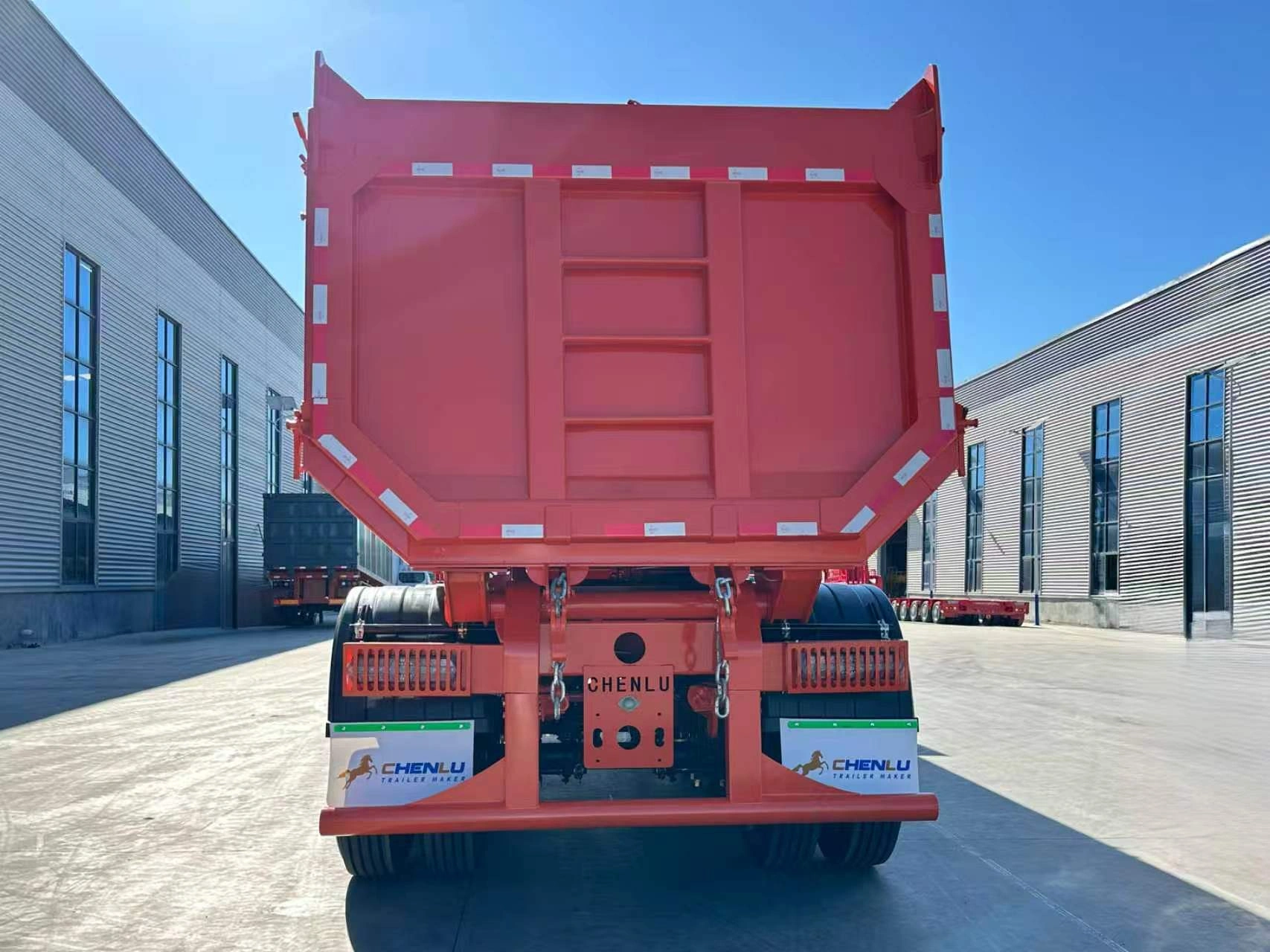
A CHENLU rear dump semi-trailer normally combines a high-sided tipping body, chassis, rear hinge, front-mounted hydraulic lifting system, tailgate and running gear. During transport, the body holds sand, aggregate, soil, coal or another bulk material. During unloading, the hydraulic system lifts the front of the body and the material moves towards the tailgate. Body volume defines the space available to the material. The chassis and running gear carry the mass and load distribution created by that material. See the CHENLU tipper and dump semi-trailer range.
What Do m³ and t Mean for an End Dump Semi-Trailer?
Five separate values are needed when checking whether an end dump semi-trailer can complete a transport task:
| Value | What it answers | What it does not replace |
|---|---|---|
| Effective body volume, m³ | How much loading space the body provides | Permitted cargo mass |
| Site bulk density, t/m³ | How much one cubic metre weighs in the current loading condition | The solid density of the particles |
| Trailer structural rating | What the chassis, body and connections can carry under their specified conditions | Legal loading on the intended route |
| Combination and axle-load margin | How much mass the tractor, trailer, axles, tyres and route conditions still allow | Geometric body volume |
| Hydraulic tipping condition | Whether the body, load position and lifting system are compatible | Permitted road load |
The basic estimate is:
Estimated cargo mass (t) = loaded volume (m³) × site bulk density (t/m³)
When the available payload has already been established:
Volume allowed by the mass limit (m³) = available payload (t) ÷ site bulk density (t/m³)
Available payload cannot be replaced by one isolated tonnage figure. It is constrained by the structural conditions in the approved drawing or vehicle documents, actual tare mass, tractor-trailer matching, axle and tyre ratings, and the limits that apply on the intended route. The first limit reached determines the actual load.
The calculation can be reduced to three steps. Confirm effective body volume. Use site bulk density to calculate the corresponding cargo mass. Then compare the result with available payload, axle-load distribution and the conditions for tipping at the unloading site.
How Much Can a 30 m³ Body Carry at Different Bulk Densities?
Assume an end dump semi-trailer has an effective body volume of 30 m³. Under the current tractor, trailer tare mass, structural and route conditions, assume that 42 t is available for cargo. The three site bulk densities below are calculation assumptions. They are not rated values for a named material or a CHENLU trailer model.
| Assumed site bulk density | Cargo mass when 30 m³ is full | Volume allowed by a 42 t cargo limit | First limit reached |
|---|---|---|---|
| 1.20 t/m³ | 36.0 t | 35.00 m³ | 30 m³ body volume |
| 1.60 t/m³ | 48.0 t | 26.25 m³ | 42 t cargo mass |
| 1.80 t/m³ | 54.0 t | 23.33 m³ | 42 t cargo mass |
At 1.20 t/m³, filling all 30 m³ produces 36 t of cargo, so body space runs out first. At 1.60 t/m³, the same full body would contain 48 t. With the assumed 42 t limit, loading volume falls to 26.25 m³. At 1.80 t/m³, it falls again to about 23.33 m³.
If the body cross-section is approximately constant along its length, 26.25 m³ and 23.33 m³ equal about 87.5% and 77.8% of the body volume. These are volume ratios, not loading-height instructions. In a sloped or U-shaped body, volume and material height do not change in a simple linear relationship. The load must also be distributed properly from front to rear and from side to side.
The arithmetic is straightforward. Most practical error comes from two inputs: whether 30 m³ represents the true effective volume, and whether the selected bulk density represents the material at the loading site.
How Does Rated Body Volume Become Usable Loading Space?
For a rectangular body, internal length, internal width and effective loading height can be used to estimate volume. If the sides slope, the floor is U-shaped or the cross-section changes, multiplying three maximum dimensions will overstate the space. Use the effective average cross-sectional area instead:
Geometric body volume (m³) = effective average cross-sectional area (m²) × internal length (m)
The loading boundary also needs to be stated. Loading level with the top of the sideboards, forming a local heap, adding side extensions or using a cover can produce different figures. Exterior dimensions cannot be multiplied and treated as effective volume. Permission to load above one boundary also does not increase the trailer's payload rating.
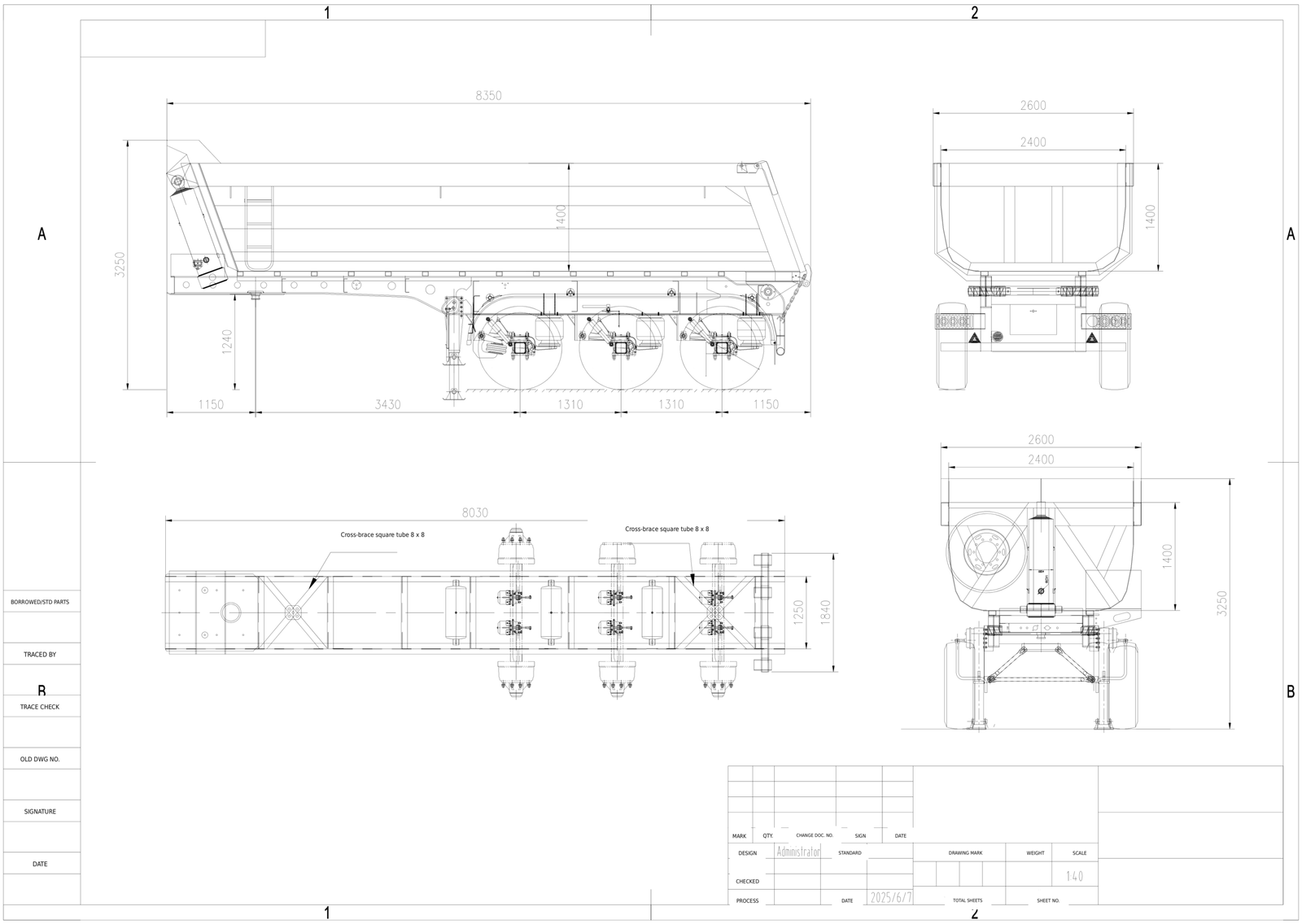
One published CHENLU three-axle rear dump semi-trailer measures 8,350 × 2,600 × 3,250 mm overall. Its published internal body width is 2,400 mm, sideboard height is 1,400 mm, and adjacent axle spacing is 1,310 + 1,310 mm. These dimensions describe the overall envelope, lateral body space, side height and axle-group layout. No single value establishes body volume or permitted payload. Volume still requires internal length and the true cross-section. Payload also requires tare mass, component ratings and route limits.
Markets that use cubic yards need a unit conversion before comparing body volumes. The US National Institute of Standards and Technology gives the approximate relationship 1 m³ ≈ 1.31 yd³. In the other direction, 1 yd³ ≈ 0.76 m³. Changing units changes the number used to describe volume; it does not turn volume into mass. [1]
How Does Material Density Convert m³ into Tonnes?
Bulk density is the mass within a unit of total bulk volume. That volume includes both the particles and the spaces between them. It is therefore different from the density of the rock or mineral particles themselves.
ASTM C29/C29M-23 distinguishes loose and compacted bulk density for aggregate. It also explains that laboratory dry values do not automatically represent the compaction, absorption and surface moisture present in a haul unit or stockpile. The mass inside the same body volume can therefore change with grading, moisture content, loading drop, vibration and settlement in transit. [2]
The FHWA Field Materials Manual defines dry-rodded unit weight as the mass of dry aggregate per unit volume under a specified procedure, while moisture content is measured separately. A supplier's dry-density figure or a laboratory value cannot automatically represent a wet stockpile, washed aggregate or the condition in which the material is loaded. [3]
Volume-to-mass calculations should therefore use site bulk density and record the material's moisture condition when it was measured. A material name alone is not enough to establish how many tonnes the same body will contain.
Why Can Axle Load and Tipping Still Be Unsuitable When Total Mass Is Acceptable?
The same cargo mass can place different loads on the kingpin and rear axle group when its position changes. A simplified static model treats the kingpin and the axle group as two supports:
Rear axle-group reaction ≈ W × x ÷ L
Here, W is the weight of the load being assessed, x is the horizontal distance from the kingpin to that load's centre of gravity, and L is the distance from the kingpin to the axle group's equivalent support point. The kingpin carries the remaining reaction. The model shows the direction of change: moving the cargo centre rearward normally increases the share carried by the rear axle group; moving it forward normally increases the kingpin share. When comparing proportions only, the same mass units can be used for W. A formal force calculation must use force units.
This simplified model does not include trailer tare distribution, multi-axle suspension equalisation, dynamic loads or structural flexibility. It cannot replace a final axle-load calculation or scale weighing.
Cargo concentrated over a short section also creates local loading. Even when total mass is within the vehicle documents, a local area of the floor, crossmembers or chassis can carry higher stress. The loading method, drop position, maximum particle size and drop height therefore matter, especially for large rock or demolition material.
During tipping, cargo weight creates a moment about the rear hinge. With the body near horizontal, the simplified relationship is M ≈ W × d, where d is the horizontal distance from the cargo centre of gravity to the rear hinge. The lifting moment available from the hydraulic cylinder also depends on its mounting position, working angle and stroke. A load concentrated near the front of the body does not create the same lifting condition as the same mass distributed evenly.
Why Can Unloading Conditions Limit Usable Capacity?
The vehicle's centre of gravity rises significantly when the body is lifted. Enough body volume does not mean that the material can be tipped in the same condition at every site. Crossfall, soft ground, an uneven load, material stuck to one side, overhead lines or pipework, and insufficient space behind the tailgate can all change the unloading condition.
The UK HSE tipping checklist emphasises level, stable ground, overhead clearance and even loading. It also identifies material sticking or freezing on one side of the body as a possible cause of instability. This is UK workplace guidance, not an operating manual for a CHENLU model, and it does not replace local rules. It shows why the unloading site cannot be excluded when determining usable loading capacity. [4]
For wet clay, fine damp material or cargo that can compact and stick, a cubic-metre figure is not enough. Body cross-section, floor and side condition, tailgate design and any unloading aids must be checked against the material and site. A body that can be filled but cannot discharge its load evenly and stably does not provide repeatable usable capacity.
How Should Volume and Payload Be Checked Against a Specific Trailer?
For a specific CHENLU end dump semi-trailer, volume and payload need to be checked within the same operating case. A change in material, loading quantity, tractor, route or unloading site can change which limit is reached first.
| Data to check | Relationship to volume or payload |
|---|---|
| Material, site bulk density and moisture range | Determines the space needed for the target mass and affects sticking or compaction |
| Target net cargo mass and volume per trip | Shows whether body space or cargo mass is reached first |
| Maximum particle size, abrasion, loading equipment and drop height | Affects body shape, floor and side structure, and wear requirements |
| Tractor model, fifth-wheel height and permitted combination mass | Affects kingpin load, vehicle matching and overall height |
| Country, route, road conditions and weighing requirements | Defines the checks for combination mass, axle loads, overall dimensions and access |
| Unloading-site slope, ground support, overhead clearance and rear space | Determines whether rear tipping can be completed at the site and which lifting height must be checked |
| Daily cycles, transport distance and maintenance conditions | Relates the hydraulic system, suspension and operating duty to the task |
Technical documents should also state how the terms volume and payload are being used. Volume needs a defined body boundary. A tonnage figure needs to distinguish a structural design condition, actual cargo mass and the load permitted on the intended route. Figures for two trailers are comparable only when their definitions are consistent.
Frequently Asked Questions
Can a 40 m³ End Dump Semi-Trailer Carry 40 t?
The 40 m³ figure alone cannot answer the question. At a site bulk density of 1.00 t/m³, 40 m³ corresponds to 40 t. At 1.50 t/m³, it corresponds to 60 t. The actual transport condition also depends on available payload, axle-load distribution, tractor matching, route limits and the unloading condition.
Does Adding Higher Sideboards Increase Payload?
Higher sideboards increase geometric loading space. They do not automatically increase the ratings of the chassis, axles, tyres, suspension or hydraulic system. Extra volume can be useful for a low-density material. With a dense material, the mass limit may be reached before the body is full. Overall height, centre of gravity, cover arrangement and loading and unloading conditions also need to be checked.
Can an Online Sand or Aggregate Density Table Be Used Directly?
A published density table can support an early estimate, but it cannot replace project data. Check whether the figure is particle density, dry bulk density or loose wet bulk density. Also check grading, moisture content and the measurement method. A representative volume and mass measurement using the material at the loading site provides a more reliable input, with its moisture condition recorded.
Which Limits Should the Final Calculation Use?
End dump trailer capacity is not one isolated m³ or tonne figure. Use site bulk density to convert the target cargo mass into the required volume, then check that volume against the actual body cross-section. Next, check structural conditions, tractor and axle loads, the transport route, and the tipping site. This sequence shows whether the operation is limited by space, mass or unloading conditions.
For a specific CHENLU trailer, the material, site density and moisture range, actual mass and volume per trip, maximum particle size, loading equipment, tractor, route and unloading site belong in the same assessment. Final usable volume and cargo mass must follow the approved drawing, vehicle documents, actual weighing and the requirements that apply on the intended route.
Scope of This Article
This article covers body volume, material mass and loading conditions for rear dump semi-trailers. It does not state a universal legal payload for any country. The 30 m³ / 42 t example explains the calculation only. The simplified support model and tipping-moment relationship explain how load position affects the trailer. ASTM and FHWA sources define bulk-density and moisture measurement boundaries. HSE guidance supports the unloading-site discussion, and NIST supports the unit conversion. A specific CHENLU model remains subject to its approved drawing, vehicle documents and the requirements for the intended route.
References
- NIST SP 365 (2024): Metric Conversion Card — approximate conversion between m³ and yd³.
- ASTM C29/C29M-23: Standard Test Method for Bulk Density ("Unit Weight") and Voids in Aggregate — loose and compacted bulk density, voids and moisture limitations.
- FHWA: Field Materials Manual, Exhibit 5-7 — definitions for dry-rodded unit weight and moisture-content measurement.
- UK HSE: Section 9 — Tipping — unloading ground, load distribution, sticking material and tipping conditions.
- CHENLU: 3 Axle Rear Dump Semi Trailer for Saudi Arabia — published dimensions and configuration scope for the CHENLU three-axle example used in this article.