
Lowboy Trailer Weight Capacity: Rated Payload, Concentrated Loads and Axle Limits
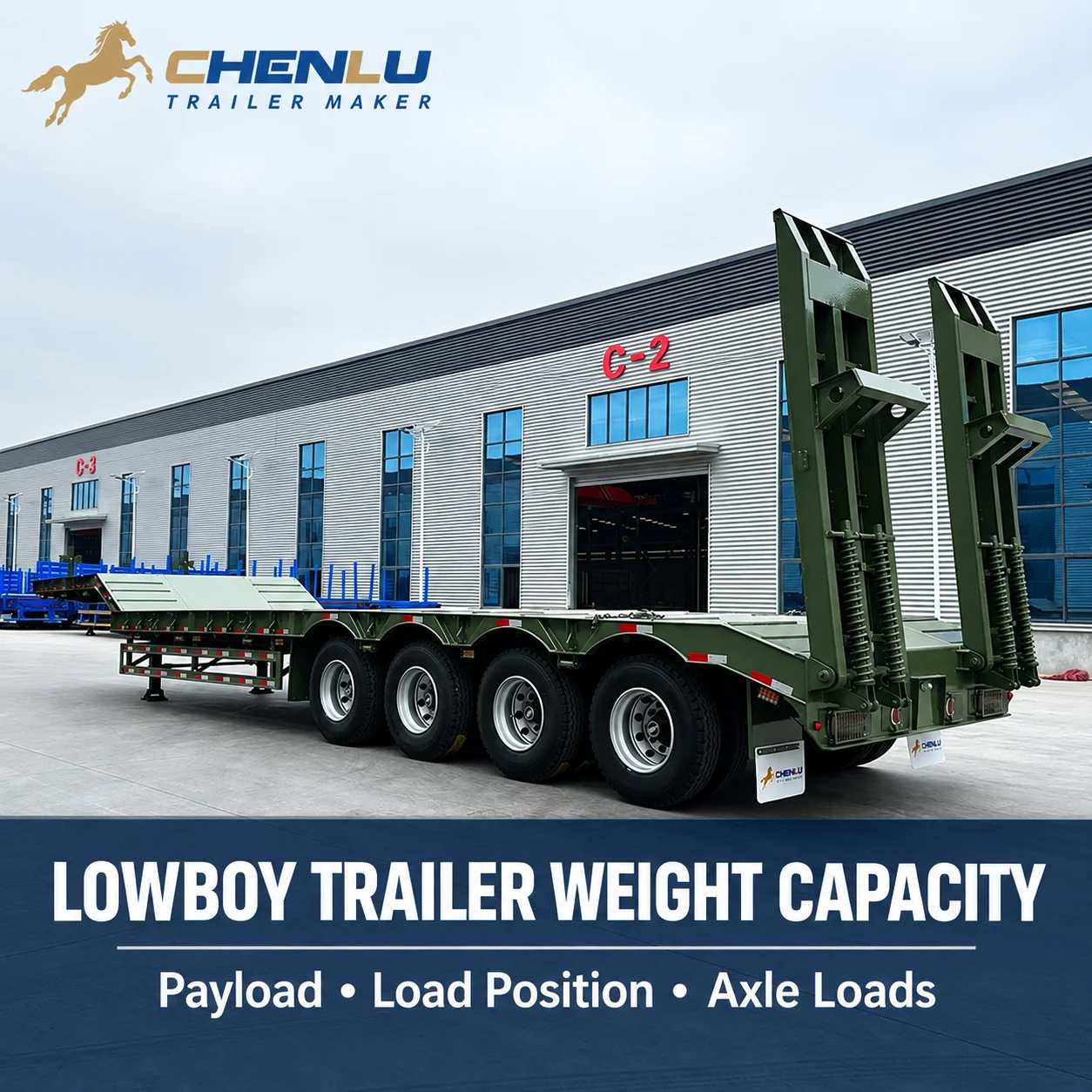
A lowbed semi-trailer may be described as a 35-ton, 55-ton or 80-ton model, but that figure does not mean that every machine of the same mass can be carried. The capacity label has to be traced back to its rating conditions: whether it states payload, a model name or a frame rating; the deck length over which the load may be concentrated; the way the machine mass is shared between the kingpin and rear axle group; and whether the tractor, tyres, suspension, brakes and route allow the same load case. The first limit reached governs the actual transport task.
For a 50 t machine and a 55 ton lowboy trailer, the check goes beyond “50 is less than 55”. The 50 t figure should include the bucket, counterweight, attachments, fuel and all equipment kept in the transport condition. The machine must also satisfy the selected trailer's support area, concentrated-load condition, kingpin load and axle-group limits. The tractor and operating route must accept the same combination. A 55 t rating is a starting category, not a stand-alone approval for the load.
The CHENLU low bed trailer range includes different axle arrangements, capacity classes and gooseneck structures. The range page handles the broader low bed trailer and lowboy trailer category. This article answers a narrower question: how to turn machine data into verifiable load conditions instead of selecting a configuration from one tonnage label.
| Known information | Check first | What a capacity label can leave out |
|---|---|---|
| Machine mass | Confirm the complete mass in transport condition | Attachments, counterweights, fuel or removable parts may be missing |
| Track, tyre or support-leg positions | Effective support length, width and individual support loads | The same total mass can create very different local loads |
| Machine centre of gravity | Static reaction at the kingpin and rear axle group | Total mass may be acceptable while one end exceeds its limit |
| 35 t, 55 t or 80 t lowbed label | Unit, rating definition and specified load condition | “Ton” may not state metric tonnes or short tons, or the rated load length |
| Three or four axles | Spacing, ratings, tyres, suspension and actual load sharing | One more axle does not raise every vehicle limit at the same time |
| Tractor and route | Fifth wheel, drive axles, combination mass, roads and permits | Frame capacity does not establish that the combination may use the route |
The table establishes the checking order. The final decision still needs the selected trailer drawing and rating file, the machine data, tractor information and destination requirements.
What Do 35-Ton, 55-Ton and 80-Ton Lowboy Ratings Mean?
Tonnage is commonly used to separate lowboy classes, but a number in a technical or commercial document can describe at least five different things:
- Rated payload: the cargo mass permitted under the stated load distribution, speed, road and structural conditions.
- Gross Vehicle Weight Rating (GVWR): the manufacturer's rated loaded mass for the individual vehicle. It is not the cargo mass alone.
- Gross Axle Weight Rating (GAWR): the manufacturer's load-carrying rating for the relevant axle system. It is not the complete trailer payload.
- Road axle or axle-group limit: the practical limit created by destination rules, axle count, axle spacing, tyres and the actual route. It is not interchangeable with GAWR.
- Model or series name: the name may originate from a particular rating condition, but the formal file for that model still governs.
49 CFR 571.3 defines GVWR as the manufacturer's rated loaded weight of a single vehicle and GAWR as the manufacturer's load-carrying capacity for a single axle system, measured at the tyre–ground interfaces. The Talbert Trailer Operator's Manual states that the applicable GVWR and GAWR must not be exceeded and that load distribution has to be checked from front to rear and side to side. Other markets should use the corresponding terms in their own documents. The North American definitions are cited here to separate lowboy trailer weight, payload, manufacturer axle ratings and road axle-group limits.
How Does Trailer Tare Use Part of the Gross-Mass Allowance?
For one actual trailer, begin with the basic mass relationship:
Actual trailer gross mass = actual trailer tare + cargo mass
Trailer tare includes the frame, deck, gooseneck, axles, suspension, tyres and all equipment installed on that vehicle. Extra axles, a wider structure and optional equipment can change it. A GVWR-based mass allowance therefore needs the selected vehicle's technical file or weighing result, not a generic tare for the same tonnage class.
The mass total does not mean that all weight rests on the trailer axle group. Part passes through the kingpin to the tractor. Subtracting actual tare from GVWR may provide an initial gross-mass allowance, but the machine still has to satisfy the concentrated-load, kingpin, axle-system, tractor and route limits.
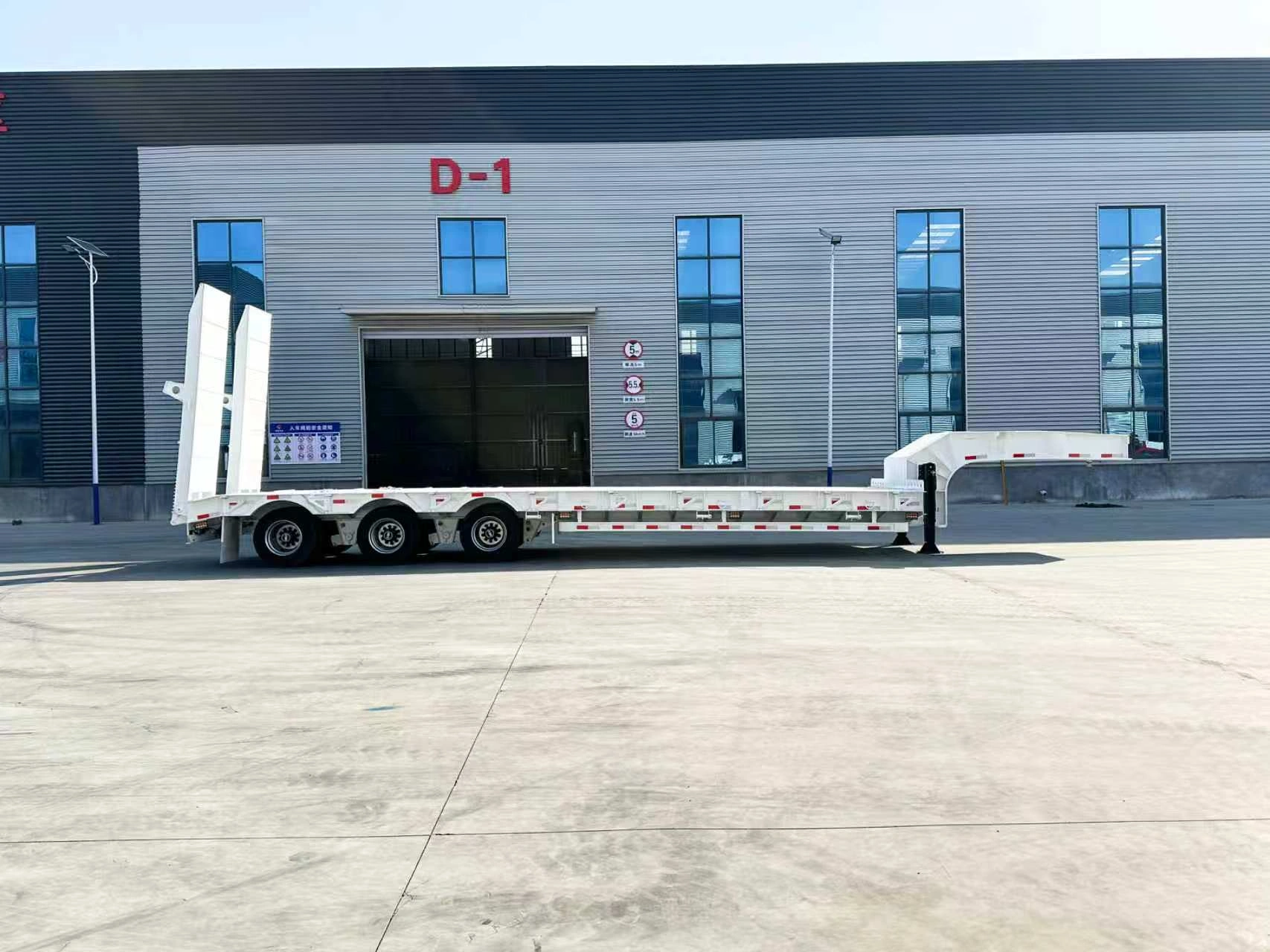
Units also need to be explicit. Every t in the worked examples below means a metric tonne: 1 t = 1,000 kg. If an English page or equipment plate uses only “ton”, confirm whether it means a metric tonne or a US short ton. Fifty-five short tons are about 49.9 t and cannot be substituted for 55 t in a technical check.
A public South African lowbed specification lists design capacity, kingpin rating and axle and suspension capacities separately rather than replacing them with one tonnage figure. It is not a CHENLU rating or a standard for the whole of Africa. It shows that a regional project can also require the load chain to be checked item by item.
Why Must Rated Payload Include Its Load Conditions?
Frame capacity depends on more than total mass. It also depends on where the mass acts, the length it covers and the width through which it enters the structure.
The XL Lowboy Loading Guidelines distinguish between load distributed along the deck and load concentrated within a defined 12 ft section in one example. They also require suitable longitudinal distribution and support width, and warn that point loading can damage the decking or buckle crossmembers. The 12 ft condition and the ratings in that document apply only to the cited manufacturer's example; they are not CHENLU specifications. The transferable principle is that a payload rating needs a defined load length and support condition.
Typical load patterns on a lowbed include:
- A tracked machine passes weight into the deck through its left and right tracks.
- A wheeled machine creates separate loads at a small number of tyre contact areas.
- Removing an attachment changes the machine's centre of gravity and front-to-rear load distribution.
- Timber blocks or steel spreader plates change the effective contact length and lateral support position.
- A support leg, blade or attachment that is not correctly stowed may create a high local load.
Main-beam bending, local crossmember capacity, deck bearing pressure, outriggers and the rear deck do not necessarily share one rating condition. The Talbert 60CC/55SA-LD literature pairs capacity with a two-point rigid load base over 10 ft or half the deck length, as well as swing radius and axle arrangement. Those figures belong only to the models in that document. They show why “What is the capacity?” needs a second question: Over what load length, support width and deck area does the rating apply?
Why Does Effective Support Length Matter for the Same Machine Mass?
Consider a simplified 50 t machine. To compare support lengths, first assume that its mass is distributed evenly along the stated effective length. The result is an average longitudinal line load for comparison, not the trailer's rated concentrated load.
- Over an 8 m effective support length, the average line load is 50 ÷ 8 = 6.25 t/m.
- Over a 4 m effective support length, it is 50 ÷ 4 = 12.5 t/m.
The total machine mass is unchanged, but the average load per metre doubles in the second condition. If two tracks are assumed to share the 50 t equally, each track averages 25 ÷ 4 = 6.25 t/m over a 4 m support length. Real track loading may not be uniform. It also depends on the centre of gravity, rollers, track tension, undercarriage structure, packing position and actual contact condition.
These numbers identify whether the load changes from a longer distribution to a shorter concentration. Formal frame and crossmember verification also needs:
- the support positions of the left and right tracks or each wheel;
- effective contact length and width, not only the overall machine length;
- individual support loads or at least the manufacturer's centre of gravity in transport condition;
- details of timber, plates or dedicated supports and the way they span crossmembers and main beams; and
- the machine's longitudinal position on the deck.
Spreader plates may improve the load on the deck surface and local crossmembers. They do not remove machine mass or automatically change the overall share between the kingpin and rear axle group. Local support and complete-vehicle reactions are separate checks.
How Does Load Position Change Kingpin and Axle-Group Loads?
For a simplified static model, a semi-trailer can be treated as having two supports: the tractor fifth wheel and kingpin at the front, and the rear axle group. For the machine load alone, the effect of centre-of-gravity position can be shown as:
Rear axle-group reaction Ra = W × x ÷ L
Kingpin reaction Rk = W × (L − x) ÷ L
Here, W is machine mass, L is the horizontal distance from the kingpin to the equivalent centre of the rear axle group, and x is the distance from the kingpin to the machine centre of gravity. The simplified relationship applies when the centre of gravity lies between the two equivalent supports. It describes static vertical load sharing only; it excludes trailer tare, dynamic effects, gradients, braking, structural flexibility and unequal sharing between individual axles.
For illustration, take W = 50 t and L = 10 m.
| Machine centre-of-gravity position | Machine contribution at kingpin | Machine contribution at rear axle group |
|---|---|---|
| 6 m behind the kingpin | 50 × (10−6) ÷ 10 = 20 t | 50 × 6 ÷ 10 = 30 t |
| Moved 1 m rearward, 7 m behind the kingpin | 50 × (10−7) ÷ 10 = 15 t | 50 × 7 ÷ 10 = 35 t |
| Load transfer caused by the move | −5 t | +5 t |
The t values in this table are tonne-equivalent static vertical loads used to explain the transfer. They are not forces stated in newtons or measured axle loads. Moving the machine only 1 m rearward shifts about 5 t from the kingpin to the rear axle group. Moving it forward reverses the direction. Actual verification must add the tare reactions at the kingpin and axle group, then compare the totals with:
- the kingpin, gooseneck and fifth-wheel limits;
- the tractor steering axle, drive axle group and gross mass;
- the trailer axles, suspension, tyres and wheel ratings;
- the frame rating for that support length and load position; and
- destination road, bridge and permit conditions.
This is why moving a machine rearward to gain space at the front is not only a geometric change. It also alters axle loads, the tractor drive-axle condition and the dynamic behaviour of the combination.
What Can an Extra Axle Solve, and Which Limits Remain?
A 4 axle lowboy trailer can distribute rear reaction across more axles than some three-axle configurations when the structure, spacing, suspension, tyres and route allow it. Four axles are one configuration input, not a capacity conclusion by themselves.
An extra axle may help when:
- the static reaction at one axle or axle group is too high;
- more rear support is needed under an allowable spacing and load-sharing arrangement; or
- a particular project or route requires mass to be distributed over more axle lines.
The following limits still require separate checks:
- a concentrated deck or crossmember load caused by a short machine support length;
- kingpin, gooseneck, fifth-wheel or tractor drive-axle limits;
- a frame rating that does not cover the intended load condition;
- tyre, suspension, brake or coupling limits; and
- destination limits on axle groups, spacing, combination mass or bridge use.
Adding axles normally adds running-gear mass and may change axle-group length, turning geometry and tyre-wear conditions. The effect depends on axle spacing, suspension and any steering or lift mechanism. Extra tare uses part of a GVWR-based mass allowance and must also be added when axle-group reactions are calculated. Available payload therefore comes from tare, kingpin load, axle-group capacity, structural rating and road conditions together—not from adding the component ratings of individual axles.

Why Is the Tractor Part of the Lowboy Capacity Calculation?
A lowbed semi-trailer differs from a full trailer supported entirely by its own front and rear axles. Part of the trailer and cargo mass passes through the kingpin to the tractor. Fifth-wheel position and height, permitted vertical load, drive-axle ratings and the tractor's combination rating all affect the usable configuration.
The Talbert operator's manual requires the towing vehicle to be matched to the trailer GVWR and towing rating and calls for coupling compatibility to be checked. A CHENLU lowbed project should obtain:
- tractor model, axle arrangement and unladen axle loads;
- fifth-wheel height, position and permitted vertical load;
- drive-axle-group, tyre and suspension ratings;
- the tractor manufacturer's permitted combination mass and towing conditions;
- brake and electrical interfaces, kingpin specification and swing clearance; and
- route gradients, bends, road surfaces and low-speed site conditions.
A request for “a 55-ton lowbed” without the intended tractor leaves the kingpin side of the check open. If the tractor drive axles cannot accept the planned kingpin load, the combination or load position has to be changed. A higher trailer capacity label does not remove the tractor-side limit.
How Do Destination and Route Change Usable Payload?
Africa does not have one road-quality, axle-load or permit system. The same lowbed may face different axle-group, combination-mass, overall-dimension, bridge, escort and permit conditions in different countries, ports, mines and road corridors. This article does not apply one “African axle-load figure” across those markets.
A route review should cover at least:
- the destination country and actual route, not only the discharge port;
- port and site exits, width, turning radius, ramps and ground bearing conditions;
- bridges, culverts, road surface and overhead restrictions;
- axle groups, spacing, combination mass and abnormal-load permit conditions;
- the machine's transport height, width and length; and
- the effect of rainy seasons, unpaved roads and low-traction surfaces on the combination.
The trailer's structural rating answers what it can carry under stated conditions. Road and permit rules determine whether that combination can operate on the route. Both have to be satisfied. For deck height, ground clearance and loaded-height calculations, continue with the CHENLU guide to lowboy trailer dimensions rather than repeating the complete dimensional decision here.
Why Is 55 Tons Still Only an Initial Screen for the 50 t Machine?
Return to the 50 t tracked machine. The previous sections have produced two initial results: an average line load of 12.5 t/m over a 4 m effective support length, and—under the assumed 10 m support span and 6 m centre-of-gravity position—about 20 t at the kingpin and 30 t at the rear axle group. These figures explain the checking method. They are not fixed CHENLU specifications or capacity promises.
First confirm that the 50 t includes the bucket, ripper, counterweight, fuel and any other parts kept with the machine. Then compare the earlier results with the specific 55 t configuration:
- Does the frame rating cover 50 t over a 4 m support length at the intended deck position?
- Do both tracks sit over the designed load area, and do the deck, crossmembers, main beams and any outriggers meet the load condition?
- Can the kingpin, gooseneck, fifth wheel and tractor drive axles accept the total front reaction?
- Can the axle group, suspension, tyres and brakes accept the total rear reaction?
- Does the combination meet the height, spacing and mass conditions for the actual route?
A nominal 55 t lowbed may suit the 50 t machine only after all of those conditions are satisfied. If the rated concentration length, centre of gravity, local support, tractor or route does not fit, the trailer, load position or vehicle combination has to change. A larger capacity label does not replace the missing data.
How Should Equipment Data Be Turned into a CHENLU Lowbed Configuration?
To check the capacity class, axle arrangement, deck and gooseneck structure, provide the project information together. Mark missing information as “to be confirmed” rather than presenting an estimate as a known value.
| Information to provide | Why it is needed | Main configuration effect |
|---|---|---|
| Machine make, model and total mass in transport condition | Establishes the load basis | Capacity class and calculation input |
| Attachments, counterweights, fuel and dismantling plan | Prevents base machine mass from replacing transport mass | Total mass, centre of gravity and loading plan |
| Overall length, width, height and lowest ground-clearance point | Checks deck fit and route clearance | Deck dimensions, loaded height and approach geometry |
| Centre of gravity or individual track and wheel loads | Calculates kingpin and axle-group reactions | Load position, axle arrangement and tractor match |
| Track or wheel contact length, width and spacing | Defines load concentration and lateral load path | Decking, crossmembers, main beams and outriggers |
| Planned tractor model and fifth-wheel data | Closes the kingpin load and geometry check | Gooseneck, kingpin, swing clearance and combination mass |
| Destination country, port-to-site route and site conditions | Checks legal and physical route conditions | Axle groups, dimensions, permits and loading method |
| Loading method and available working space | Defines rear, front or assisted loading | Gooseneck structure, loading ramps and working area |
If the machine cannot climb rear loading ramps, front entry can materially reduce the approach angle, or the site requires the gooseneck to open a front path, see when a detachable-gooseneck lowbed is needed for equipment transport. The loading path, machine clearance and site conditions decide whether a detachable neck is useful; that mechanism does not establish payload by itself.
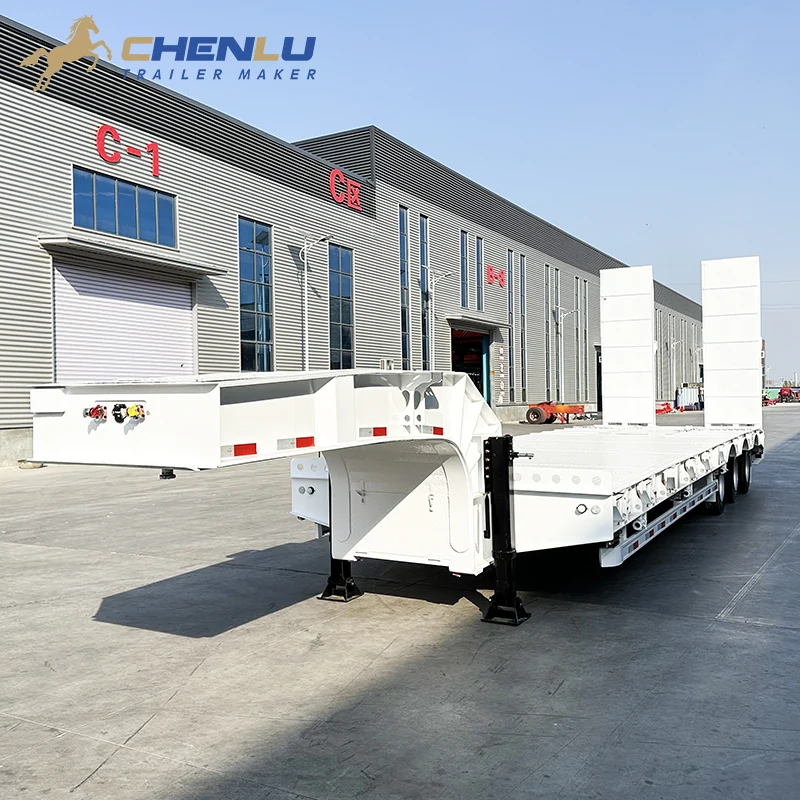
A CHENLU configuration file should make the decision traceable: which machine it covers, its complete transport mass, support area and centre of gravity, the intended tractor and the route basis. This is how “55 tons” changes from a model class into a verifiable engineering condition.
Usable lowboy trailer weight capacity is governed by the first limit reached. The capacity label starts the screening process. Complete machine mass, support length and centre of gravity determine how the load enters the structure. The kingpin, axle group and tractor determine how the combination carries it. The route and permits determine whether that combination can operate. Only when these conditions appear in the same configuration file do 35-ton, 55-ton and 80-ton labels have a defined meaning.
Frequently Asked Questions
Can a 55-ton lowboy carry every machine below 55 t?
Machine mass alone is not enough. The 55 t unit and rating definition, concentrated-load length, complete transport mass, track or tyre support, centre of gravity, kingpin and axle-group loads, tractor and route conditions all have to fit.
Does a four-axle lowboy always carry more than a three-axle trailer?
No. Four axles may distribute more rear reaction under suitable conditions, but usable payload still depends on the frame, kingpin, suspension, tyres, brakes, tractor, tare, spacing and destination rules. Compare the complete rating file, not only the axle count.
Can individual axle ratings be added to obtain lowboy payload?
No. The trailer axles carry only part of the combination mass; another part passes through the kingpin to the tractor. Trailer tare also uses axle capacity. Frame concentration, tyres, suspension, kingpin and route conditions remain separate limits.
Do attachments and fuel count towards transport mass?
Use the actual transport condition. If an attachment travels separately, remove it explicitly from this vehicle's load. If the bucket, counterweight, fuel or tools stay with the machine, the base-model unladen figure is not the transport mass.
Does moving the machine on the deck change the load check?
Yes. It changes the share between the kingpin and rear axle group and may place the tracks or tyres over a different deck area. Recheck the static reactions, local support and vehicle geometry after the move.
How can configuration start when the machine centre of gravity is unavailable?
First request the transport-condition centre of gravity, axle loads or track reactions from the equipment manufacturer. Approved weighing results can also establish the input. Sensitivity calculations may compare several assumed positions, but one assumed result is not a final capacity decision.
What is the difference between trailer capacity and a road mass limit?
Trailer capacity describes the structure and components under stated conditions. Road limits depend on destination rules, axle groups, spacing, combination mass, bridges and permits. A structurally acceptable combination may still require a different arrangement, a permit or another route.
Scope and References
This article explains lowbed capacity relationships. It does not replace a model rating file, structural calculation, equipment manufacturer's data, weighing record, tractor manual, route survey or destination permit. The 50 t machine, 4 m and 8 m support lengths, 10 m equivalent support span and 6 m and 7 m centre-of-gravity positions are teaching examples, not fixed CHENLU parameters. External manufacturers' concentration lengths and ratings show how the industry defines rating conditions; they are not CHENLU capacity claims.
- CHENLU: Low Bed Trailers — product-family scope and configuration entry point.
- CHENLU: Lowboy Trailer Dimensions — deck height, ground clearance, loaded height and dimensional relationships.
- CHENLU: When Is a Detachable Gooseneck Lowbed Needed? — front loading, working space and detachable-gooseneck conditions.
- U.S. Government Publishing Office: 49 CFR § 571.3 — North American definitions of GVWR and GAWR.
- Talbert Manufacturing: Trailer Operator's Manual — GVWR, GAWR, load distribution, coupling and tractor matching.
- XL Specialized Trailers: Distributed and Concentrated XL Lowboy Loading Guidelines — distributed loads, defined concentration length, support width and point-load risk.
- Talbert Manufacturing: 60CC/55SA-LD Spread Axle Lowboy Series — an example of capacity tied to rigid load-base length, swing radius and axle arrangement.
- South Africa eTenders: Lowbed Specification — a regional project example that separates design capacity, kingpin, axle and suspension requirements.
MORE FROM OUR NEWSROOM
Related News
Lowboy vs RGN Trailer: Structural and Loading Differences Between Fixed and Removable Gooseneck Lowbeds
Compare Lowboy vs RGN trailer designs, including fixed and removable goosenecks, loading direction, equipment clearance, site space and maintenance.
Read News ↗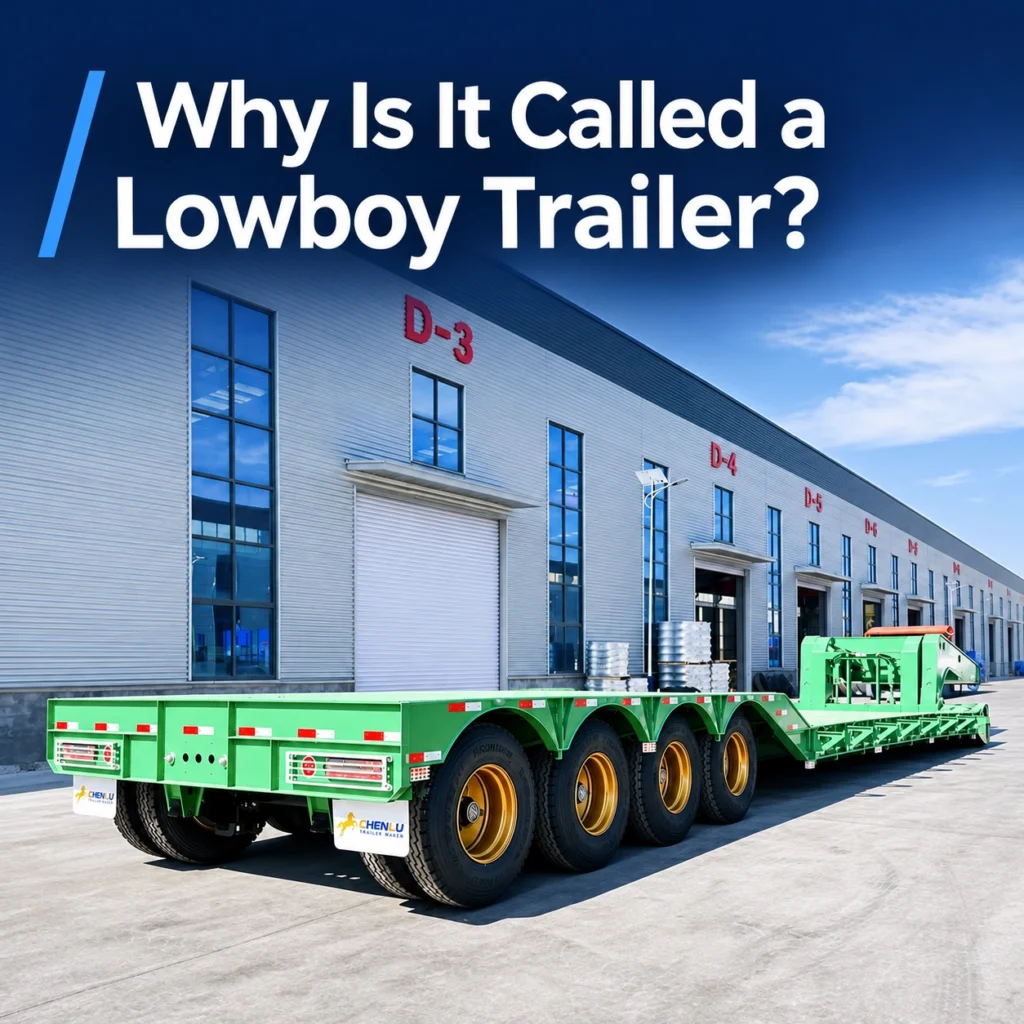
Why are low-platform semi-trailers called “Lowboys”? What is the difference between a “Lowboy,” a “Low Bed,” and a “Low Loader”?
Why is it called a lowboy trailer? Learn how lowboy, low bed, low loader, cama baja and regional terms relate to deck and gooseneck design.
Read News ↗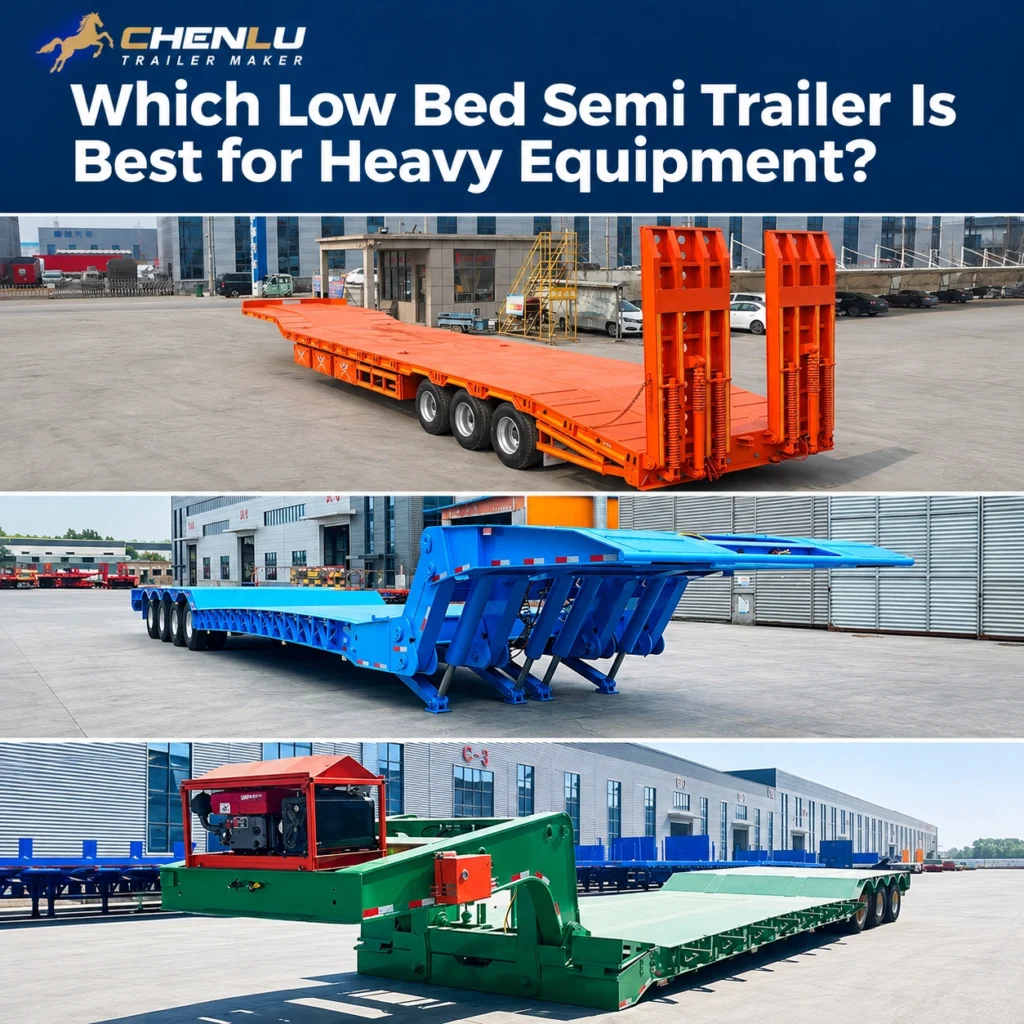
Which Low Bed Semi Trailer Is Best for Heavy Equipment? Fixed, Folding and Detachable Goosenecks
Compare fixed, folding and detachable gooseneck low bed semi trailers for heavy equipment, including loading access, CHENLU dimensions, axle layouts, tractor matching and route checks.
Read News ↗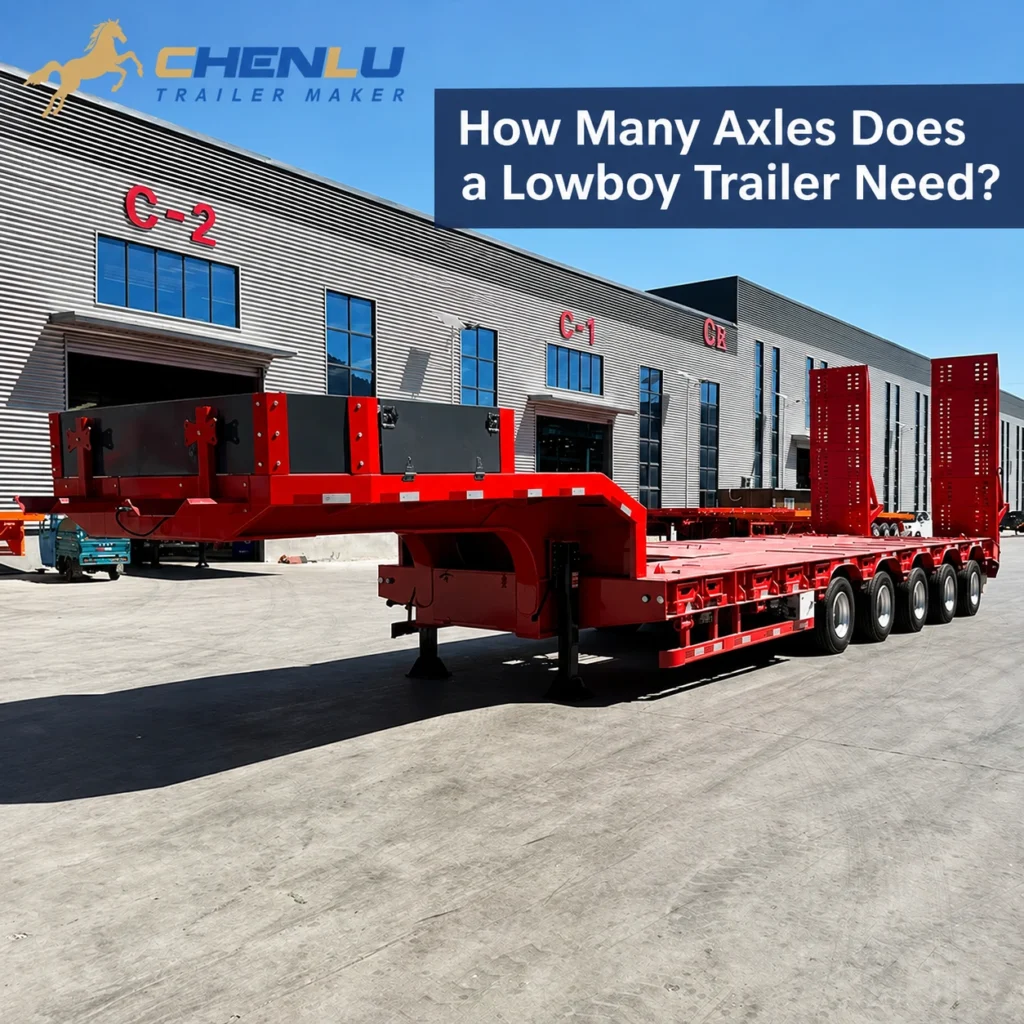
How Many Axles Does a Lowboy Trailer Need? 2-, 3-, 4- and Multi-Axle Configurations
A lowboy trailer may have 2, 3, 4 or more axles. Compare low bed semi trailer axle configurations by cargo weight, axle spacing, tractor and route limits.
Read News ↗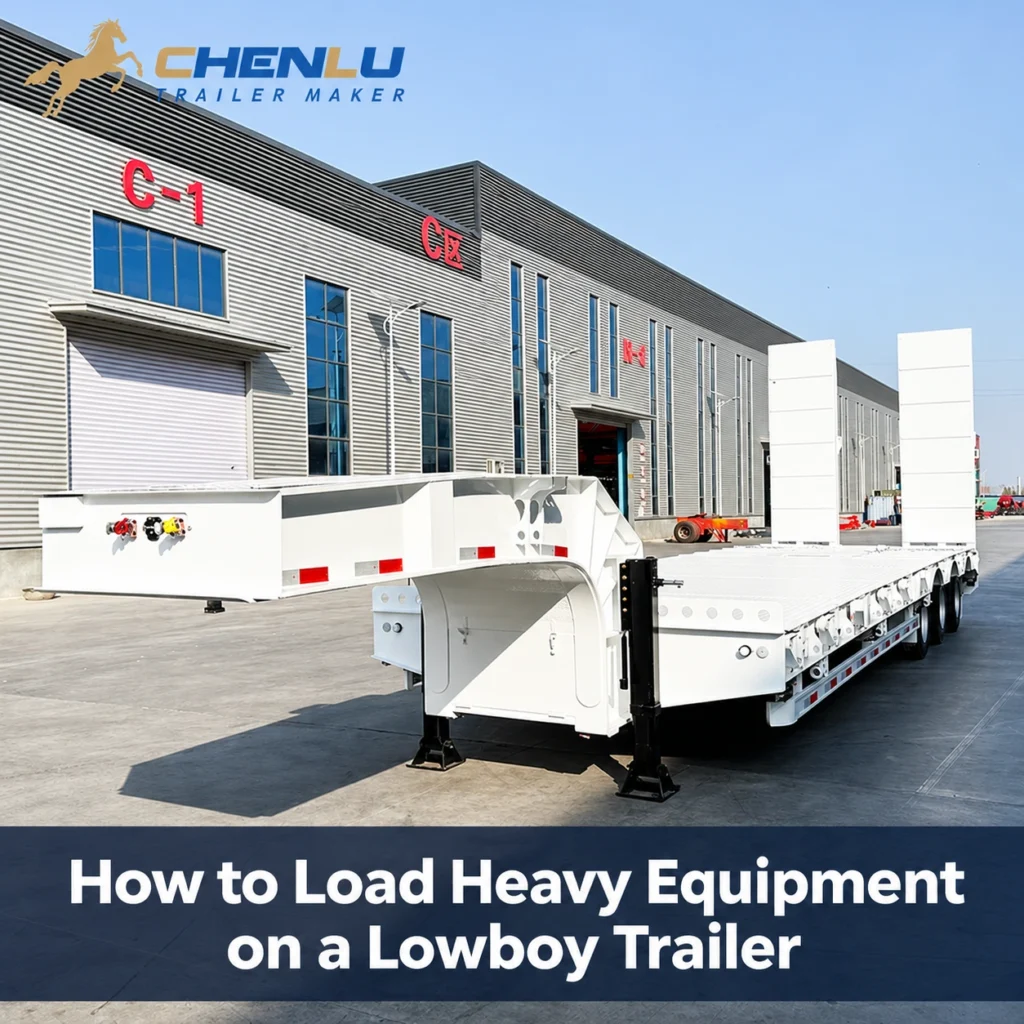
How to Load Heavy Equipment on a Lowboy Trailer: Rear Ramps, Folding Goosenecks and RGN
This lowboy trailer loading guide compares rear ramps, folding and detachable goosenecks for heavy equipment, including loading angle and ground clearance.
Read News ↗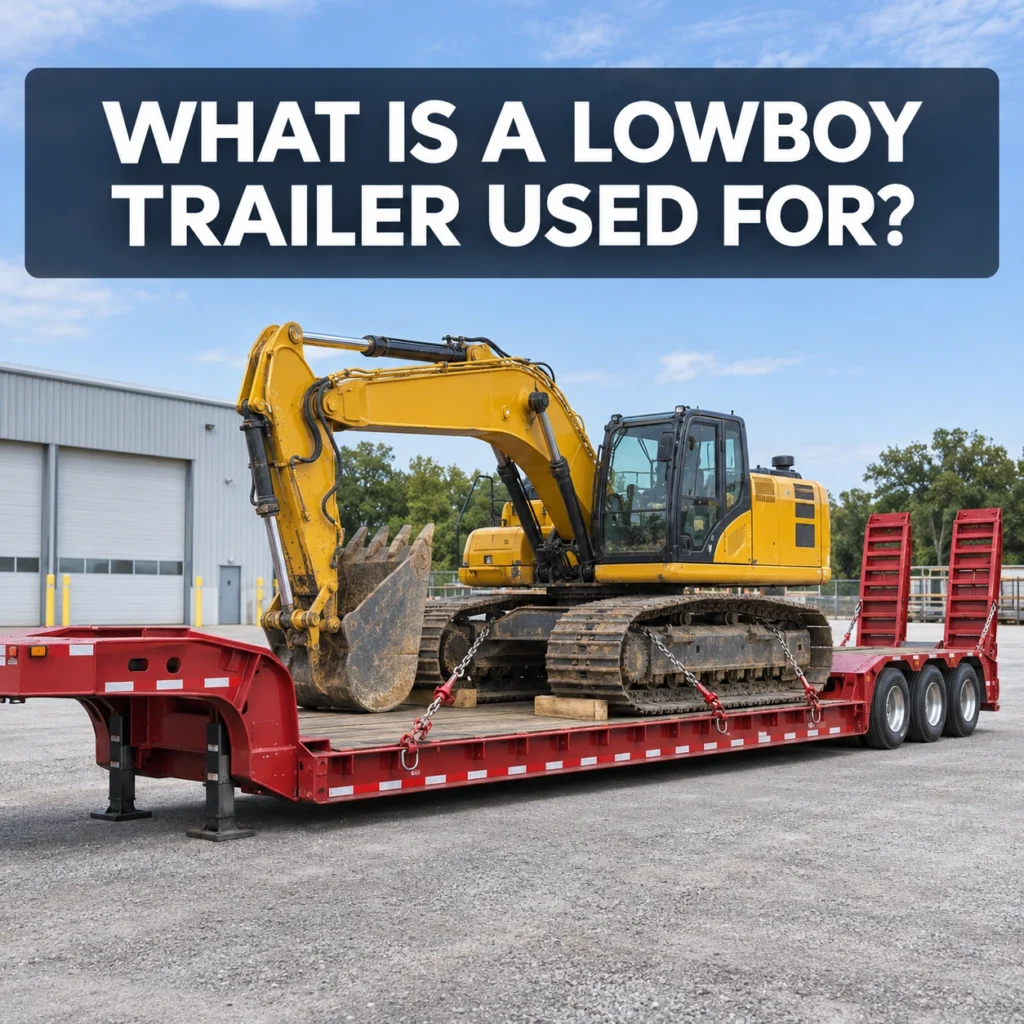
What Is a Lowboy Trailer Used For? Equipment, Loading Methods and Trailer Selection
What is a lowboy trailer used for? See how a heavy equipment lowboy trailer carries excavators, bulldozers, loaders and construction machinery.
Read News ↗