
Why Is It Called a Lowboy Trailer? Lowboy, Low Bed and Low Loader Explained
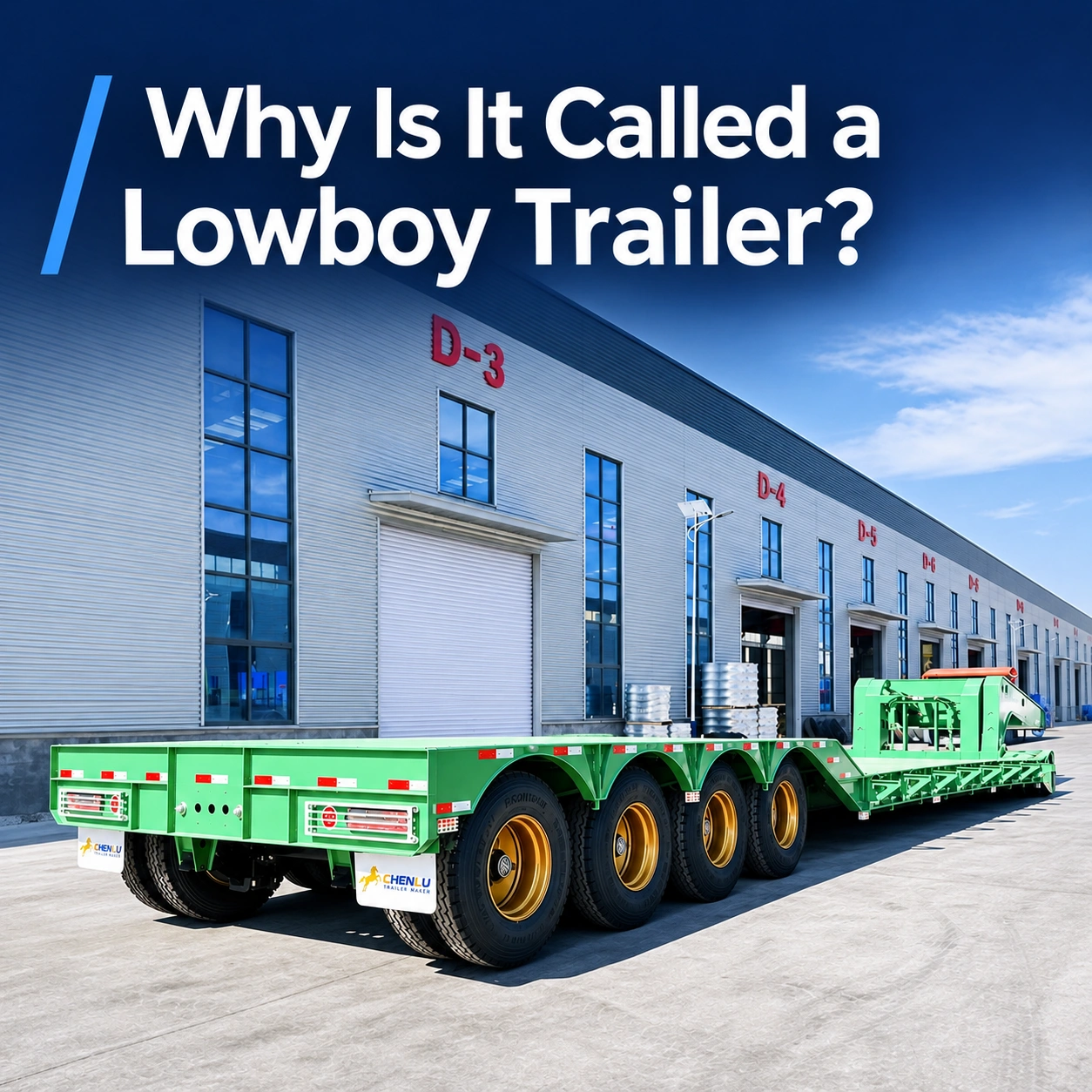
The name lowboy trailer grew out of the trailer's shape. Early examples appeared in North American heavy-haul work during the 1920s. They used a raised gooseneck at the tractor end, a low centre deck and a rear section above the wheels. The main load-carrying area sat visibly lower than an ordinary flatbed, which is the feature the name “lowboy” came to describe.
Early lowboys had fixed or riveted goosenecks and were loaded from the rear. Detachable-gooseneck designs became established later and allowed machinery to enter from the front. A 1959 Western Construction advertisement for a Loadmaster “Lo-Boy” also shows that the name was already used commercially for machinery trailers by the end of that decade. Historical accounts do not identify one universally accepted inventor of the word, so it is more accurate to treat “lowboy” as a trade name that developed around the low-deck form.
The same kind of semi-trailer now appears under several regional names. North American documents commonly use lowboy; international manufacturers often use low bed or lowbed; and British equipment literature often uses low loader. In the Gulf, Central Asia, Turkey and South America, local terms are also common. These words identify a family of low-deck transport trailers, but they do not by themselves tell us whether the gooseneck is fixed, folding or removable.
Why Is It Called a Lowboy Trailer?
A lowboy semi-trailer carries its main deck below the level of the tractor connection and the rear axle platform. Viewed from the side, the trailer drops behind the gooseneck, runs through a low centre section and rises again above the rear running gear. The name refers to this low position of the load deck.
The word “boy” is not the name of a component and does not describe the trailer's capacity. It belongs to the established North American trade term. A trailer is not a lowboy merely because it has small tyres or a shallow frame; it needs the lowered cargo-carrying profile associated with heavy-equipment transport.
What Does “Low” Mean on a Lowboy or Low Bed Trailer?
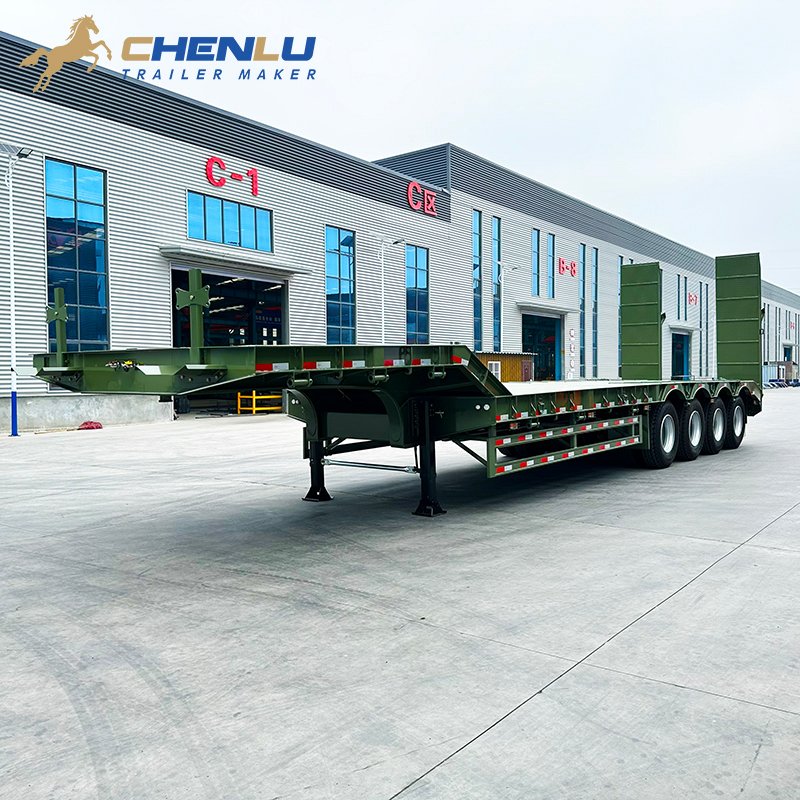
“Low” refers mainly to the deck on which the machine is supported. It does not mean that every part of the trailer is at the same height. A conventional lowboy normally has three recognisable zones:
- the gooseneck and kingpin area above the tractor's fifth wheel;
- the lowered main load deck; and
- the raised rear platform above the axle group.
This stepped profile allows an excavator, bulldozer, loader or other tall machine to sit closer to the road than it would on a continuous flatbed. The practical result is a lower loaded height, not simply a lower empty trailer. The machine's transport height, its support position and the real deck height must still be considered together.
A low deck also reduces clearance beneath the trailer. Railway crossings, speed humps, uneven site entrances and steep changes in road grade can therefore matter at the underside as much as overhead clearance matters at the top of the load. The dimensional terms are explained in more detail in What Are the Dimensions of a Low Bed Semi Trailer?
Lowboy, Low Bed and Low Loader: Are They the Same?
They often refer to the same broad family of low-deck semi-trailers, but their use changes with the market. The name alone is not enough to identify the loading system or the gooseneck structure.
| Market or language | Common term | What the term usually indicates |
|---|---|---|
| North America | Lowboy trailer | A low-deck heavy-equipment semi-trailer; it may have a fixed, folding or removable gooseneck. |
| International export market | Low bed trailer, lowbed trailer | The general product family used for low-deck machinery transport. |
| United Kingdom | Low loader | A broad British term for low-loading machinery transport equipment. |
| Gulf and Arabic-speaking markets | "لوبد", "اللوبد", "مقطورة منخفضة السطح" | Regional names used for low-deck equipment trailers. |
| Turkey | "Lowbed yarı römork", "Alçak şasi yarı römork", "Lowbed dorse" | Names found in specifications, catalogues and commercial listings. |
| Central Asia and Russian-language trade | "Низкорамный полуприцеп", "Низкорамный трал", "Полуприцеп-тяжеловоз", "Трал" | Terms used for low-frame semi-trailers and heavy-equipment transport trailers. |
| Spanish-speaking South America | "Cama baja", "Semirremolque cama baja", "Semirremolque de plataforma baja", "Remolque lowboy" | Common names for low-deck trailers used for machinery and oversized loads. |
| Brazil | "Semirreboque prancha", "Carreta prancha", "Prancha rebaixada", "Semirreboque prancha rebaixada" | Portuguese trade terms for platform and lowered-platform transport trailers. |
Gulf and Arabic-speaking markets
English-language quotations for Saudi Arabia, the United Arab Emirates and neighbouring markets often use lowbed or low bed trailer. Arabic transport pages may use “لوبد” or “اللوبد”, while formal descriptions may use “مقطورة منخفضة السطح”. The Saudi transport page cited below uses “اللوبد” for multi-axle low-deck trailers carrying heavy equipment. In a bilingual product document, “مقطورة منخفضة السطح (لوبد)” can be used while the structural description remains separate.
Turkey
Turkish specifications and product catalogues use “Lowbed yarı römork” and “Alçak şasi yarı römork”. “Lowbed dorse” also appears in commercial use. A Turkish government procurement specification places the first two expressions together, which shows how the imported product name and the Turkish technical wording coexist. The document still defines the axle class and gooseneck arrangement separately.
Central Asia
Russian remains widely used in equipment trade across Kazakhstan and other Central Asian markets. Listings may use “Низкорамный полуприцеп”, “Низкорамный трал”, “Полуприцеп-тяжеловоз” or the shorter “Трал”. None of these expressions confirms the neck mechanism. When that detail matters, the description can be expanded to “низкорамный полуприцеп с фиксированным гусаком”, “низкорамный полуприцеп со съемным гусаком” or “раздвижной низкорамный полуприцеп”.
Spanish-speaking South America
“Cama baja” is common in Chile and other Spanish-speaking South American markets. More complete product names include “Semirremolque cama baja” and “Semirremolque de plataforma baja”. A removable-neck configuration may be written as “Semirremolque de plataforma baja con cuello desmontable” or “Semirremolque Cama Baja con Cuello Desmontable”. The local name identifies the low-deck family; the added words identify the structure.
Brazil
Brazilian material often uses “Semirreboque prancha”, “Carreta prancha” and “Prancha rebaixada”. The ANTT equipment manual includes “Semirreboque Prancha Rebaixada (Prancha Baixa / Lowboy)”, linking a Brazilian technical description with the North American term. As elsewhere, the name should be followed by the actual deck and gooseneck arrangement when a precise specification is required.
Why Can Two Lowboy Trailers Have Different Structures?
Lowboy, low bed and low loader describe the position and purpose of the deck. They do not define how machinery enters the deck. That is why two quotations can use the same product name while showing different front structures and different loading routes.
Fixed-gooseneck lowboy
The gooseneck remains fixed to the main frame. Self-propelled equipment normally loads from the rear over ramps, while non-running cargo may be placed by lifting equipment. The loading check centres on ramp width, track or tyre spacing, ground clearance and the transition from the ramp to the deck. See the CHENLU four-axle fixed-gooseneck lowbed.
Folding-gooseneck lowboy
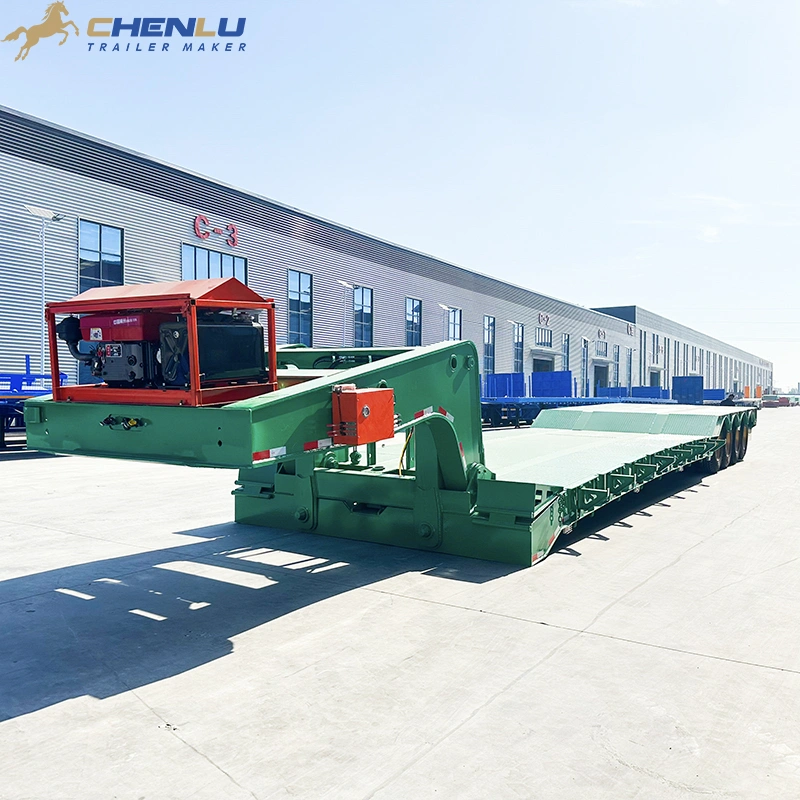
The front gooseneck changes position but stays connected to the trailer. Its hinged and powered assembly forms a front loading path. This is not an RGN: the difference is whether the gooseneck remains attached while the trailer changes between loading and transport positions. See the CHENLU four-axle folding-gooseneck lowbed.
Removable-gooseneck lowboy or RGN
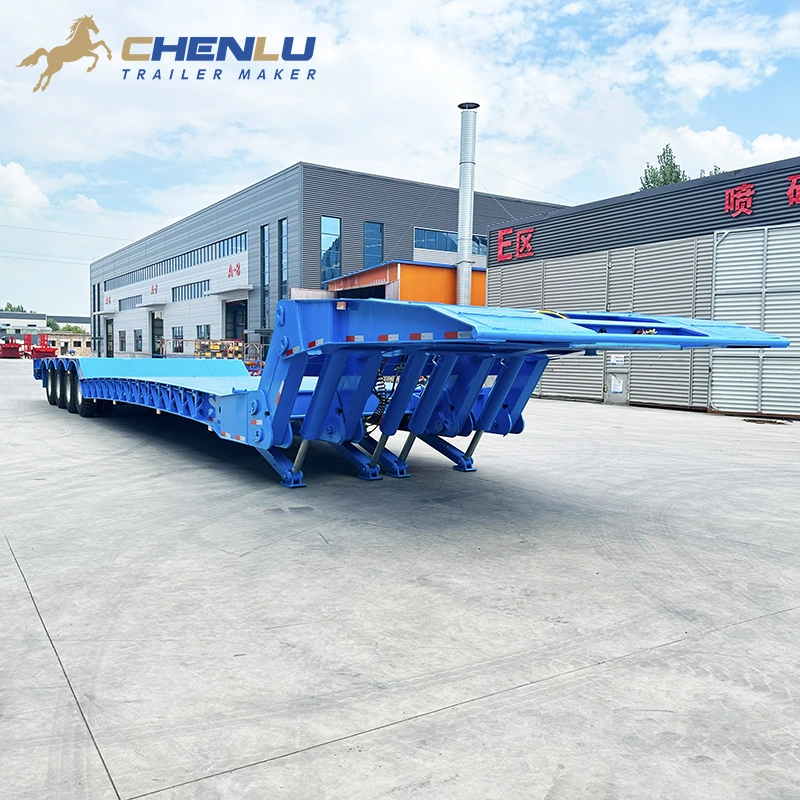
RGN means removable gooseneck. The neck separates from the main deck so the front of the deck can be placed in its loading position. The machine enters from the front, and the neck is reconnected before transport. “RGN lowboy” therefore describes a lowboy with a removable neck; it does not mean that every lowboy is an RGN. See the CHENLU four-axle removable-gooseneck lowbed.
Double-drop and extendable lowboys
Double drop describes the side profile: the deck drops behind the gooseneck and rises again before the rear wheels. It does not tell us whether the gooseneck is fixed or removable. Extendable describes a section that changes length. The extending part may be the main deck or the gooseneck, and the working load conditions can change with the extended position. CHENLU lists these separately in its extendable lowbed trailer range.
A fuller comparison of these mechanisms is available in What Types of Low Bed Semi Trailers Are There?
How CHENLU Names These Low Bed Semi Trailers
CHENLU uses Low Bed Trailers as the main product family. The next part of the name identifies the loading structure. This keeps the deck type and the gooseneck type in the same description without treating regional names as separate vehicles.
| CHENLU example | Loading route | Clear international description |
|---|---|---|
| CHENLU four-axle fixed-gooseneck lowbed | Rear loading over ramps | Fixed-Gooseneck Lowboy / Fixed-Gooseneck Low Bed Semi-Trailer |
| CHENLU four-axle folding-gooseneck lowbed | Front loading over a folding neck | Folding-Gooseneck Lowboy / Folding-Gooseneck Low Bed Semi-Trailer |
| CHENLU four-axle removable-gooseneck lowbed | Front loading after neck removal | RGN Lowboy / Removable-Gooseneck Low Bed Semi-Trailer |
The same three structures can be presented with local market wording. In Arabic material, the regional name may appear as “لوبد”; in Turkish material, as “Lowbed yarı römork”; in Russian-language Central Asian material, as “Низкорамный полуприцеп”; in Spanish-speaking South America, as “Semirremolque cama baja”; and in Brazil, as “Semirreboque prancha rebaixada”. The structural term should remain beside the local name so that the loading method is not lost.
What the Name Can—and Cannot—Tell You
A regional name is useful because it places the trailer in the right product family. If a listing says lowboy, low bed, low loader, “cama baja” or “низкорамный полуприцеп”, it is reasonable to expect a load deck positioned below an ordinary flatbed. That is where the name has real value.
The name stops being sufficient when the details of the job begin. It does not confirm the entry direction, gooseneck movement, usable deck length, deck height, axle arrangement or rated load. Those points belong in the model description and the agreed technical specification. A clear quotation therefore moves from the general name to the structure: fixed, folding, removable, double drop or extendable.
This is also why one term should not be used to judge price by itself. A fixed-gooseneck trailer with rear ramps and a hydraulic removable-gooseneck trailer may both be sold as lowboys, but they do not contain the same mechanism and do not provide the same loading process.
Frequently Asked Questions
Why is it called a lowboy trailer?
It is called a lowboy because the main cargo deck sits lower than the deck of an ordinary flatbed. The term developed in North American heavy-haul use and became an established trade name.
What does lowboy mean?
Lowboy means a low-deck trailer used mainly for heavy or tall equipment. It describes the deck profile, not one axle count, payload or gooseneck mechanism.
Is a lowboy the same as a low bed trailer?
In many contexts, yes. Lowboy is more common in North America, while low bed or lowbed is common in international manufacturing and export markets. The structure must still be checked separately.
Is a low loader different from a lowboy?
Low loader is the common British term and can cover a broad range of low-loading machinery trailers. The actual deck and gooseneck design determines whether a particular low loader matches a particular lowboy.
What is a lowboy called in the Middle East?
English quotations often use lowbed or low bed trailer. Arabic pages may use “لوبد”, “اللوبد” or “مقطورة منخفضة السطح”.
What is a lowboy called in South America?
Spanish-speaking markets commonly use “Cama baja” or “Semirremolque cama baja”. Brazilian Portuguese commonly uses “Semirreboque prancha”, “Carreta prancha” or “Prancha rebaixada”.
What is a lowboy called in Central Asia?
Russian-language trade commonly uses “Низкорамный полуприцеп”, “Низкорамный трал”, “Полуприцеп-тяжеловоз” or “Трал”.
What is a lowboy called in Turkey?
Common Turkish terms include “Lowbed yarı römork”, “Alçak şasi yarı römork” and “Lowbed dorse”.
Is an RGN the same as a lowboy?
An RGN is one type of lowboy or low bed trailer. RGN identifies a removable gooseneck; lowboy identifies the low-deck trailer family. Not every lowboy has a removable neck.
Are all lowboy trailers double drop?
No. Double drop describes a particular raised-low-raised side profile. The term lowboy is also used more broadly for other low-deck heavy-equipment trailer arrangements.
Is a folding gooseneck an RGN?
No. A folding gooseneck changes position while remaining attached to the main frame. An RGN separates from the main deck.
Should “low bed” or “lowbed” be used?
Both spellings are widely used. “Low bed” is common in general English, while “lowbed” often appears in product names and catalogues. Consistency within one document is more important than treating them as different vehicles.
Conclusion
Lowboy is an old North American name for a trailer whose main cargo deck sits low between the raised front connection and the rear running gear. Low bed and low loader describe the same general idea in other markets, while names such as “لوبد”, “Низкорамный полуприцеп”, “Cama baja” and “Prancha rebaixada” developed through local language and trade practice.
The words change from one market to another, but the trailer still has to be understood through its structure. A fixed neck, a folding neck and a removable neck create different loading routes even when all three trailers are called lowboys. Once the regional name has identified the product family, the gooseneck, deck and loading method provide the description that actually matters.
References
- Overbilt Trailer Company: The History of Lowboys.
- Western Construction, January 1959: Loadmaster “Lo-Boy” advertisement.
- Masar, Saudi Arabia: “اللوبد” heavy-equipment transport service.
- Turkish State Supply Office: Low Bed Semi-Trailer Technical Specification.
- Semiturk: “Lowbed Yarı Römork” product classification.
- Flagma Kazakhstan: Russian-language low-frame trailer listings.
- Transportes Mavesa, Chile: “Camas bajas” and “lowboy” terminology.
- SYC Maquinarias, Chile: “Cama baja” equipment listing.
- Brazilian National Land Transport Agency: Equipment Reference Cost Manual, Volume 3.
- CHENLU Low Bed Trailers.
- CHENLU Removable Gooseneck Trailers.
- CHENLU Extendable Lowbed Trailers.
MORE FROM OUR NEWSROOM
Related News
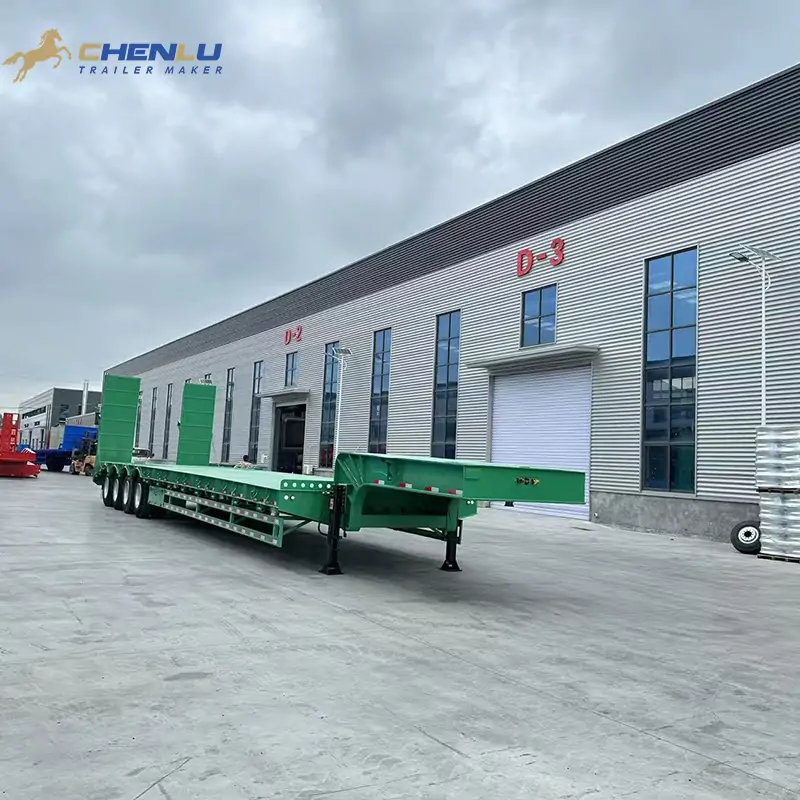
Lowboy vs RGN Trailer: Structural and Loading Differences Between Fixed and Removable Gooseneck Lowbeds
Compare Lowboy vs RGN trailer designs, including fixed and removable goosenecks, loading direction, equipment clearance, site space and maintenance.
Read News ↗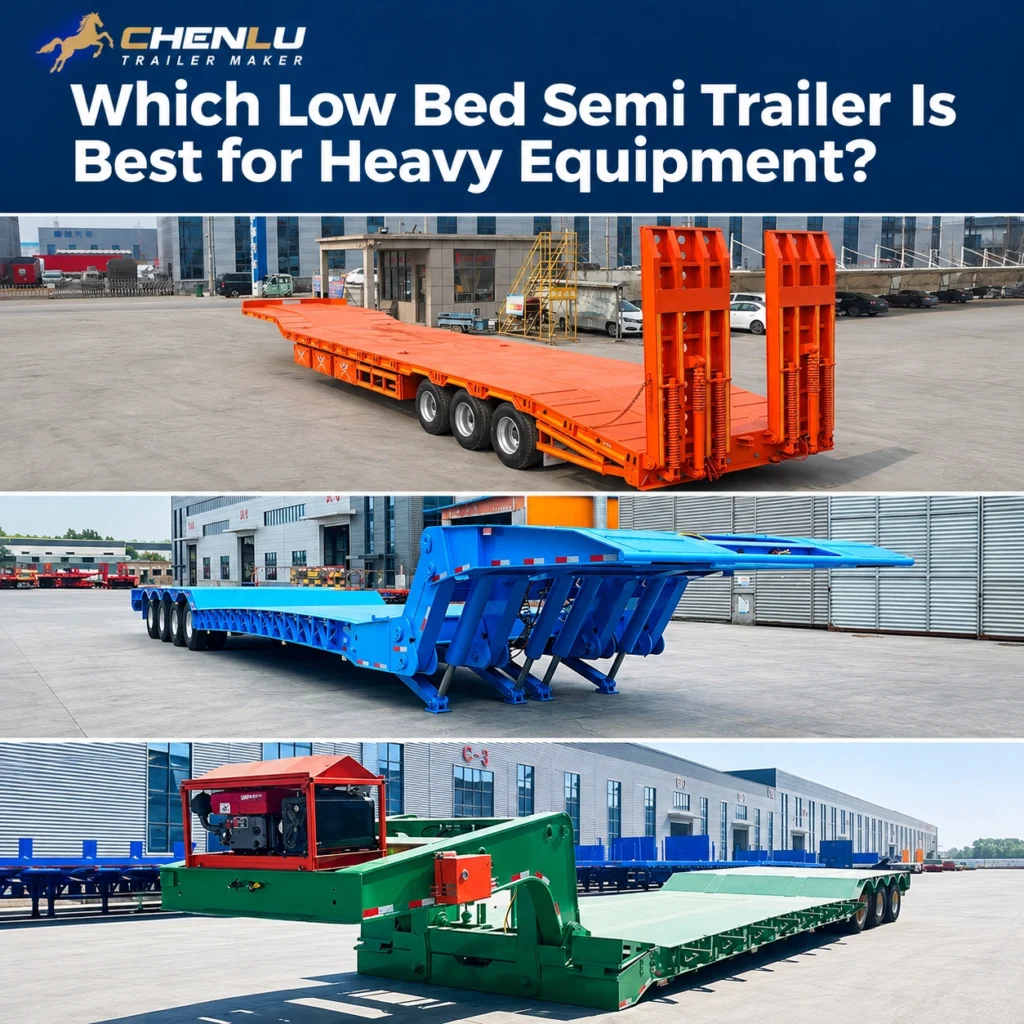
Which Low Bed Semi Trailer Is Best for Heavy Equipment? Fixed, Folding and Detachable Goosenecks
Compare fixed, folding and detachable gooseneck low bed semi trailers for heavy equipment, including loading access, CHENLU dimensions, axle layouts, tractor matching and route checks.
Read News ↗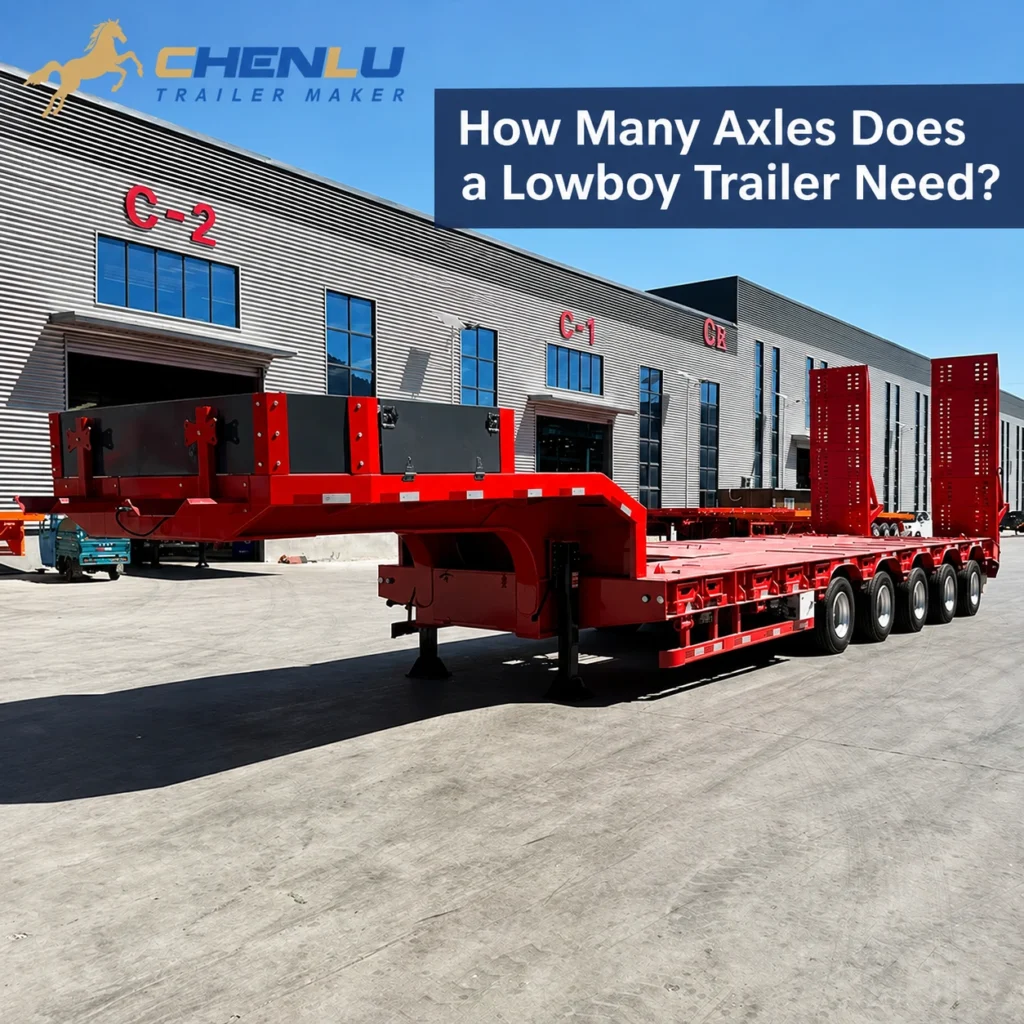
How Many Axles Does a Lowboy Trailer Need? 2-, 3-, 4- and Multi-Axle Configurations
A lowboy trailer may have 2, 3, 4 or more axles. Compare low bed semi trailer axle configurations by cargo weight, axle spacing, tractor and route limits.
Read News ↗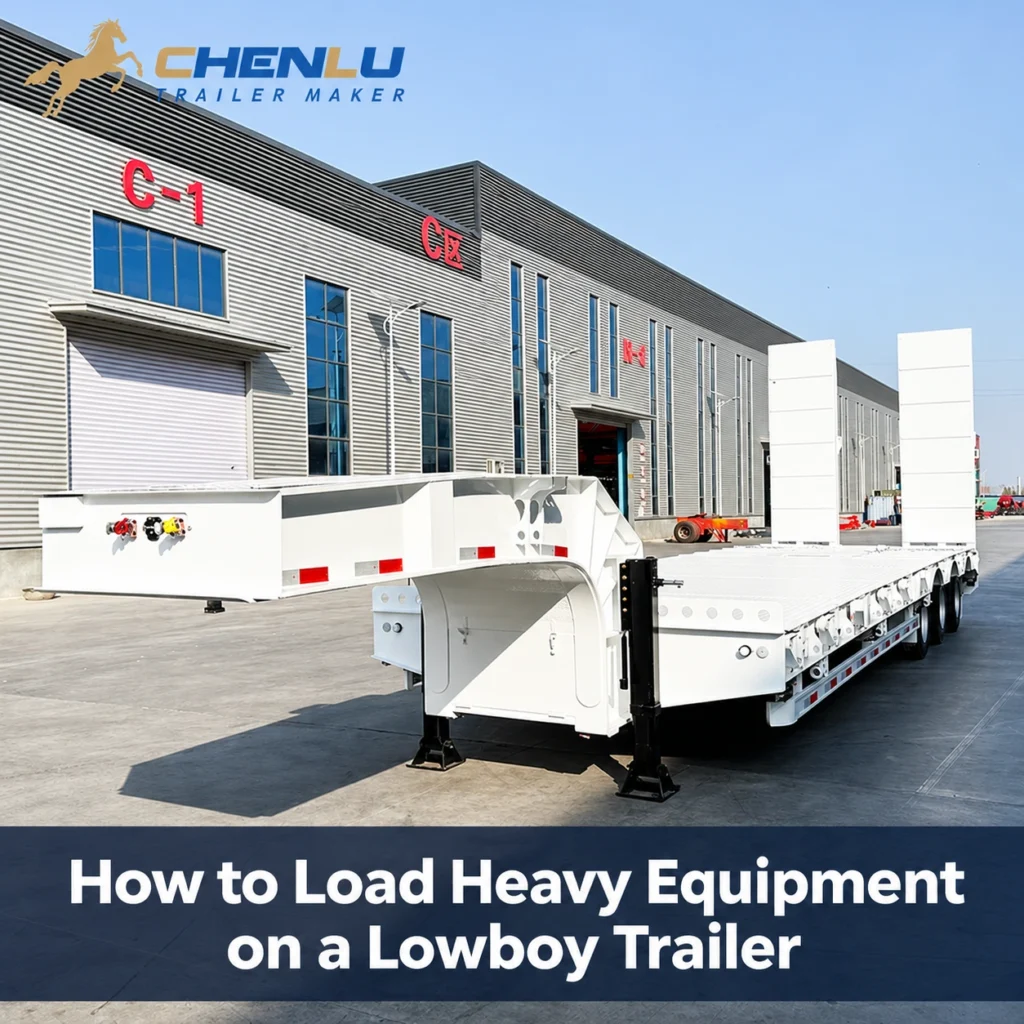
How to Load Heavy Equipment on a Lowboy Trailer: Rear Ramps, Folding Goosenecks and RGN
This lowboy trailer loading guide compares rear ramps, folding and detachable goosenecks for heavy equipment, including loading angle and ground clearance.
Read News ↗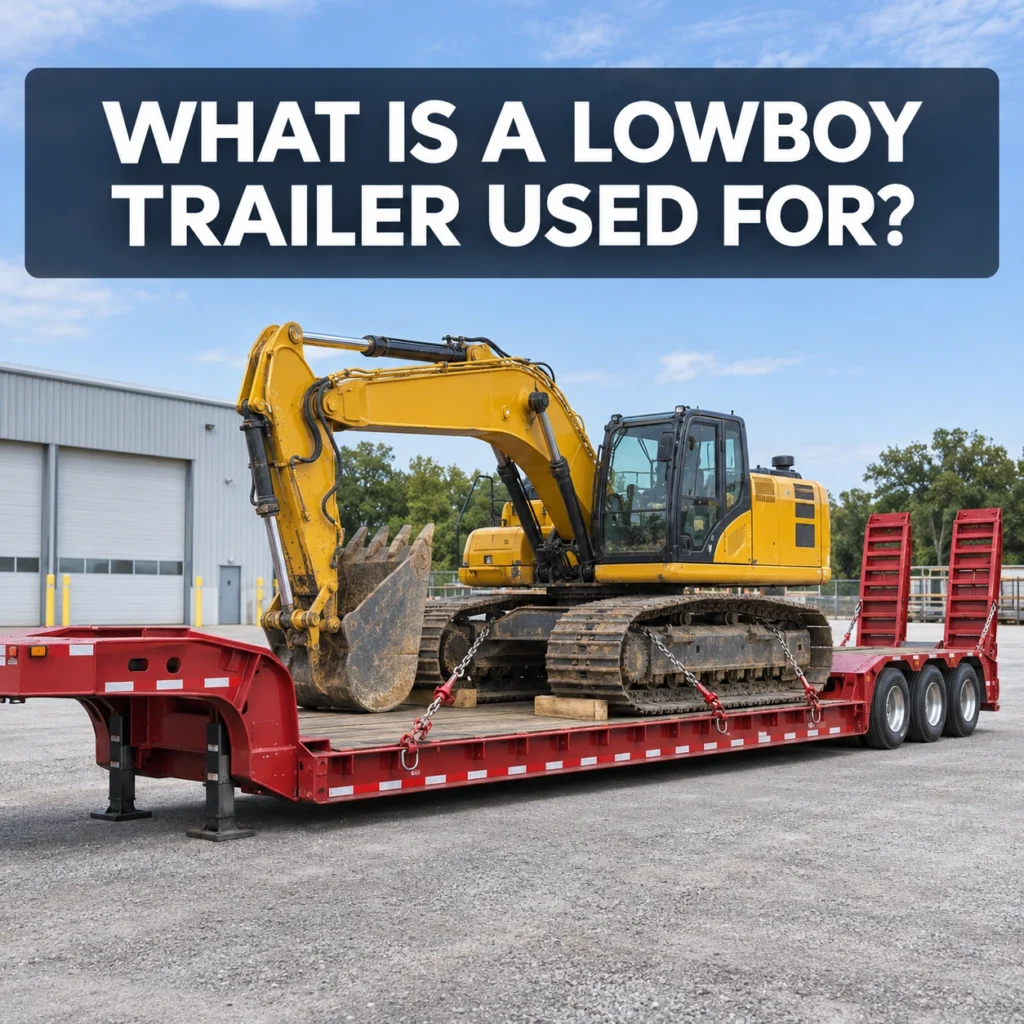
What Is a Lowboy Trailer Used For? Equipment, Loading Methods and Trailer Selection
What is a lowboy trailer used for? See how a heavy equipment lowboy trailer carries excavators, bulldozers, loaders and construction machinery.
Read News ↗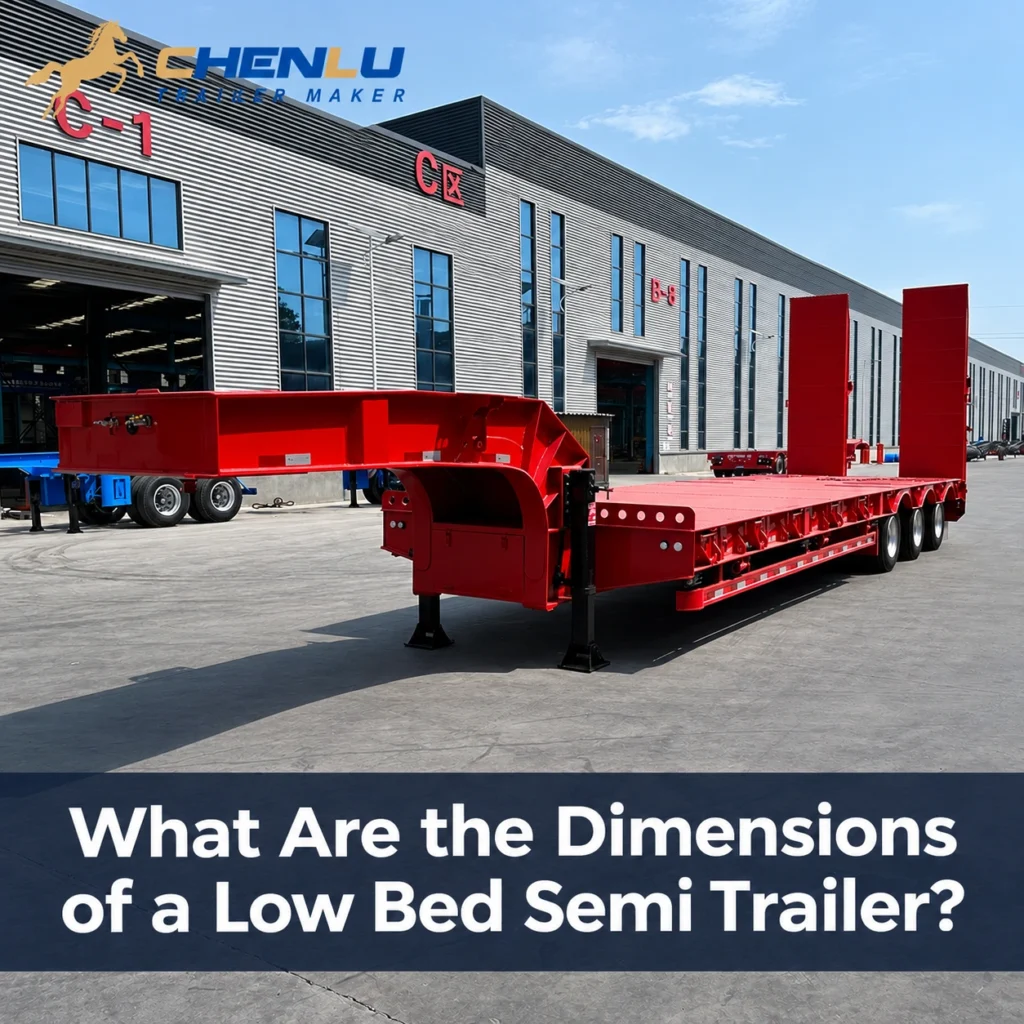
What Are the Dimensions of a Low Bed Semi Trailer? Overall Length, Deck Length, Width and Deck Height
Compare low bed semi trailer length, usable deck length, width and deck height using CHENLU fixed, folding, detachable and extendable gooseneck configurations.
Read News ↗