
How Many Axles Does a Lowboy Trailer Need? 2-, 3-, 4- and Multi-Axle Configurations
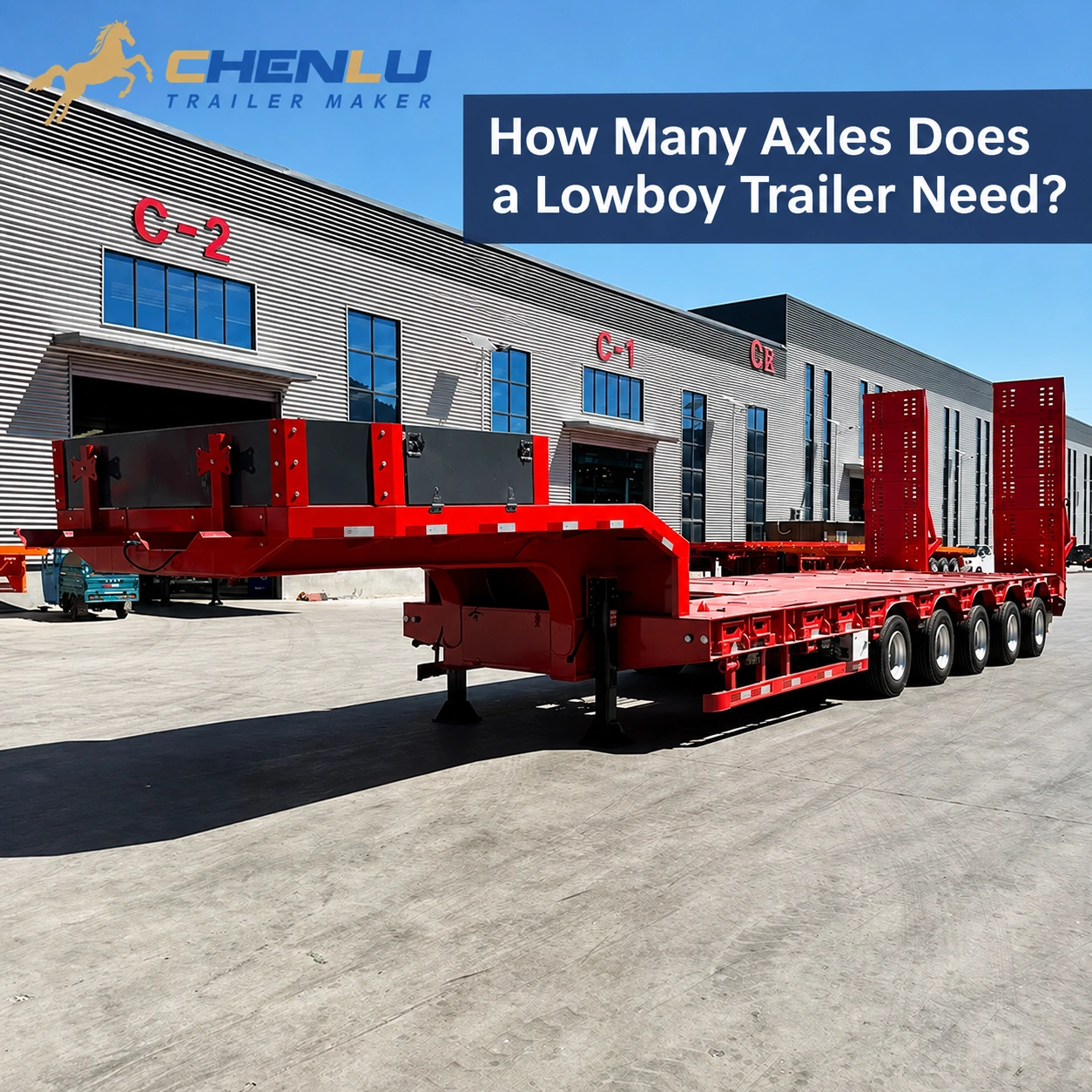
A lowboy trailer does not have one standard axle count. Two-, three-, four- and multi-axle configurations are selected from the machine's transport weight, centre of gravity and support positions, trailer tare, kingpin load, axle and tyre ratings, tractor conditions and the actual transport route.
Adding axles creates more load-carrying and load-distribution positions in the rear group. It does not mean that the vehicle can carry the same amount of extra cargo on every road. Extra axles also add trailer tare and more tyres, suspension parts and brakes. They may create a longer axle group and greater lateral tyre forces during a turn. Actual turning behaviour depends on axle spacing, fixed or steering axles and the complete vehicle geometry.
The CHENLU low bed trailer range includes two-, three-, four- and multi-axle models. The axle count and load data on each product page apply only to that frame, suspension, tyre and load plan. A load figure from one model cannot be transferred to another.
How Do You Choose a 2-, 3-, 4- or Multi-Axle Lowboy?
| Axle configuration | Main characteristics | When to evaluate it | Main checks |
|---|---|---|---|
| Two axles | A shorter axle group with fewer tyres, brakes and suspension parts. Trailer tare can be easier to control. | The calculated rear-group load is within the two axles, suspension, tyres and route limits. | Kingpin load, single- and grouped-axle limits, local deck loads and tractor matching. |
| Three axles | Can form a compact lowboy layout that balances rear-group capacity, frame length and turning. | The loaded machine produces acceptable kingpin and three-axle-group loads for the vehicle and route. | Adjacent axle spacing, suspension equalisation, tyre loads and the actual rear-group reaction. |
| Four axles | Provides more rear load positions for a higher axle-group requirement or a different distribution. | A three-axle design cannot meet component or route axle-load conditions, and the four-axle layout can use the destination roads. | Added tare, axle-group length, tyre scrub, manoeuvring space and braking equipment. |
| Five or more axles | Distributes load through more axles and may combine steering axles, lift axles or a special suspension. | A large or unusual machine needs further axle-load distribution, with the tractor, route and frame layout already defined. | Steering control, lift-axle logic, suspension equalisation, tyre wear, maintenance and road permits. |
If a two- or three-axle layout already meets the expected axle-group load, tractor and route conditions, there is no reason to choose four axles only to increase the axle count. When fewer axles cannot meet the component or road limits, a four- or multi-axle design can be assessed together with its added tare, axle spacing, steering needs and maintenance requirements.
This does not mean that every project must be tested from two axles upwards. When the machine weight, support position or route already points to a specific multi-axle layout, that configuration can be evaluated directly.
Which Axles Are Counted in a Lowboy Trailer Description?
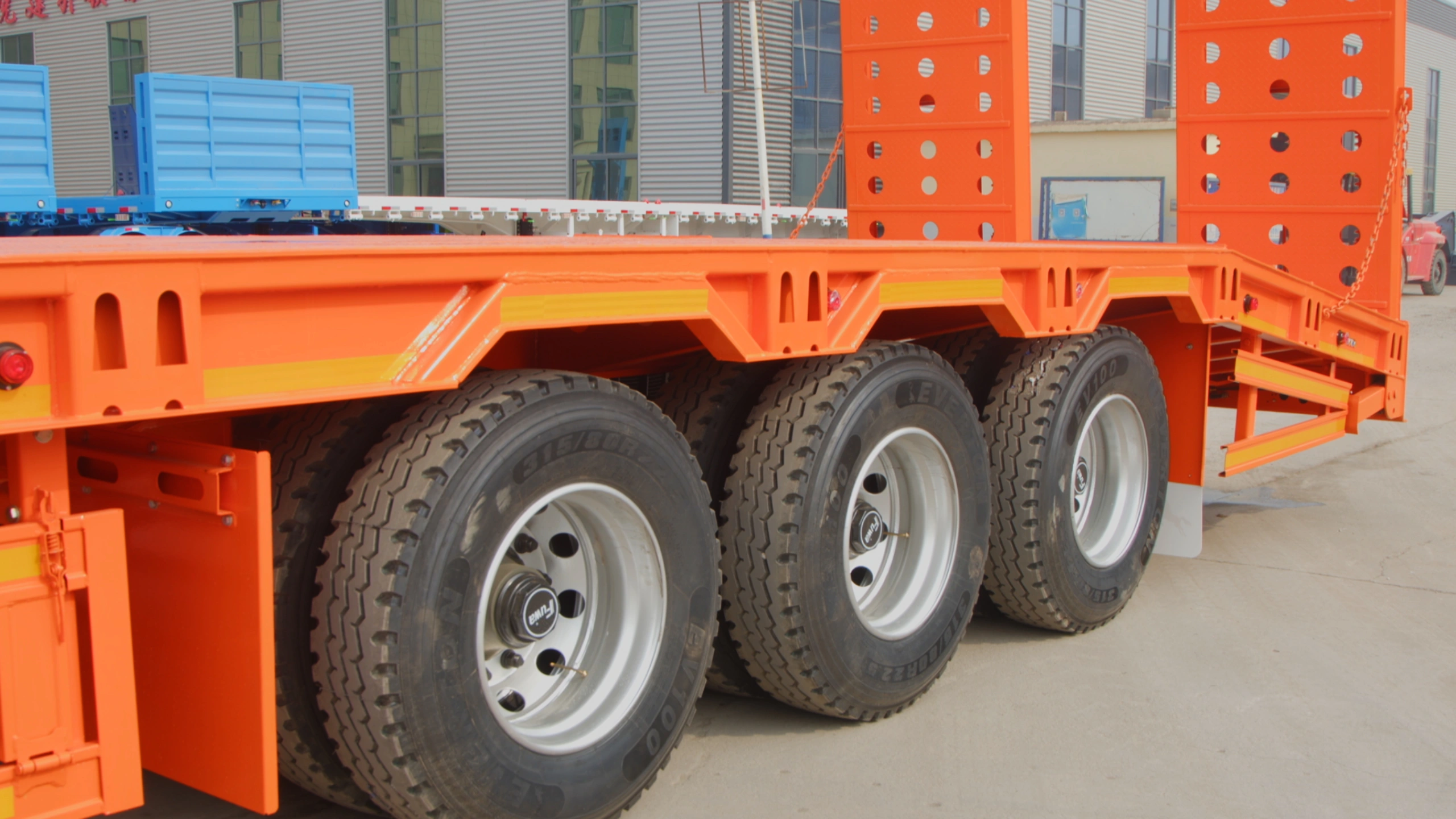
Two-axle, three-axle and four-axle product names normally refer to the running gear at the rear of the semi-trailer. They do not include the tractor's steering and drive axles. A complete transport combination should list the tractor axles, trailer axles and any separate load-support equipment.
Axle count also does not identify how the axles work. A five-axle trailer may use fixed, self-steering or forced-steering axles. Some positions may also lift. Four-axle trailers can use different spacings, suspensions, tyres and braking systems.
A complete axle-group description should include:
- the number and rating of the semi-trailer axles;
- the centre distance between adjacent axles and the total group length;
- fixed, self-steering or forced-steering axles;
- lift-axle positions and permitted operating conditions;
- suspension type, model and rated conditions;
- tyre size, quantity, load index and rim specification; and
- the braking equipment on each axle.
Why Does Cargo Weight Alone Not Determine Axle Count?
A semi-trailer has no separate front axle. The kingpin and fifth wheel transfer part of the trailer tare and machine weight to the tractor. The trailer's rear axle group carries the remaining share. Moving the machine's centre of gravity forwards usually raises the kingpin load. Moving it rearwards usually raises the rear axle-group load.
Two machines with the same total weight can therefore create different kingpin and axle reactions when their centres of gravity, track contact lengths, wheel positions or loading directions differ. Adding axles only changes the rear running gear. It cannot correct every problem. A machine placed too far forwards may still overload the tractor drive group. A small support area may still overload part of the deck. The tyres, suspension or braking system may also reach a limit before the axles do.
Rated payload, concentrated loads and kingpin-to-axle-group reactions are covered in the CHENLU low bed semi-trailer capacity guide. Axle selection should use the results of that load plan rather than a separate axle-count table based only on tonnage.
What Is the Difference Between Fixed, Self-Steering and Forced-Steering Axles?
Fixed Axles
Fixed wheels maintain a defined direction in relation to the trailer frame. The structure and control method are direct. During a turn, each axle follows a different radius, so a long fixed group can make some tyres slide sideways. Narrow sites, tight bends and frequent low-speed turns require checks for tyre wear, lateral frame forces and available manoeuvring space.
Self-Steering Axles
SAF-HOLLAND's steering technology explanation describes a self-steering axle as following the turn through the offset between the steering-pin centre and the tyre contact patch, together with tyre-to-road adhesion. Its centring method, permitted steering angle, reversing lock and speed conditions depend on the actual system. A self-steering axle can reduce tyre scrub in a long group, but it does not remove the effects of vehicle length, off-tracking or limited road space.
Forced-Steering Axles
A forced-steering axle receives steering input from the relative movement between the tractor and semi-trailer. Mechanical, hydraulic or other controlled equipment then turns the axle according to the system design. It does not depend entirely on lateral tyre forces to begin steering. Linkages, hydraulic circuits, control logic, fault states and maintenance requirements must be confirmed in the system documents.
Self-steering and forced steering should not be combined under the general term steering axle when the actual mechanism matters. Product information should state which system is fitted. A wheel that appears to turn is not enough to identify its steering method.
When Is a Lift Axle Useful?
A lift axle can leave the road when its carrying ability is not required. This can reduce wear on some tyres and change low-load or unladen turning behaviour.
Raising an axle does not reduce the vehicle's total weight. The load previously carried by that axle moves to the axles, tractor and other support points that remain in contact with the road. The remaining axles, suspension, tyres and tractor must stay within their permitted conditions.
Lift operation may also depend on vehicle load, speed, suspension-control logic, destination-road rules and the instructions for that trailer. An axle must not be raised under load simply to make a turn easier. A lift axle should not be described as a device that directly increases total carrying capacity.

Which Axle Configurations Appear on CHENLU Lowbed Models?
The following data comes from published CHENLU product pages. Each row describes a separate model, not one frame with axles simply added or removed.
| CHENLU reference model | Published axle and layout data | What the example shows |
|---|---|---|
| Two-axle fixed-gooseneck lowbed | 13,000 mm body, 9,200 mm main deck, two-axle rear group and 1,310 mm axle spacing. The page does not give this layout one universal published payload. | A two-axle trailer still requires deck length, machine support and kingpin-load checks. Axle count does not provide the rating. |
| 13 m three-axle lowbed semi-trailer | 13,000 mm overall length, 9,150 mm main deck, three rear axles, 1,310 + 1,310 mm spacing and 265/70R19.5 tyres. | The three axles must be considered together with their spacing, tyres and deck arrangement. |
| 100-tonne four-axle fixed-gooseneck lowbed | 14 m layout, four axles, 315/80R22.5 tyres and a 1,300 mm loading-platform height. The 100-tonne figure is a nominal payload for this configuration; the final rating follows the quotation and load plan. | Four axles can form part of a specific high-load design, but the frame, tyres and load plan create that result. |
| 80-tonne five-axle lowbed semi-trailer | Five self-steering axles, with axles one and two liftable, air suspension, 1,310 mm between each adjacent axle, 245/70R17.5 tyres and a 1,050 mm deck height. | The additional axles also serve axle-load distribution, steering and vehicle layout. They do not automatically create a higher nominal payload. |
The CHENLU five-axle drawing shows four consecutive 1,310 mm axle spacings and states 5-AXLE SELF-STEERING; AXLES 1 & 2 LIFTABLE. These details apply only to that model. They do not prove that another multi-axle lowbed uses the same spacing, steering system or lift-axle positions.
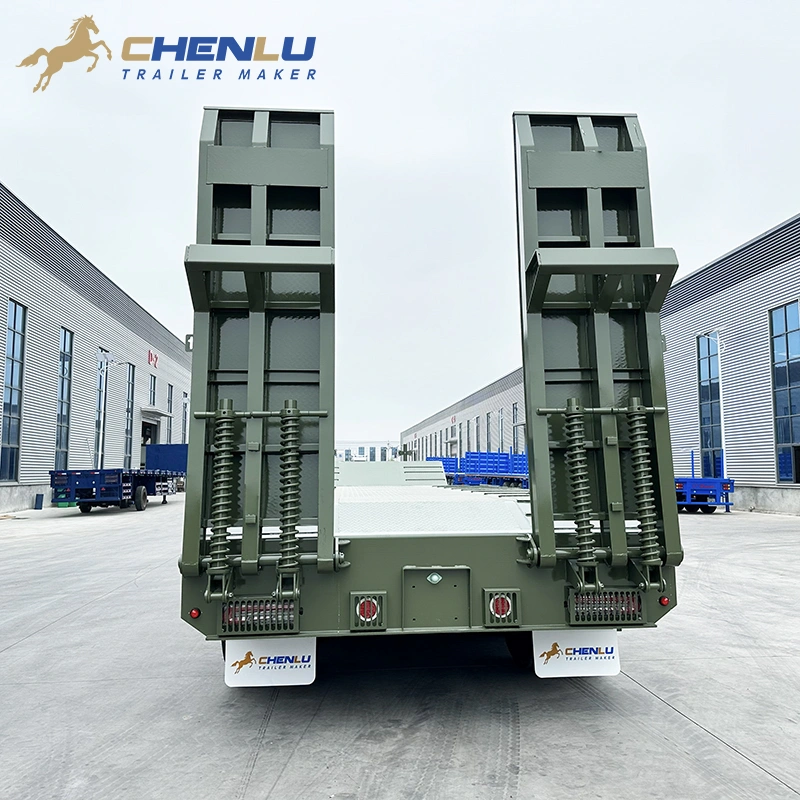
The four-axle model states a 100-tonne nominal payload, while the five-axle model states an 80-tonne rated payload. These figures do not form a direct ranking. The trailers use different frames, deck positions, axle groups, tyres, suspensions and design conditions. The comparison shows why five axles do not always mean a higher stated payload, and why four axles alone do not prove a 100-tonne rating.
Why Does Axle Spacing Matter as Much as Axle Count?
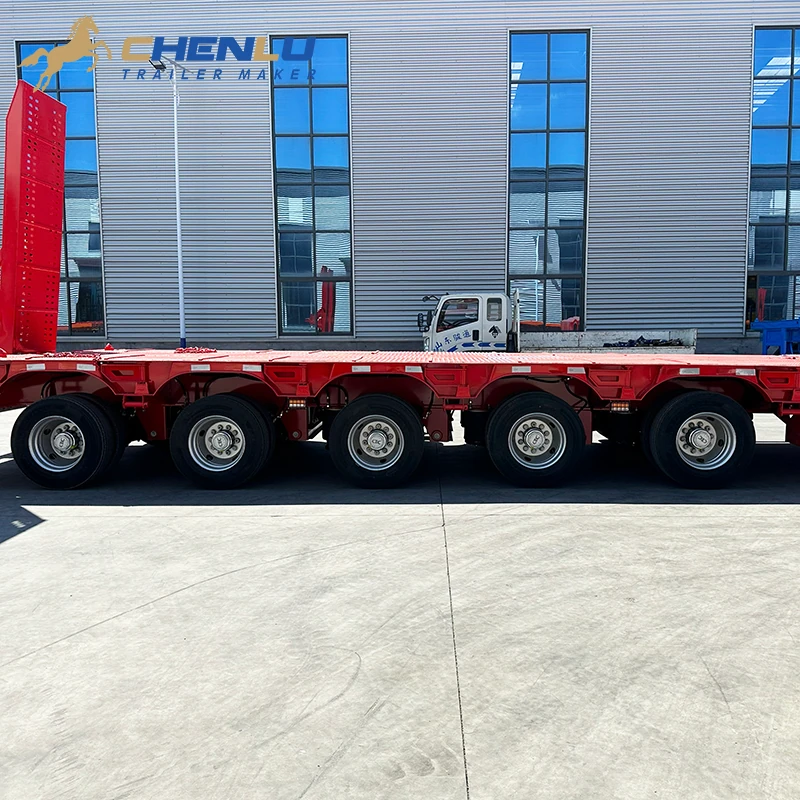
Adding an axle does not automatically increase legal cargo weight on a route. Road rules may define an axle group from the spacing between adjacent axles. They may also control single axles, tandem groups, multi-axle groups, vehicle mass and the complete combination. Wider spacing can also lengthen the group and change turning and frame loads.
The U.S. Federal Highway Administration Bridge Formula illustrates how the number of axles in a vehicle or specified consecutive axle group and the distance between the outer axles interact within its legal scope. It is not a lowboy payload formula. It cannot be separated from U.S. single-axle, axle-group and gross-weight rules or applied directly to another country.
The consolidated text of Council Directive 96/53/EC uses a different framework for vehicle weights, axle loads and dimensions. Africa and the Middle East are not one road-law market either. The destination country and the actual route must be checked separately.
A quotation and technical file should therefore state more than “four axles” or “five axles.” It should list adjacent axle spacing, total group length, axle and suspension ratings, tyre configuration and the axle-group definitions used on the target route.
Why Might the Same Machine Move From a 3-Axle to a 4-Axle Design?
Assume that a machine's actual transport weight, centre of gravity and planned deck position are known. An initial load calculation determines the static reactions required at the tractor fifth wheel and the semi-trailer's rear axle group.
The three-axle design should first be checked for:
- whether the three axles, suspension, tyres and rims can carry the calculated group reaction;
- whether the suspension can distribute load appropriately between the three axles;
- whether the adjacent spacing and total three-axle-group length meet the route definitions;
- whether the kingpin reaction is within the fifth-wheel and tractor-drive-group limits; and
- whether the deck support areas and frame suit the machine's tracks, tyres or base.
If the three-axle design fails one of these checks, a four-axle layout can be calculated. The fourth axle changes rear-group capability and load distribution, but it also adds trailer tare and may create a longer group. The revised calculation must cover usable cargo allowance, kingpin load, route limits for the four-axle group, turning space and braking. If tyre scrub from a fixed four-axle group is not acceptable, a steering-axle layout may also need assessment.
Moving from three to four axles is therefore not a matter of adding one axle to the same trailer. It requires a new relationship between axle position, frame load, suspension, tyres, brakes, tractor and route.
How Should the Tractor and Braking System Match the Axle Group?
Even after more trailer axles are added, the tractor can still limit the combination. The matching process should check:
- permitted vertical load on the fifth wheel;
- permitted tractor-drive-axle and drive-group loads;
- fifth-wheel height and the designed trailer attitude;
- kingpin specification and position;
- swing clearance between the gooseneck, cab, mudguards and chassis equipment;
- air, electrical and braking connections; and
- tractor wheelbase, gross mass and the actual operating route.
ISO 1726-1 specifies some interchangeability dimensions for general-cargo tractors and semi-trailers. Its scope also says that it may not apply to special combinations such as low-bed and tipper vehicles. Fifth-wheel height, gooseneck contour and swing clearance on a lowboy must still be checked against the tractor information and project drawing. A general statement of ISO interface compatibility cannot replace that work.
Every added axle also needs corresponding brakes, air lines and control equipment. Where the destination adopts UN Regulation No. 13 or another heavy-vehicle braking rule, the version used by that jurisdiction must be confirmed. One braking regulation should not be presented as a universal requirement.
How Do You Confirm the Final Axle Configuration?
1. Define the Machine in Its Transport Condition
Record transport weight, length, width, height, centre of gravity and track or tyre contact positions. Include attachments, counterweights and transport frames carried with the machine. A nominal model weight cannot replace the actual transport condition.
2. Place the Machine on the Trailer Drawing
Mark the tracks, wheels, legs or transport base on the drawing and confirm that every support point lies within an approved deck area. A machine that fits within the total deck length may still have unsuitable centre-of-gravity or support positions.
3. Calculate Kingpin and Rear Axle-Group Reactions
Use the trailer tare distribution, machine centre of gravity and loading position to calculate the kingpin and rear-group reactions. On a multi-axle trailer, check how the suspension distributes group load between individual axles. Weighing may be needed to confirm actual axle loads.
4. Set the Axle Count and Running Gear
Select two, three, four or more axles from the calculation. Then confirm fixed, self-steering or forced-steering axles, lift axles, suspension, tyres and brakes. Axle count and running gear should be selected as one system.
5. Check the Tractor and Actual Route
Compare the kingpin reaction with the fifth wheel and tractor drive-group conditions. Check the destination's single-axle, group, gross-mass and dimension rules. Bridges, tight bends, gradients, site roads, ferry ramps and loading areas can also change the workable design.
6. Use One Final Set of Technical Documents
The general arrangement drawing, load plan, axle and suspension schedule, tyre and rim specification, tractor interface, braking equipment and operating conditions should refer to the same model and revision. The same axle count does not mean the same vehicle. The final order is controlled by its corresponding drawing and component schedule.
Conclusion
The number of axles needed on a lowboy trailer depends on how the machine load passes into the tractor and semi-trailer, and whether the axle-group design fits the destination route. Two axles can help control tare and maintenance items. Three axles can form a compact, common lowbed layout. Four and more axles provide additional load-distribution positions but add components and may create a longer group with more complex steering requirements.
The reliable sequence starts with the machine's transport condition and deck position. Calculate the kingpin and rear-group reactions, then check the frame, axles, suspension, tyres, brakes, tractor and route. No fixed tonnage-to-axle-count table applies to every machine and country.
Frequently Asked Questions
Does a Lowboy Trailer With More Axles Always Carry More Weight?
No. Extra axles can change rear-group capability and load distribution, but they also add trailer tare. Frame, kingpin, suspension, tyres, brakes, tractor and route conditions still control the rating. The published CHENLU four-axle 100-tonne nominal-payload model and five-axle 80-tonne rated-payload model are different designs and cannot be ranked by axle count alone.
How Do You Choose Between a 3-Axle and 4-Axle Lowboy for the Same Machine?
Calculate the kingpin and rear-group reactions at the planned loading position. If the three-axle design meets the component ratings, tractor conditions and route axle limits, there is no reason to add an axle only for appearance. If it does not, calculate a four-axle layout and include the extra tare, revised load distribution, turning and braking conditions.
Are Self-Steering and Forced-Steering Axles the Same?
No. A self-steering axle mainly follows the turn through its geometry and tyre-to-road forces. A forced-steering axle uses mechanical, hydraulic or another controlled input to steer according to a set relationship. Reversing, locking, speed and maintenance requirements differ and must be confirmed from the actual system information.
Can a Lift Axle Be Raised After the Trailer Is Loaded?
Only when the remaining axles, suspension, tyres and tractor loads remain within their limits and the trailer instructions permit it. Raising an axle does not reduce total vehicle weight. It transfers that axle's former load to the remaining support points.
Why Can Lowboy Trailers With the Same Axle Count Have Different Load Ratings?
The same axle count does not mean the same main beams, crossmembers, gooseneck, spacing, axle ratings, suspension, tyres, deck support areas or cargo position. A rated or nominal payload must be used with the drawing, load conditions and component schedule for that model.
Scope and Technical Limits
The CHENLU dimensions and configurations in this article come from the linked product pages and drawing and apply only to those models. The U.S. Federal Bridge Formula, Council Directive 96/53/EC, ISO 1726-1 and UN Regulation No. 13 each have their own geographic or vehicle scope. They are cited to show why axle spacing, tractor interfaces and braking requirements need separate checks. They do not establish road permission in any destination country.
References
- CHENLU Low Bed Trailers: model range and configuration entry point.
- CHENLU 2-Axle Fixed-Gooseneck Lowbed Trailer: two-axle layout, deck dimensions and axle spacing.
- CHENLU 13m 3 Axle Lowbed Semi Trailer: three-axle layout, spacing, tyres and deck dimensions.
- CHENLU 100 Ton 4 Axle Lowbed Trailer: four-axle nominal-payload configuration and rating boundary.
- CHENLU 80 Ton 5 Axle Lowbed Trailer: self-steering axles, lift axles, air suspension and spacing.
- CHENLU Five-Axle Lowbed Drawing: adjacent axle spacing, steering and lift-axle labels.
- FHWA — Bridge Formula Weights: the relationship between axle count, spacing and permitted axle-group weight within its U.S. legal scope.
- EUR-Lex — Consolidated Council Directive 96/53/EC: European framework for vehicle weights, axle loads and dimensions.
- ISO 1726-1:2000: general tractor and semi-trailer interchangeability dimensions and the special-vehicle scope boundary.
- UNECE — UN Regulation No. 13: official heavy-vehicle braking regulation entry point.
- SAF-HOLLAND — Steering Technology: operating principles of self-steering and forced-steering axles.
- BPW — Steering Axles: self-steering tracking, centring and reverse-lock information.
MORE FROM OUR NEWSROOM
Related News
Lowboy vs RGN Trailer: Structural and Loading Differences Between Fixed and Removable Gooseneck Lowbeds
Compare Lowboy vs RGN trailer designs, including fixed and removable goosenecks, loading direction, equipment clearance, site space and maintenance.
Read News ↗
Why are low-platform semi-trailers called “Lowboys”? What is the difference between a “Lowboy,” a “Low Bed,” and a “Low Loader”?
Why is it called a lowboy trailer? Learn how lowboy, low bed, low loader, cama baja and regional terms relate to deck and gooseneck design.
Read News ↗
Which Low Bed Semi Trailer Is Best for Heavy Equipment? Fixed, Folding and Detachable Goosenecks
Compare fixed, folding and detachable gooseneck low bed semi trailers for heavy equipment, including loading access, CHENLU dimensions, axle layouts, tractor matching and route checks.
Read News ↗
How to Load Heavy Equipment on a Lowboy Trailer: Rear Ramps, Folding Goosenecks and RGN
This lowboy trailer loading guide compares rear ramps, folding and detachable goosenecks for heavy equipment, including loading angle and ground clearance.
Read News ↗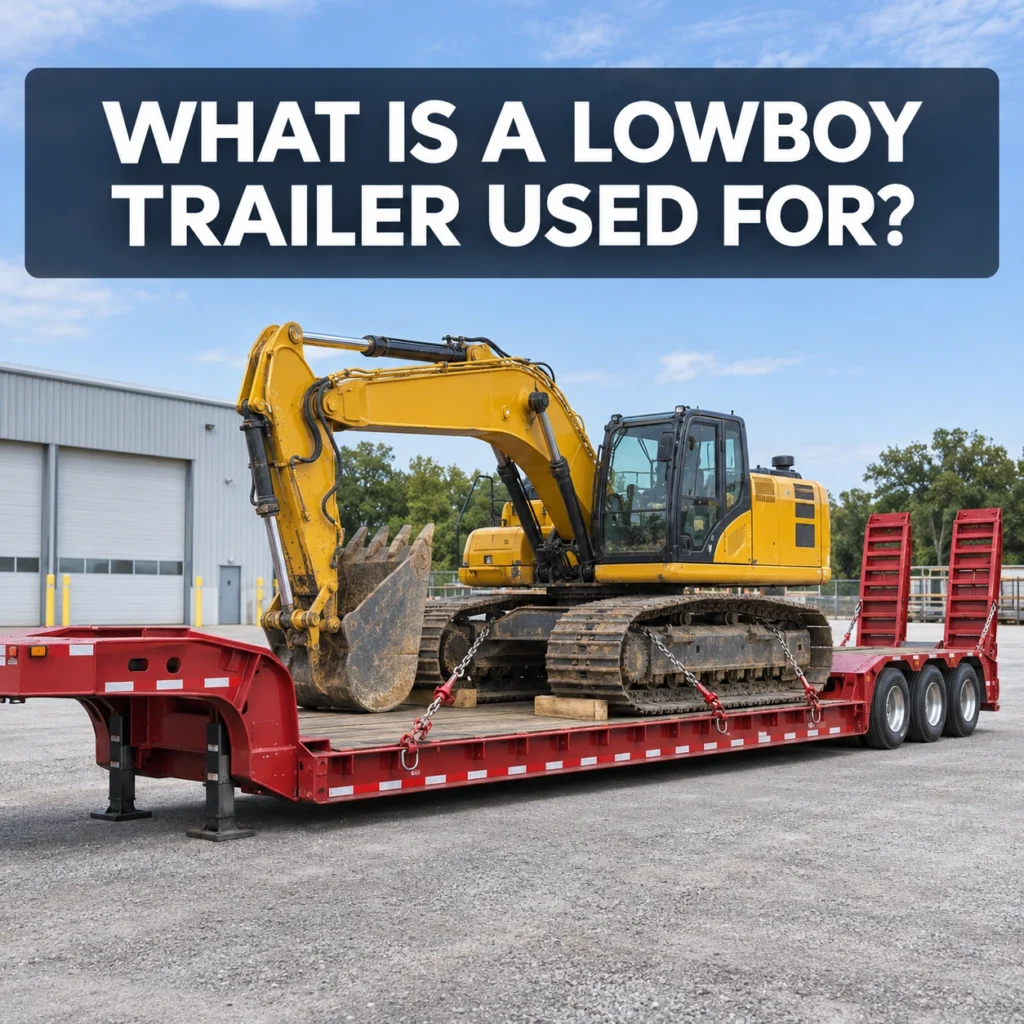
What Is a Lowboy Trailer Used For? Equipment, Loading Methods and Trailer Selection
What is a lowboy trailer used for? See how a heavy equipment lowboy trailer carries excavators, bulldozers, loaders and construction machinery.
Read News ↗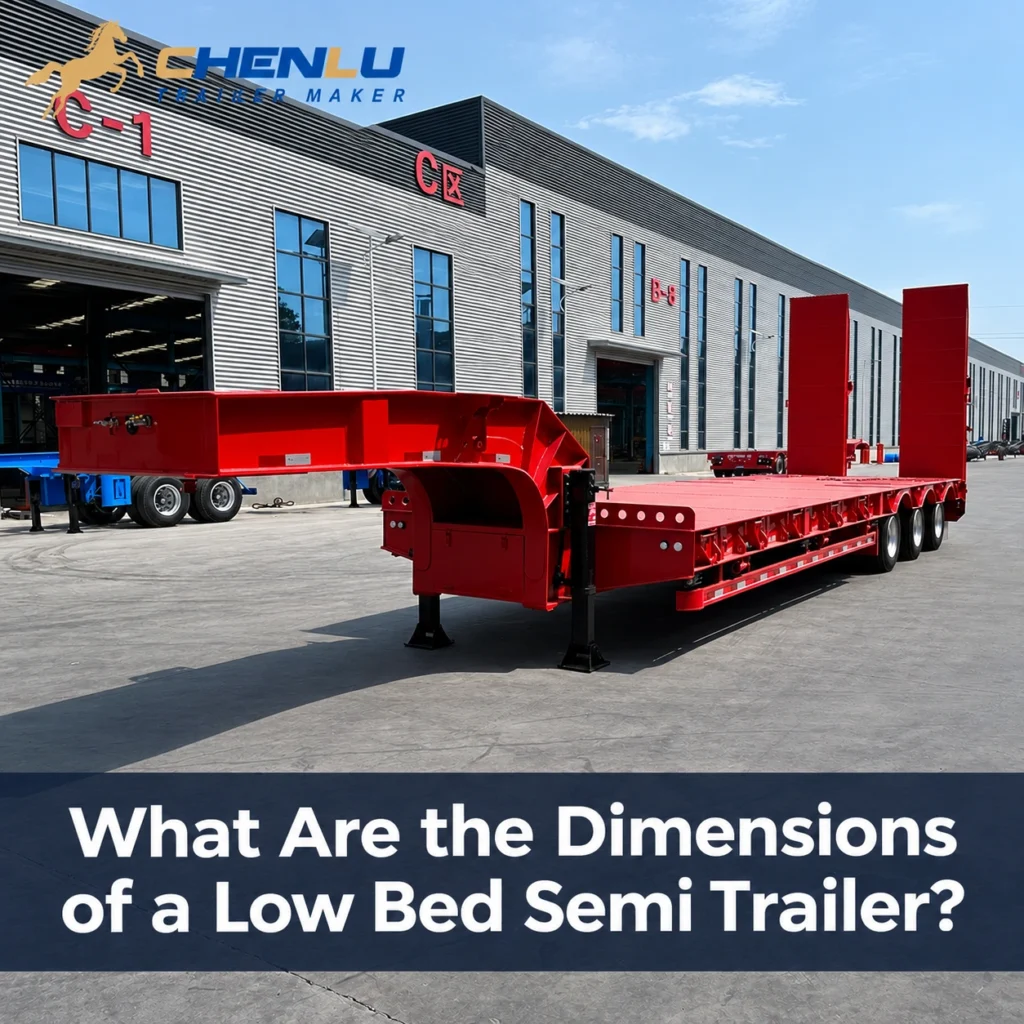
What Are the Dimensions of a Low Bed Semi Trailer? Overall Length, Deck Length, Width and Deck Height
Compare low bed semi trailer length, usable deck length, width and deck height using CHENLU fixed, folding, detachable and extendable gooseneck configurations.
Read News ↗