
How Much Weight Can a Low Bed Semi Trailer Carry?
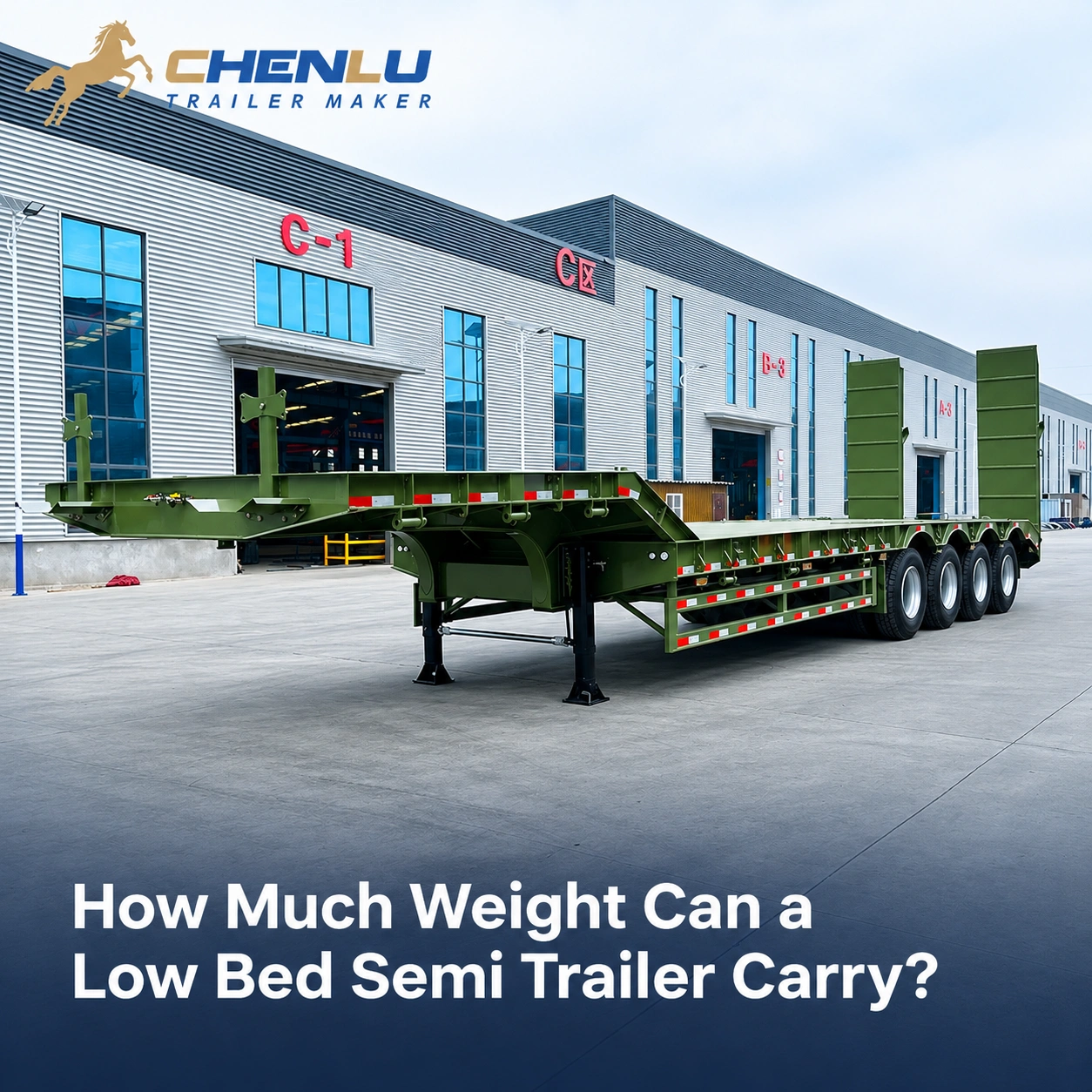
CHENLU low bed semi trailers include a three-axle model whose payload starts at 60 tonnes, four- and five-axle models with an 80-tonne rated payload, and a four-axle model with a nominal 100-tonne payload. These figures apply to different frames, axle groups, suspensions, tyres and load plans. There is no single payload figure that applies to every low bed trailer configuration.
The main deck of a low bed semi trailer sits between the front gooseneck and the rear axle group. Its lower position helps control the loaded height of excavators, loaders, bulldozers and other machinery. The front of the semi-trailer transfers part of the load to the tractor fifth wheel through the kingpin. The trailer axle group carries the rest. The stated payload, cargo support points, kingpin and axle-group reactions, trailer tare, tractor capacity and route limits must therefore be checked in one load plan.
What CHENLU 60-, 80- and 100-Tonne Low Bed Configurations Are Available?
CHENLU three-, four- and five-axle lowbeds cover different load classes and running-gear layouts. Each payload figure applies to the frame and running configuration shown. The final rated load for an order must be confirmed against the machine data, load plan and approved drawing.
| CHENLU model | Stated payload | Main configuration | What it means for selection |
|---|---|---|---|
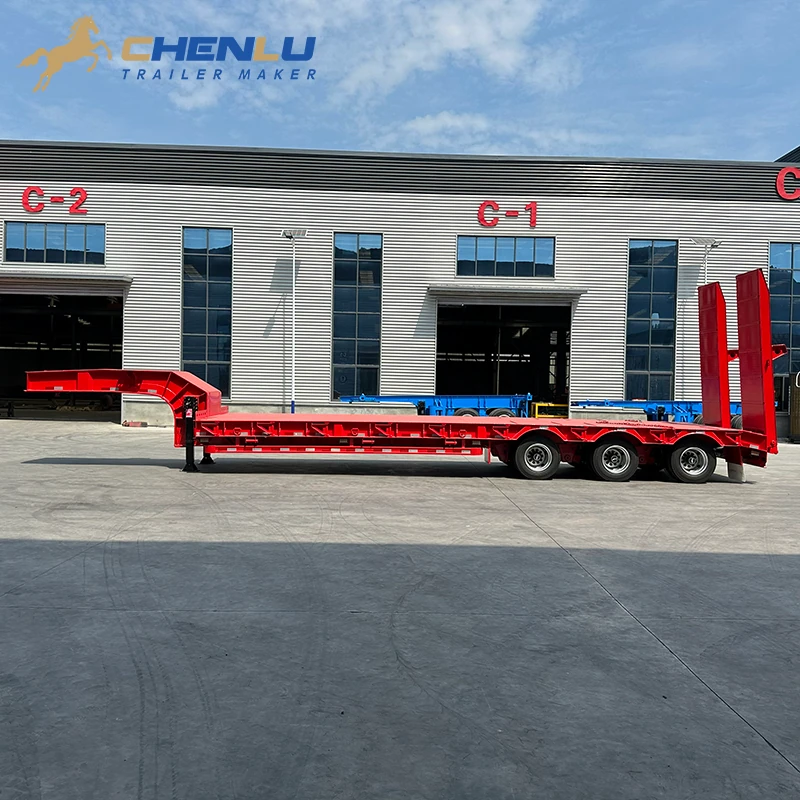
| 60 Ton 3 Axle Lowbed Trailer for Sale in Tanzania | Payload starts at 60 tonnes | Three axles, fixed gooseneck, mechanical suspension, 315/80R22.5 tyres, 13 m × 3 m, and spring-assisted rear ramps | A three-axle trailer can form part of a 60-tonne-class solution, but the cargo support position and load distribution still need checking. |
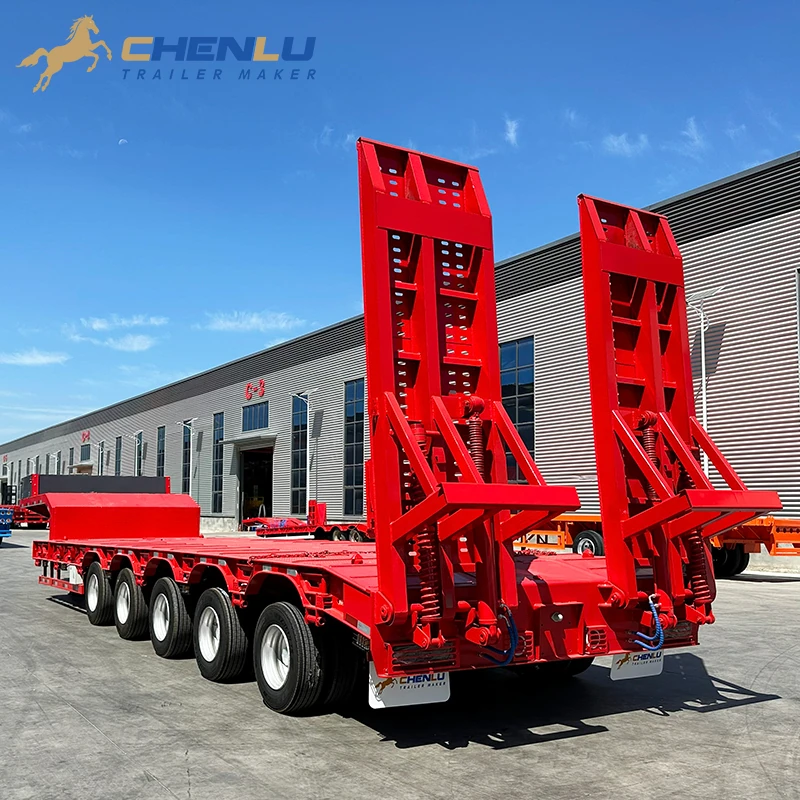
| 80 Ton 4 Axle Lowbed Trailer for Sale in Ghana | Rated payload: 80 tonnes | Four axles, fixed gooseneck, mechanical suspension, 315/80R22.5 tyres, and spring-assisted rear ramps | The fourth axle changes rear-group capacity and load distribution. The frame, components and route still set the final limits. |
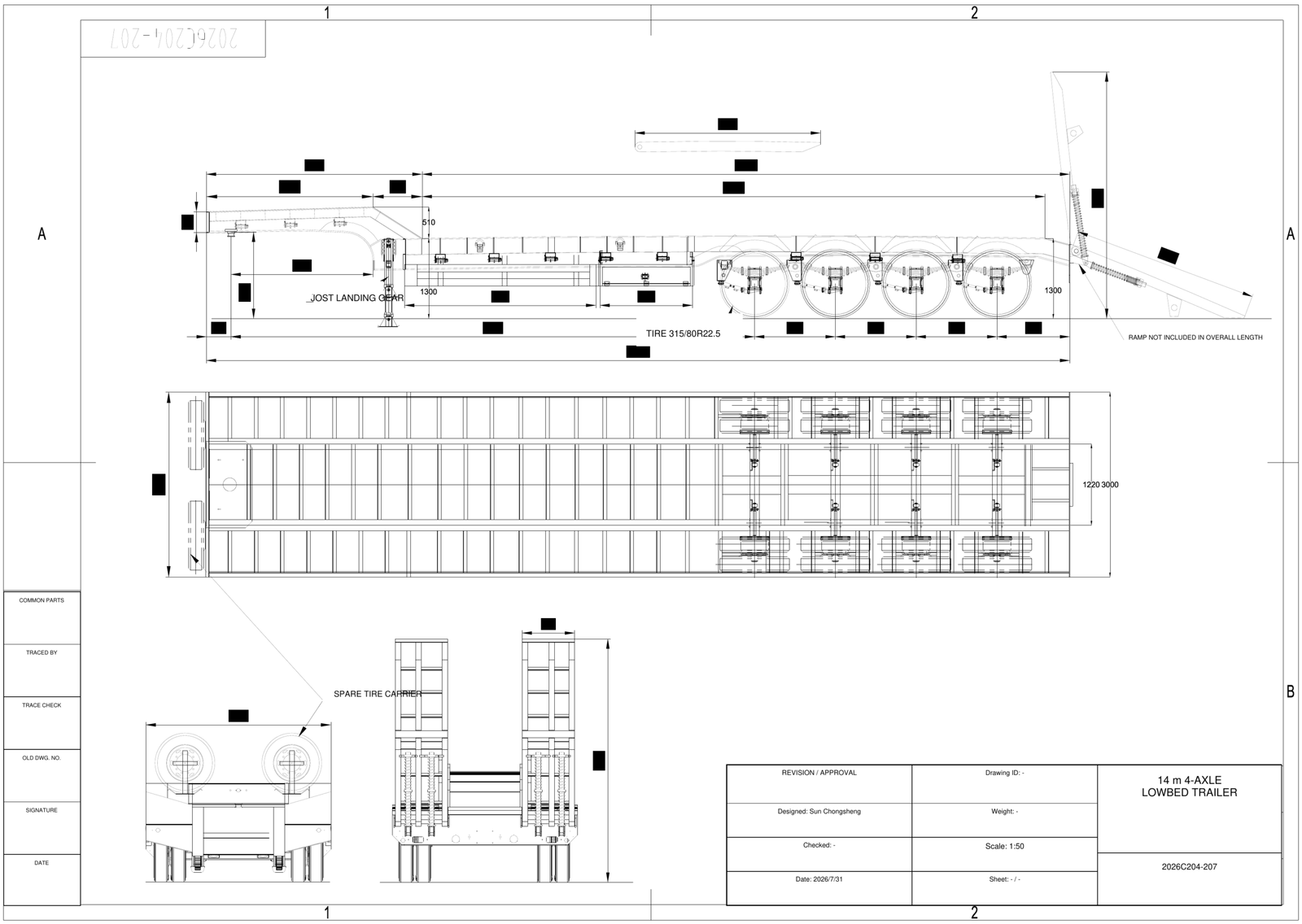
| 100 Ton 4-Axle Fixed-Gooseneck Lowbed Trailer | Nominal payload: 100 tonnes; final rated load follows the quotation and load plan | Four axles, fixed gooseneck, 14 m overall length, 3,000 mm width, 1,300 mm deck height, and 315/80R22.5 tyres | Four-axle trailers can have different load classes when the frame and load plan are different. |
| 80 Ton 5 Axle Lowbed Trailer for Zimbabwe | Rated payload: 80 tonnes | Five self-steering axles, first two axles liftable, air suspension, 3,000 mm width, 1,050 mm main-deck height, and 245/70R17.5 tyres | Extra axles may be used for axle-load distribution, steering and deck layout rather than a higher nominal payload. |
The three-axle 60-tonne-class model uses mechanical suspension and rear ramps. The four-axle 80-tonne model adds another axle within a similar loading arrangement. The four-axle 100-tonne model uses a different frame and load plan. The five-axle 80-tonne model uses self-steering axles, lift axles and air suspension to manage axle loads and turning. Each capacity is based on its own design conditions, so the machine support position, tractor and route must also be reviewed.
What Does Low Bed Semi Trailer Capacity Mean?
The tonnage in a model name is the starting point for a capacity check. A complete load plan usually includes the following figures.
| Data | Meaning | How it is checked |
|---|---|---|
| Model load class | The load class stated in the technical data or model name | Confirm whether it is a starting payload, rated payload or nominal payload, and match it to the exact configuration. |
| Structural load conditions | The conditions used to design the main beams, crossmembers, gooseneck and local reinforcement | Check the load diagram, support zones and approved drawing against the machine position. |
| Usable rear axle-group capacity | The combined limits of the axles, suspension, tyres, rims and applicable road axle-load rules | Review each component rating, axle spacing, axle type and destination-road limits. The lowest applicable limit controls. |
| Kingpin and fifth-wheel load | The vertical load transferred from the front of the semi-trailer to the tractor | Check the kingpin area, tractor fifth wheel and tractor rear-axle limits. |
| Permitted road load | The weight that the vehicle combination may operate with in the destination country and on the actual route | Check gross combination mass, single- and grouped-axle limits, bridges and permit conditions. |
A “100-tonne lowbed” therefore describes the load class of a specific product and load plan. It does not mean the trailer can carry a 100-tonne machine in every deck position, with every tractor or on every road.
Does Axle Count Determine Low Bed Trailer Capacity?
Axle count changes the rear running-gear layout and load distribution, but it must be reviewed with axle ratings, axle spacing, suspension, tyres, frame design and route limits. A three-, four- or five-axle configuration involves at least:
- the rating and type of each axle;
- the centre distance between adjacent axles;
- the applicable load for the mechanical or air suspension;
- tyre size, load index, quantity, and single- or twin-tyre layout;
- the axle-group position on the frame;
- the distance from the kingpin to the axle group;
- the tractor fifth-wheel and rear-axle limits; and
- destination-country limits for single axles, axle groups and gross combination mass.
CHENLU four-axle examples include an 80-tonne rated-payload model and a 100-tonne nominal-payload model. The same axle count can therefore be used in different load classes. The Zimbabwe five-axle model still has an 80-tonne rated payload. Its five self-steering axles, air suspension and lower main deck also serve steering follow-up, axle-load distribution and vehicle layout.
The first two axles on that five-axle trailer are liftable. The product data states that they may be raised when their load capacity is not required. They remain down when cargo weight and axle-load distribution require all five axles. The approved vehicle documents and operating requirements must define the permitted load state and operating conditions for lifting them.
Why Do Machines of the Same Weight Create Different Kingpin and Axle Loads?
A semi-trailer has no separate front axle. Part of the cargo and trailer tare is transferred to the tractor through the kingpin. The trailer axle group carries the remaining share. In a simplified static vertical model, with all values expressed on the same mass-equivalent basis:
The load distribution must also satisfy moment balance. Moving the machine centre of gravity forward will usually increase the kingpin load. Moving it rearward will usually increase the trailer axle-group load. A centre of gravity offset to one side can also create unequal wheel loads. Two machines with the same total weight may therefore produce different kingpin and axle reactions when their centres of gravity or deck positions differ.
The calculation should use the machine in its actual transport condition, not only the published operating weight for the model. Buckets, counterweights, working equipment, transport frames and removable attachments change both total mass and centre of gravity. Machine data should include:
- transport weight and overall transport dimensions;
- longitudinal and transverse centre of gravity;
- track contact length, wheel track or wheelbase;
- the distance between the left and right tracks or wheels;
- the weight of removable attachments, counterweights and transport frames; and
- the planned loading direction.
The machine centre of gravity should be obtained from the manufacturer’s transport drawing, component weights and lifting-point data. When this information is incomplete, the engineer responsible for the load plan needs measured or weighed data before setting the loading position. The centre of the machine outline is only a geometric position and cannot replace the actual centre of gravity.
How Do Distributed and Concentrated Loads Affect the Deck?
The deck plate, crossmembers and main beams transfer cargo weight towards the gooseneck and axle group. A tracked machine usually loads the deck through two long contact strips. A wheeled machine loads smaller areas through its tyres. Legs, bases and transport saddles may place most of the weight at only a few points.
Two 80-tonne loads can create different demands on the deck. A long tracked load spreads its weight over a larger area, while four small supports produce higher local loads. A concentrated-load check should define:
- the weight carried by each support or track;
- the length and width of each contact area;
- the support position relative to the main beams and crossmembers;
- the arrangement of timber, steel plates or transport bases; and
- whether the machine crosses deck sections at different heights.
Spreader plates can increase the contact area, but they also add tare and loaded height. Their material, size and position should follow the machine support requirements and the local deck-load conditions. For a more detailed treatment of support length, concentrated loads and axle loads, see Lowboy Trailer Weight Capacity: Rated Payload, Concentrated Loads and Axle Limits.
Which Components Limit Usable Low Bed Payload?
Usable payload is set by the first structure or component to reach its limit. A frame designed for a given load does not prove that every other part of the vehicle combination meets the same condition.
| System | What to check | Possible controlling limit |
|---|---|---|
| Main beams, crossmembers and gooseneck | Steel, beam depth, flanges and webs, crossmember spacing, local reinforcement and load position | Overall bending, local deck capacity or gooseneck-region loading |
| Kingpin, fifth wheel and tractor rear axle | Kingpin design conditions, fifth-wheel limit and tractor rear-axle rating | The front reaction exceeds the tractor or connection limit |
| Axles and suspension | Individual axle ratings, axle spacing, axle type, suspension assembly and load equalisation | A component rating or axle-load distribution reaches its limit |
| Tyres and rims | Tyre size, load index, quantity, inflation and rim compatibility | The tyre or rim limit is lower than the axle capacity |
| Braking and connections | Brakes, air lines, electrical connections and towing connection for the planned combination mass | The braking or connection system does not cover the planned operating condition |
Each limit must be checked separately, and the controlling value applies. Adding thicker main beams or more axles addresses only part of the system. It does not create a complete heavy-load configuration by itself.
How Do Trailer Tare and Tractor Capacity Affect Usable Cargo Weight?
Road or project documents normally control gross combination mass and axle loads, not cargo weight alone. The trailer frame, gooseneck, axles, tyres, ramps, hydraulic equipment, toolboxes and other accessories use part of the available mass allowance.
At gross-mass level, an initial cargo allowance can be expressed as:
Tools, hydraulic equipment or other accessories already included in the measured tare should not be deducted a second time. This calculation only provides a gross-mass budget. Kingpin load, tractor rear-axle load, trailer axle-group load and route limits still apply.
How Do Goosenecks and Ramps Affect the Load Plan?
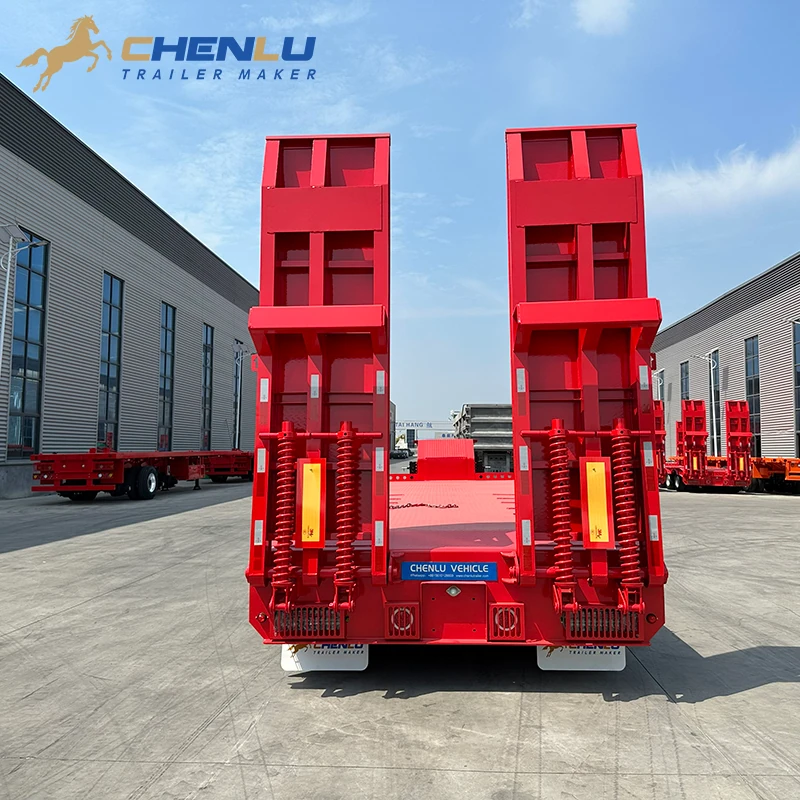
Fixed, detachable and folding goosenecks change the loading path and front structure. Rear mechanical or hydraulic ramps change how the machine reaches the deck. Couplings, locks, cylinders, pipes and reinforcement also affect trailer tare and local load paths.
These systems do not determine rated payload by themselves. First check that the machine can follow the planned loading path and reach the approved deck position. Then include the structure’s tare, support conditions and load distribution in the calculation.
Why Is Rated Payload Different from Legal Road Payload?
Rated or nominal payload describes a specific trailer under defined configuration and loading conditions. Permitted road load depends on where the vehicle combination operates. Countries and routes may apply different limits to gross combination mass, single-axle load, grouped-axle load, axle spacing, overall dimensions and abnormal-load permits.
The usable cargo weight of the same 80-tonne lowbed can therefore change from one route to another. Bridge capacity, road class, turning space, gradients, ferries and construction sections can all affect the transport plan. Without a destination country and actual route, one legal-payload figure cannot be applied across Africa and the Middle East.
A road assessment should list:
- the trailer’s stated payload and its definition;
- trailer tare in the complete configuration;
- kingpin load and tractor rear-axle conditions;
- individual axle and axle-group component ratings;
- kingpin and axle-group reactions at the planned cargo position;
- permitted axle loads, gross mass and dimensions for the destination and route; and
- any overweight, overwidth or overheight permits required.
How Do You Check Which Low Bed Trailer Fits a Machine?
1. Define the Machine in Transport Condition
Record the attachments, fuel, counterweights and transport frames that will travel with the machine. Establish its transport weight, dimensions, centre of gravity and support positions. Operating weight and transport weight may differ, so the calculation should use the actual transport condition.
2. Place the Support Points on the Trailer Drawing
Mark the tracks, wheels, legs or base on the general arrangement drawing. Confirm that they sit within the designated support zones, and check deck steps, local reinforcement, rear overhang and the loading path. A suitable overall length does not prove that every support point sits on the effective load deck.
3. Calculate Kingpin and Trailer Axle-Group Reactions
Use the trailer tare distribution, machine centre of gravity and loading position to calculate the kingpin and rear axle-group reactions. On a multi-axle trailer, also check how the suspension distributes load between the axles. Weighing may be needed for final confirmation.
4. Compare the Results with Structural and Component Ratings
Compare the calculated loads with the frame conditions, kingpin, axles, suspension, tyres, rims, brakes and tractor capacity. Usable payload is controlled by the lowest applicable limit, not the highest number in the specification.
5. Check the Destination Country and Actual Route
Finally, review gross combination mass, single- and grouped-axle limits, bridges, dimensions, turning radius, gradients, loading sites and permit requirements. When structural capacity is higher than the route limit, the transport must still follow the approved route conditions.
This process normally requires the machine transport data, trailer general arrangement drawing, load diagram or calculation, axle and suspension component list, tare record for the complete trailer, tractor data and route-permit documents. A model name such as “80-tonne lowbed” is not enough to match the machine and vehicle.
How Should 60, 80 and 100 Tonnes Be Used for Initial Selection?
The 60-, 80- and 100-tonne classes are useful for the first model screen, but they do not complete the transport assessment. When actual transport weight is close to the stated payload, the load position, support conditions, trailer tare and route limits still need room for verification. Choosing a nominal load class above the machine weight does not automatically satisfy kingpin load, concentrated-load or road axle-load conditions.
An initial comparison can follow this sequence:
- Use actual transport weight to identify the load classes to review.
- Use track, wheel or support positions to screen the deck and frame layout.
- Use the centre of gravity to calculate kingpin and axle-group reactions.
- Use the tractor and route conditions to determine a workable axle configuration.
- Confirm the final rating in the quotation, component list and approved drawing.
CHENLU Low Bed Trailers include different axle counts, goosenecks and loading arrangements. Once the machine transport weight, support positions, tractor and route conditions are known, these configurations can be matched to the actual transport task.
Frequently Asked Questions
How Much Weight Can a Three-Axle Low Bed Semi Trailer Carry?
Three axles do not define one fixed payload. The CHENLU three-axle fixed-gooseneck model for Tanzania states that payload starts at 60 tonnes, but that figure applies to its configuration. The frame, axles and suspension, tyres, machine position, kingpin reaction, tractor and route conditions still need to be checked.
Does a Low Bed Trailer with More Axles Always Carry More Weight?
No. More axles can change axle-load distribution, steering and route suitability, but they also add tare. CHENLU has a five-axle model with an 80-tonne rated payload, while its four-axle examples include an 80-tonne rated-payload model and a 100-tonne nominal-payload model. Axle count is not the only factor that sets the load class.
What Is the Difference Between an 80-Tonne and a 100-Tonne Low Bed Trailer?
Start with the load definition. The CHENLU four-axle 80-tonne model states an 80-tonne rated payload. The four-axle 100-tonne model states a 100-tonne nominal payload and specifies that the final rated load follows the quotation and load plan. The frame, support zones, kingpin conditions, axle group, suspension, tyres, trailer tare and route limits also need to be compared.
Can a 100-Tonne Low Bed Carry a 100-Tonne Machine on an Ordinary Road?
The 100-tonne nominal payload describes the load class of the corresponding model and load plan. Gross combination mass, kingpin and axle loads, dimensions, bridges and the actual route still require assessment. Some movements will also require abnormal-load permits.
Is a Machine Suitable When Its Weight Is Below the Trailer’s Stated Payload?
The machine must also fit the approved support zones, centre-of-gravity position, concentrated-load conditions, loading path and vehicle-combination limits. Weight below the stated payload is useful for initial screening, but final matching should follow the load diagram, component ratings, tractor conditions and route assessment.
Scope and Technical Limits
The three-axle 60-tonne-class, four-axle 80-tonne, four-axle 100-tonne and five-axle 80-tonne figures apply to the configurations listed above. Other low bed semi trailer ratings will change with the frame, deck, axle group, suspension, tyres and loading conditions. Each order should use its corresponding technical specification and approved drawing.
The static load relationship provides an initial view of how weight is shared between the kingpin and trailer axle group. Actual multi-axle loads are also affected by suspension equalisation, tyres, frame deflection, road surface and vehicle condition. The quotation, component list, load plan and approved drawing govern the specific order. Permitted road load must be confirmed for the destination country, actual route and permit conditions.
References
- CHENLU Low Bed Trailers: lowbed model range, loading arrangements and configuration selection.
- CHENLU 60 Ton 3 Axle Lowbed Trailer for Sale in Tanzania: three-axle configuration, starting payload, dimensions, mechanical suspension and rear ramps.
- CHENLU 80 Ton 4 Axle Lowbed Trailer for Sale in Ghana: four-axle fixed-gooseneck configuration with an 80-tonne rated payload.
- CHENLU 100 Ton 4-Axle Fixed-Gooseneck Lowbed Trailer: 100-tonne nominal payload, four-axle fixed-gooseneck configuration and final-rating boundary.
- CHENLU 80 Ton 5 Axle Lowbed Trailer for Zimbabwe: 80-tonne rated payload, five self-steering axles, lift axles and air suspension.
- CHENLU Lowboy Trailer Weight Capacity: Rated Payload, Concentrated Loads and Axle Limits: rated payload, concentrated loads, effective support length and axle-load checks.
MORE FROM OUR NEWSROOM
Related News
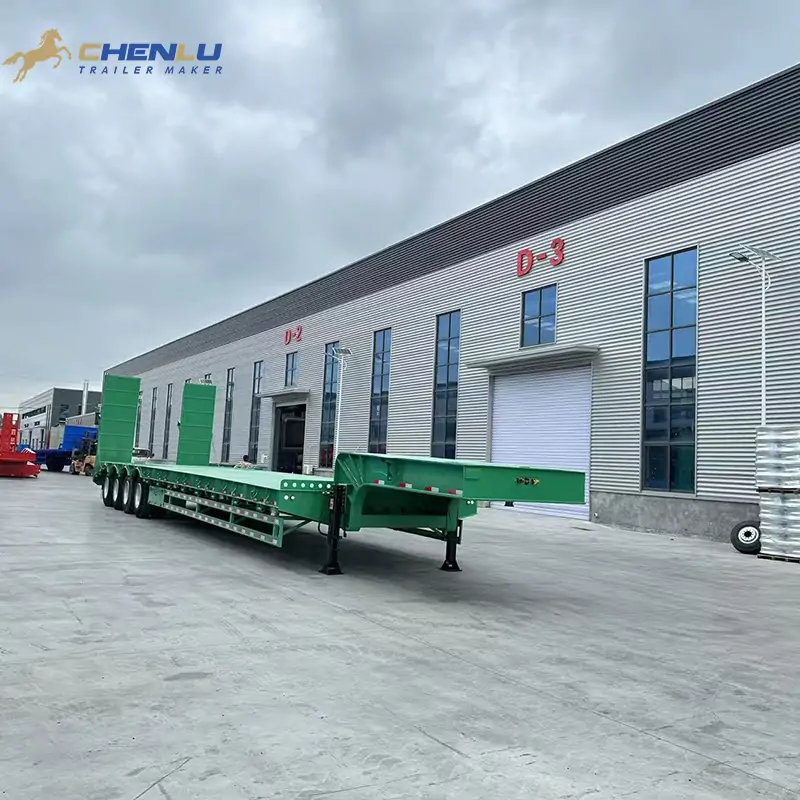
Lowboy vs RGN Trailer: Structural and Loading Differences Between Fixed and Removable Gooseneck Lowbeds
Compare Lowboy vs RGN trailer designs, including fixed and removable goosenecks, loading direction, equipment clearance, site space and maintenance.
Read News ↗
Why are low-platform semi-trailers called “Lowboys”? What is the difference between a “Lowboy,” a “Low Bed,” and a “Low Loader”?
Why is it called a lowboy trailer? Learn how lowboy, low bed, low loader, cama baja and regional terms relate to deck and gooseneck design.
Read News ↗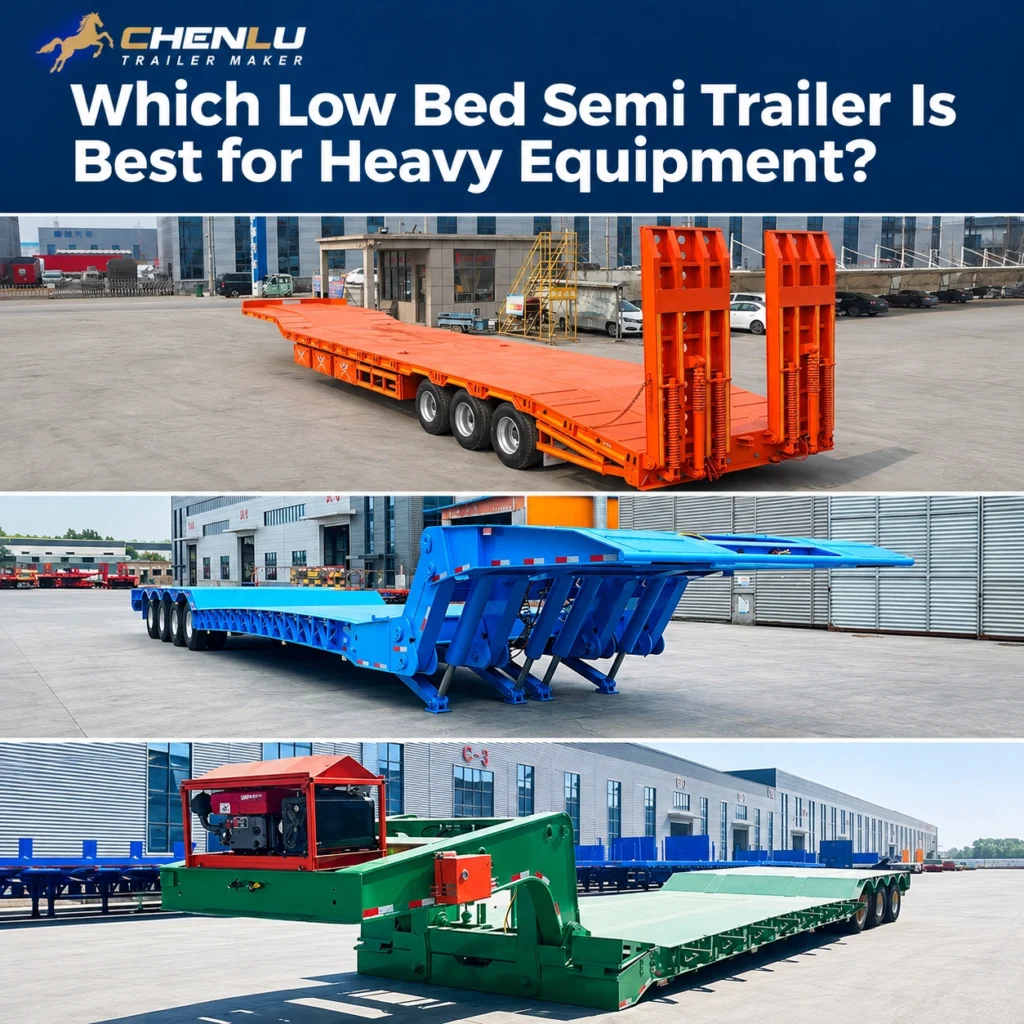
Which Low Bed Semi Trailer Is Best for Heavy Equipment? Fixed, Folding and Detachable Goosenecks
Compare fixed, folding and detachable gooseneck low bed semi trailers for heavy equipment, including loading access, CHENLU dimensions, axle layouts, tractor matching and route checks.
Read News ↗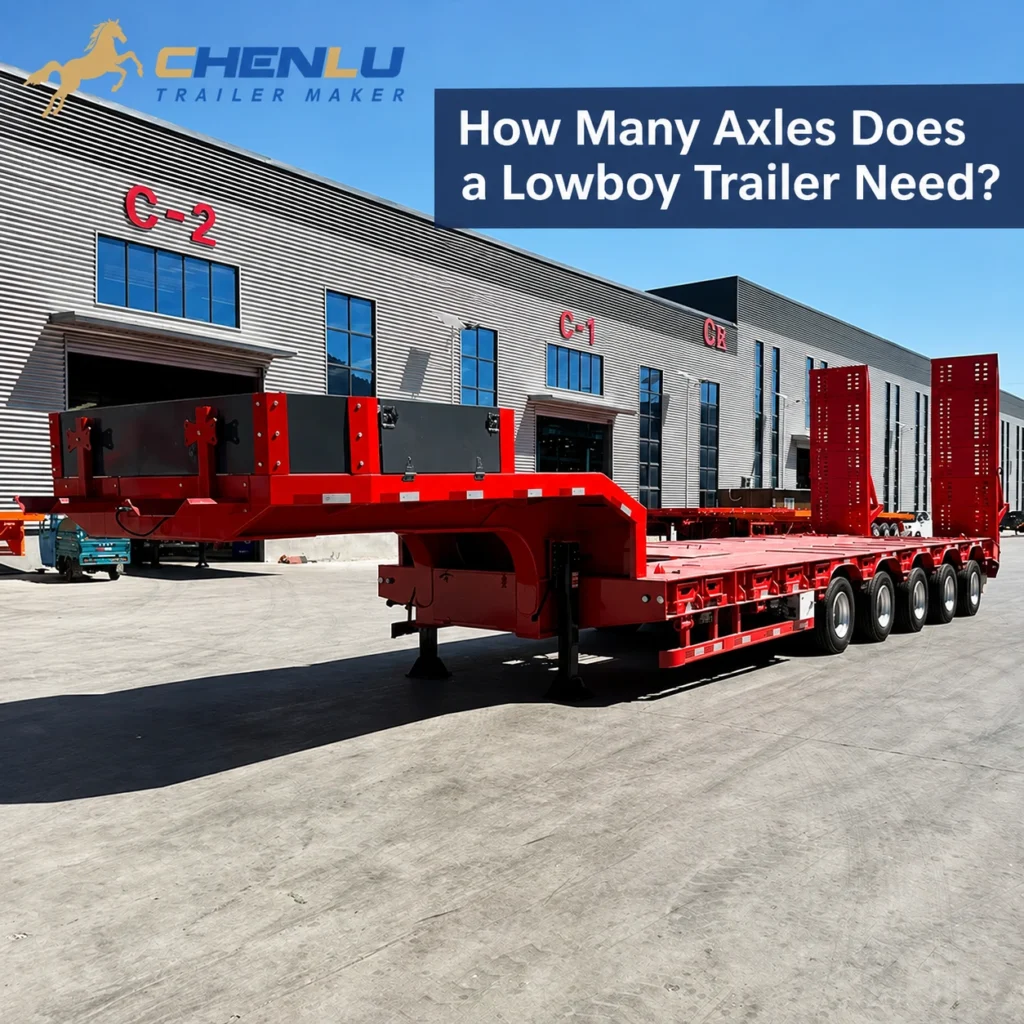
How Many Axles Does a Lowboy Trailer Need? 2-, 3-, 4- and Multi-Axle Configurations
A lowboy trailer may have 2, 3, 4 or more axles. Compare low bed semi trailer axle configurations by cargo weight, axle spacing, tractor and route limits.
Read News ↗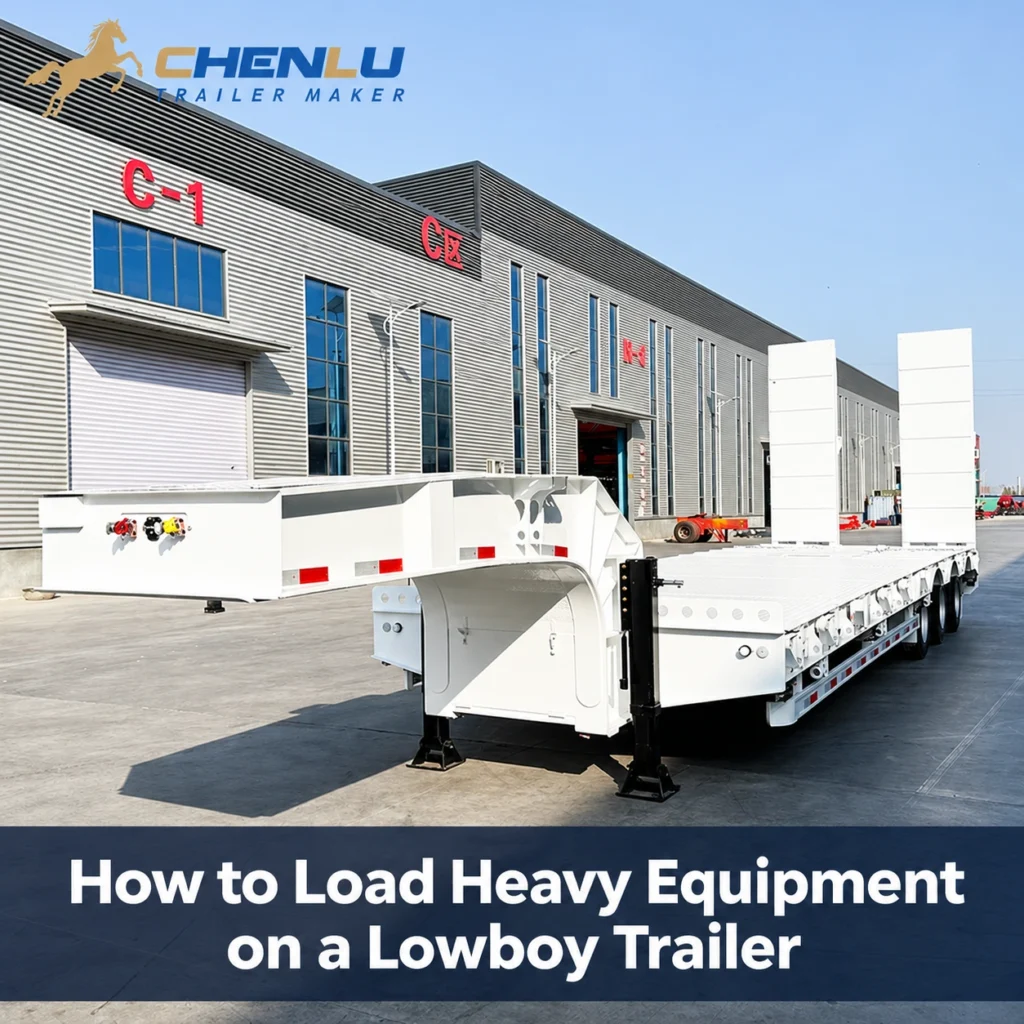
How to Load Heavy Equipment on a Lowboy Trailer: Rear Ramps, Folding Goosenecks and RGN
This lowboy trailer loading guide compares rear ramps, folding and detachable goosenecks for heavy equipment, including loading angle and ground clearance.
Read News ↗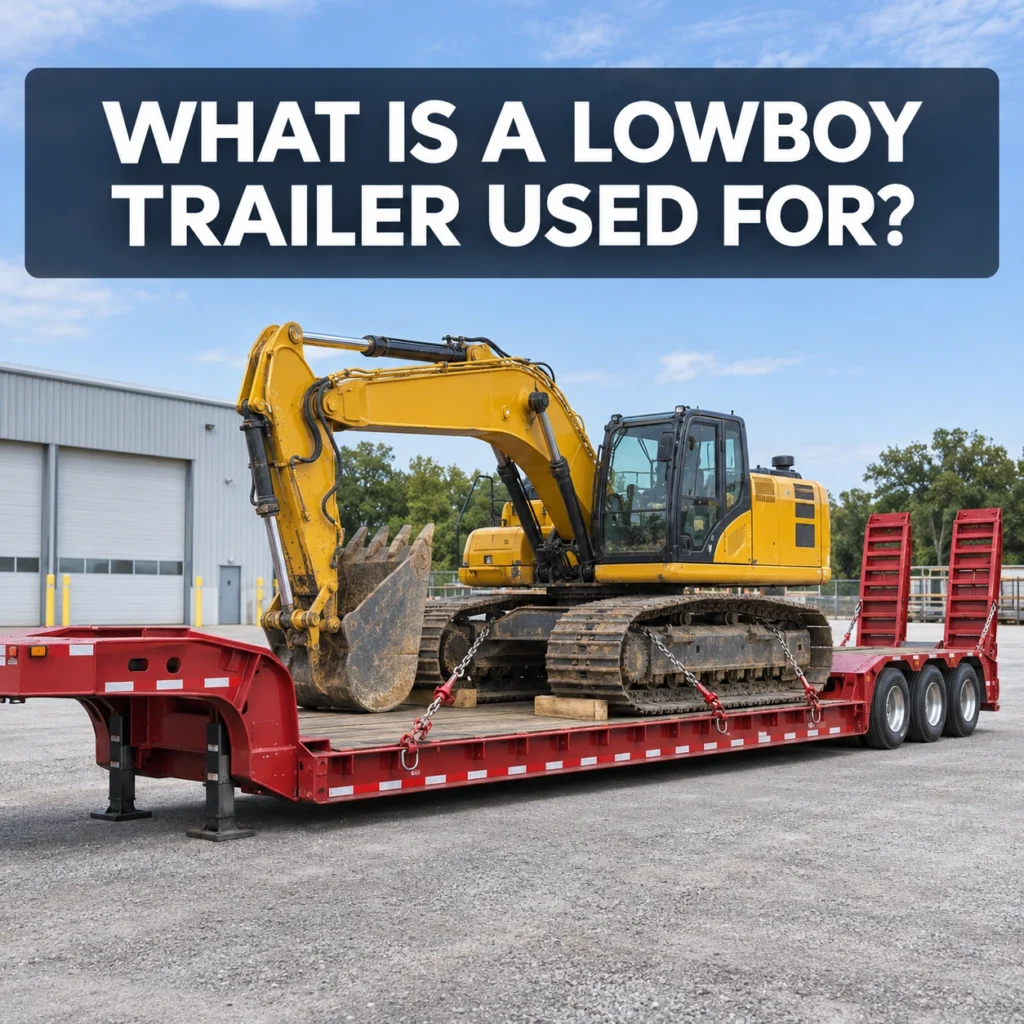
What Is a Lowboy Trailer Used For? Equipment, Loading Methods and Trailer Selection
What is a lowboy trailer used for? See how a heavy equipment lowboy trailer carries excavators, bulldozers, loaders and construction machinery.
Read News ↗