Heavy Equipment Transport

Heavy Haul Trailers

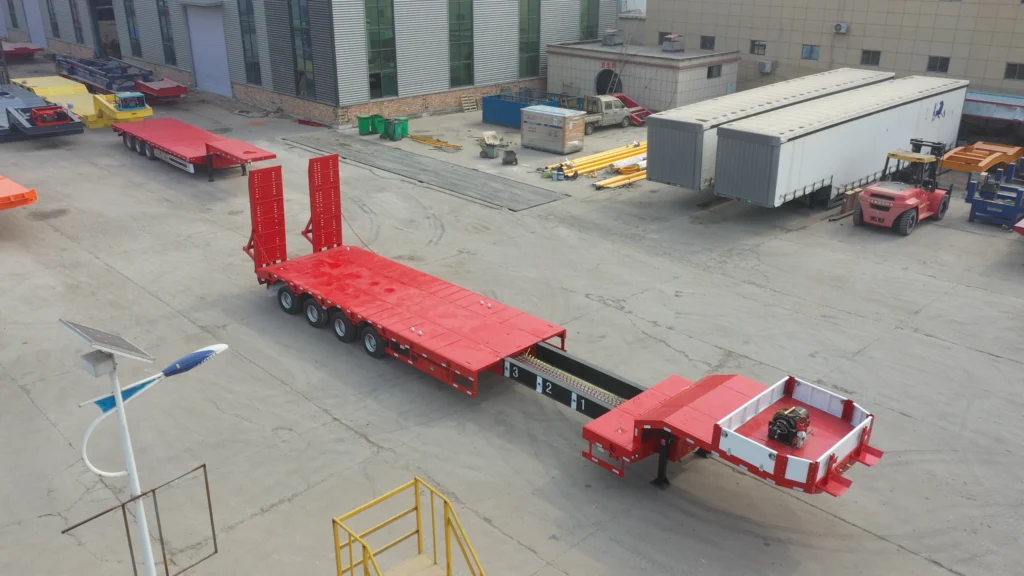
CHENLU heavy haul trailers cover four different transport problems: keeping tall machinery lower, giving suitable equipment a front-loading path, supporting longer cargo, and distributing project loads across a modular combination. Start with the cargo in transport condition—not a preferred axle count.
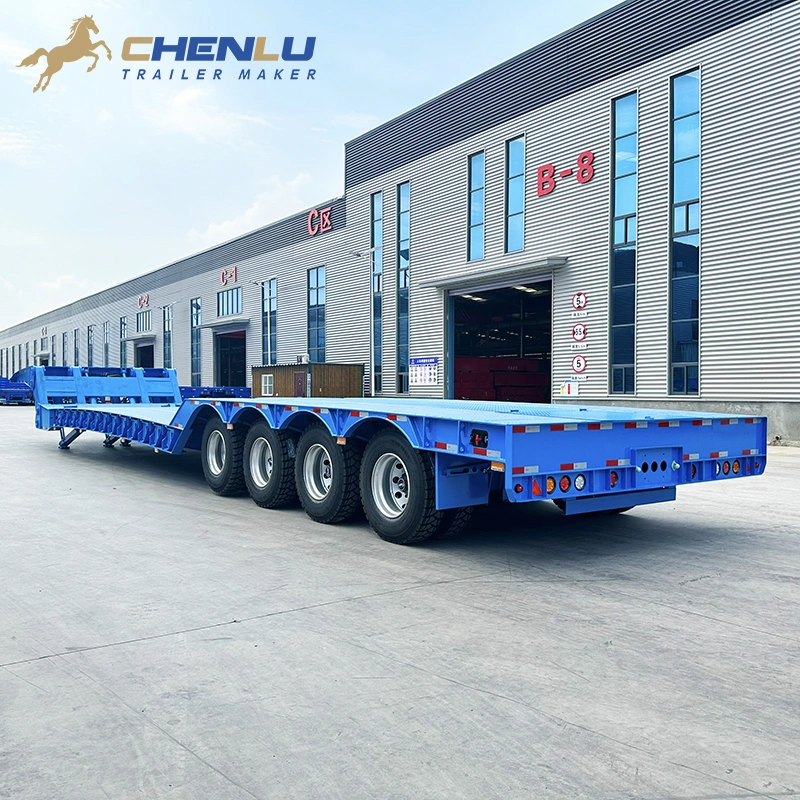
CHENLU heavy haul trailers for machinery and project cargo transport
Low bed, RGN, extendable and modular trailer range

Heavy Haul Trailer Types

What actually changes between low bed, RGN, extendable and modular trailers?

A low bed controls loaded height. An RGN changes how a machine reaches the deck. An extendable trailer changes the span between cargo supports. A modular trailer changes how the load is carried and steered across axle lines. More than one feature may appear on the same trailer.

01 / Low Deck

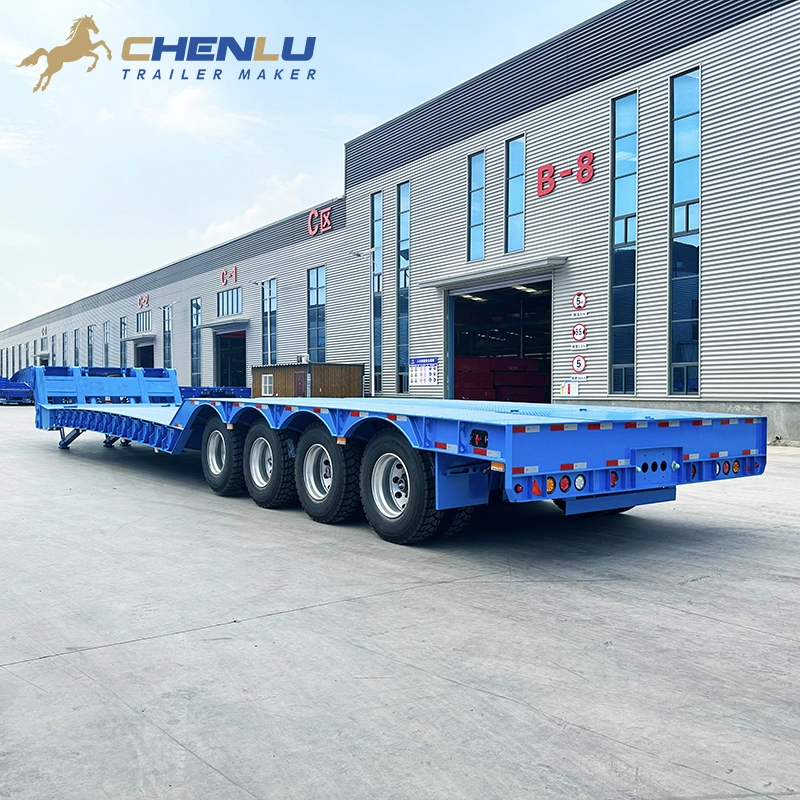
Low Bed Trailer

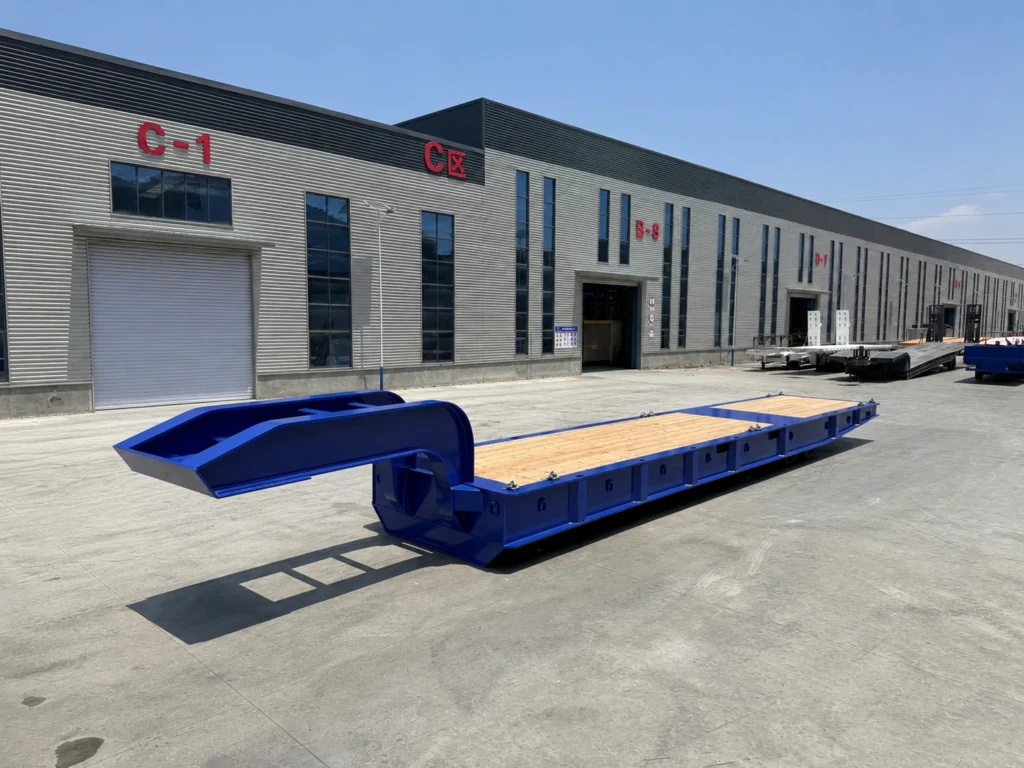
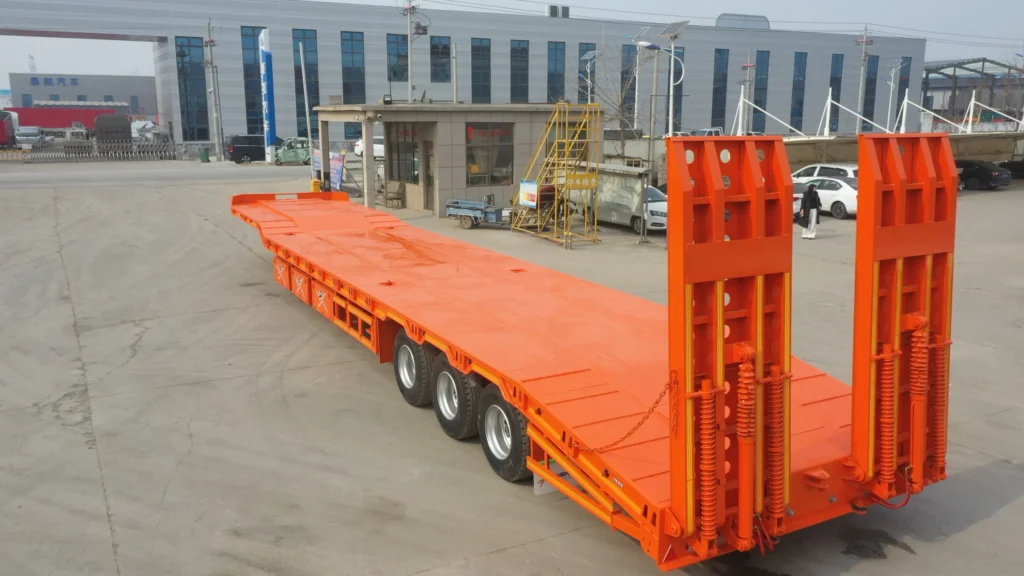
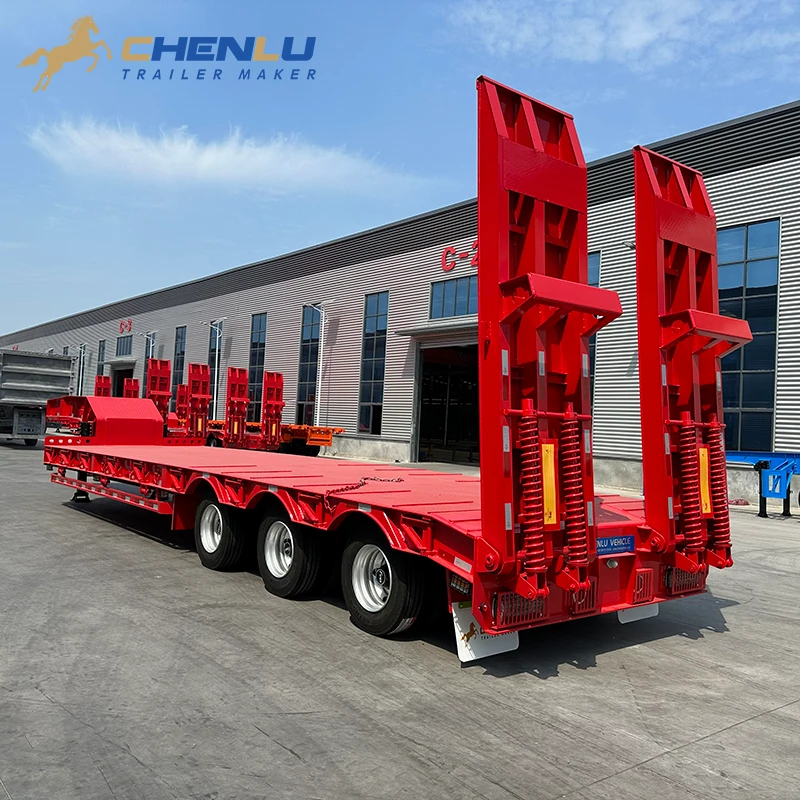
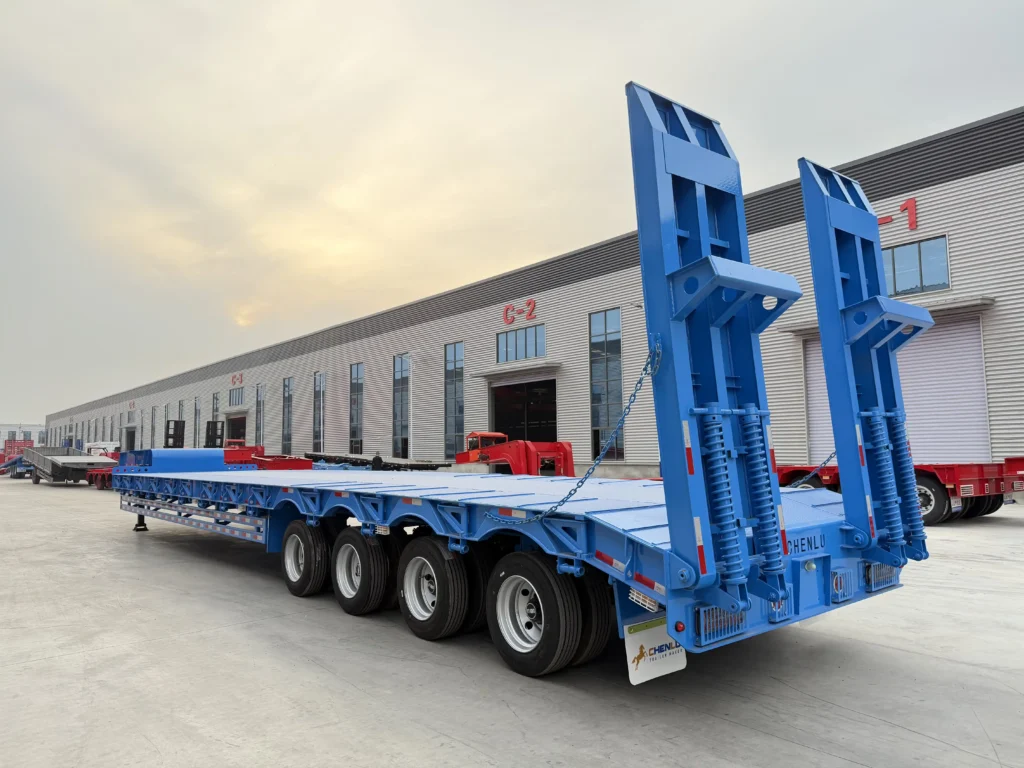
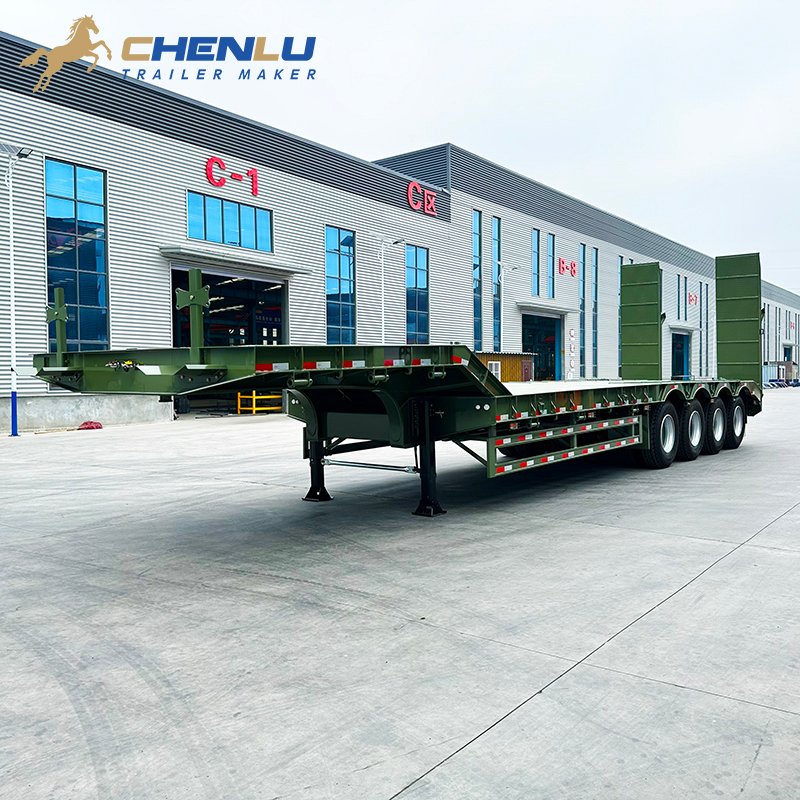
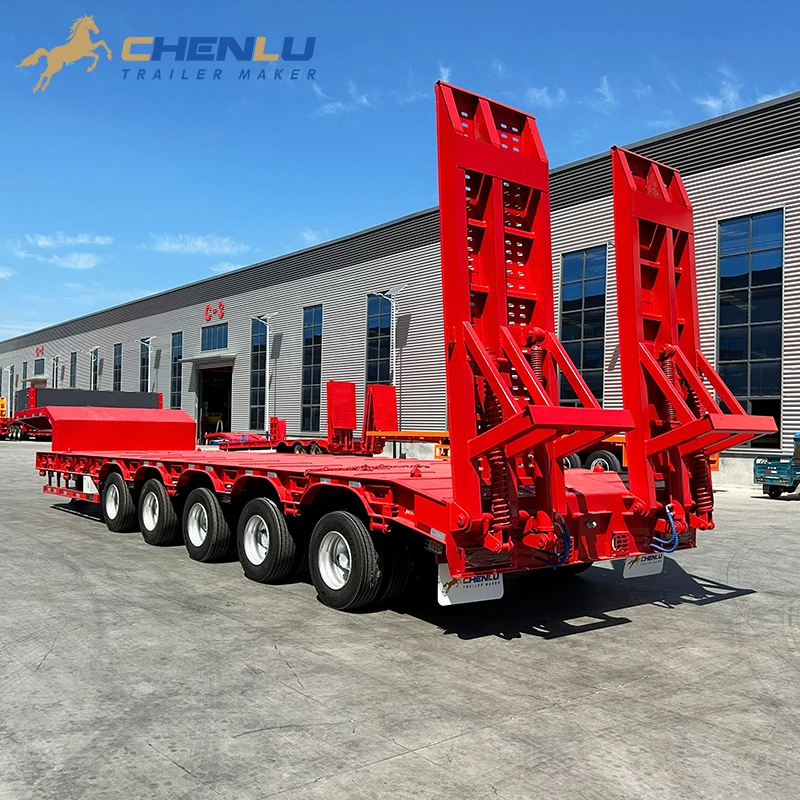
A low bed puts the main deck closer to the road so a tall machine travels lower. The term describes deck position; it does not tell you whether loading is by rear ramps, a fixed neck or a detachable neck.

Loaded height, not deck height alone Check the machine in transport position on the actual loaded deck. A wheel recess or excavator trough only helps when its position matches the machine footprint.

Ramp and undercarriage fit Compare ramp angle and breakover with machine ground clearance, wheelbase and track width. A deck can be low enough for the route but still difficult to load.

Clearance below the trailer Railway crossings, speed humps and uneven site entrances can catch a low deck. Suspension height adjustment should only be assumed when it is listed for the selected model.

Useful selection data: machine transport height, wheelbase or track width, undercarriage clearance, ramp profile and the lowest points on the route.

02 / Front Loading

Removable Gooseneck Trailer (RGN)

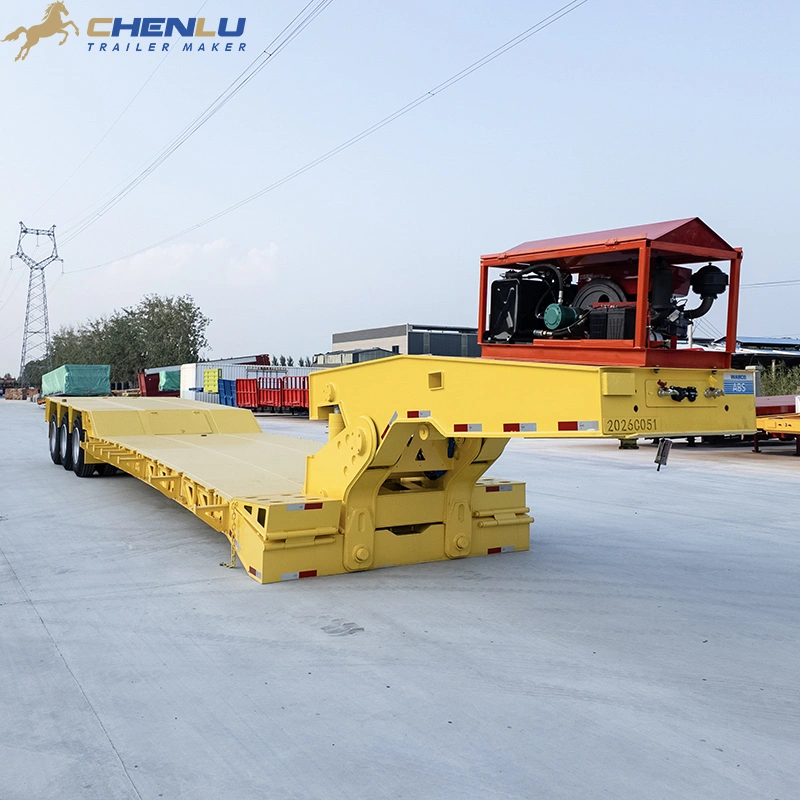
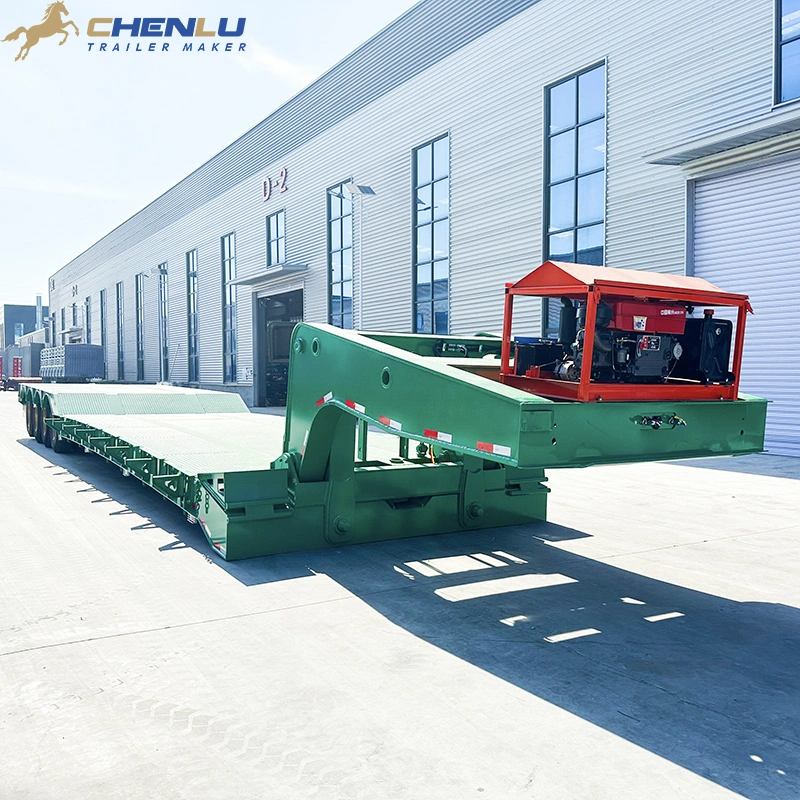
An RGN is a lowboy or low-bed trailer with a gooseneck that separates from the deck. The front of the deck is lowered so suitable tracked or wheeled equipment can drive on without using rear ramps.

The neck mechanism matters Mechanical and hydraulic detachable necks do not use the same operating sequence. Confirm how the neck is supported, disconnected, lowered and reconnected on the actual model.

The tractor is part of the fit Fifth-wheel height, neck swing clearance, tractor suspension and connection positions affect coupling and deck attitude after the trailer is loaded.

The loading ground must work Allow firm, reasonably level space for detaching the neck and approaching the deck. Track width, undercarriage clearance and the front loading area still have to match.

Useful selection data: machine track or wheel spacing, ground clearance, tractor fifth-wheel height, loading-area profile and required neck operating method.

03 / Supported Length

Extendable Trailer

An extendable trailer is used when the required distance between cargo support points will not fit on a fixed deck. The deciding dimension is often the supported span, not the overall length printed on the cargo drawing.

Support points set the working length Mark the permitted saddles, cribbing or bearing points on the cargo drawing. The deck must place structure below those points in the intended extension position.

Allowable load changes with the setup Working extension, load position, centre of gravity and axle reactions belong on the same check. Use the model load chart or an approved arrangement drawing.

The route envelope becomes longer Turning sweep, tail swing, rear overhang and loading space change in the extended position. Steering equipment, when fitted, must be reviewed as part of that arrangement.

Useful selection data: cargo drawing, support-point spacing, centre of gravity, required working length, loading position and turning constraints.

04 / Project Transport

Modular Trailer

A modular trailer is assembled from platform and axle-line units around a project load. Hydraulic suspension, steering and the chosen module combination make it a different system from a conventional semi-trailer with extra axles.

Axle lines work in support groups Modules may be joined lengthwise or side by side. Hydraulic suspension groups support the platform, while the approved combination defines axle reactions and ground loading.

The combination changes the steering Axle-line count, spacing and connection pattern affect the steering geometry. Suspension, steering, hydraulic and electrical controls have to be planned as one system.

Towed HMT and SPMT are different jobs A hydraulic modular trailer works with a tractor or puller; an SPMT carries its own drive and control system. Establish the operating method before choosing modules.

Useful selection data: total load, support footprint, centre of gravity, ground and route conditions, required manoeuvring and towed or self-propelled operation.

Heavy Equipment Transport Checks

Which measurement should decide the trailer family first?

Begin with the cargo in its real transport position, not only the dimensions in a sales brochure. Place its height, support points and centre of gravity against the intended deck, then test the loading path and route profile. The first condition a fixed semi-trailer cannot meet usually shows which family deserves attention.

01 / Route Profile

Plot the load from its highest point to the trailer’s lowest point

Record the machine with its boom, bucket, blade, mast or counterweight secured for travel. Check that loaded height against overhead restrictions, then check the underside of the trailer at railway crossings, speed humps and uneven entrances.

If height is the limiting measurement → Low Bed Trailers
02 / Loading Path

Draw how the machine will move from the ground onto the deck

Compare ramp angle and breakover with the machine’s track or wheel spacing and undercarriage clearance. If rear loading does not work, a detachable neck may provide front entry, but only where there is firm, reasonably level working ground.

If front drive-on loading is required → RGN Trailers
03 / Support Plan

Place the permitted support points before choosing deck length

Mark saddles, cribbing points, wheel or track contact and centre of gravity on the cargo drawing. When the required support span exceeds a fixed deck, check the extendable model in its working position, including load placement and axle reactions.

If fixed-deck support is too short → Extendable Trailers
04 / Axle & Steering Plan

Calculate load reactions and turning geometry as one combination

Check the kingpin or drawbar load, axle-group reactions, support footprint and available turning space. When a conventional frame and running gear cannot distribute or steer the project load, the axle-line arrangement becomes a system design task.

If the combination must be built around the load → Modular Trailers

One load can trigger more than one answer

A tall excavator may need two checks. A low bed can reduce its loaded height, while an RGN may be needed to give its tracks a workable front-loading path.

A long vessel may also create two limits. An extendable deck can place support beneath the specified saddles, while a low deck may still be needed to control overall transport height.

Modular transport begins at a different threshold. If load distribution, support footprint or steering cannot be resolved by a conventional semi-trailer, adding length or axles is not the whole answer. The module combination and operating method have to be designed together.

Heavy Haul Trailer FAQ

Seven questions to settle before matching a heavy haul trailer

Use the machine in its transport position and the route it will actually travel. Axle count and a catalogue payload are not enough to confirm the match.

FAQ 01 What type of trailer is normally used to move heavy equipment?

Excavators, dozers and other tall machines are commonly matched to a low bed or lowboy trailer because the dropped deck helps control loaded height. An RGN adds a detachable front neck when the machine needs to drive onto the deck. Long equipment may also need an extendable deck, while a load that cannot be distributed or steered on a conventional semi-trailer may require modular equipment. These features can overlap on one trailer.

FAQ 02 Is an RGN trailer the same as a lowboy trailer?

An RGN is one type of lowboy or low-bed trailer, but not every lowboy has a removable gooseneck. “Lowboy” describes the low deck profile. “RGN” identifies the detachable front neck used to create a front-loading path. A fixed-neck lowboy may use rear ramps or lifting equipment instead, and an RGN should not be assumed to have an extendable deck.

FAQ 03 Can any excavator or crawler machine drive onto an RGN trailer?

No. Check track or wheel spacing, machine weight, undercarriage clearance, approach angle and breakover against the selected deck and loading surface. The site also needs firm, reasonably level ground and enough room to detach and reconnect the neck. The trailer manual or configuration drawing should confirm the exact neck sequence and loading limits.

FAQ 04 Can an extendable trailer carry the same load at every extension length?

Do not assume that it can. The allowable load may change with working extension, cargo position, support spacing, centre of gravity and axle reactions. Mark the permitted bearing points on the cargo drawing, then check them against the manufacturer’s load chart or a configuration drawing for the intended extended position.

FAQ 05 How many axles should a heavy haul trailer have?

There is no axle number that suits every load. Start with cargo and trailer weight, centre of gravity, kingpin load, axle-group reactions and axle spacing. Tyre and component ratings set further limits, while the destination country and route determine the applicable mass and permit rules. More axles can spread weight, but they do not by themselves confirm payload or road acceptance.

FAQ 06 When is a modular trailer used instead of a lowboy or RGN?

Modular equipment becomes relevant when the load footprint, concentrated reactions, ground loading or steering requirement cannot be resolved with a conventional trailer frame and running gear. Axle-line modules may be combined lengthwise or side by side and use hydraulic suspension and coordinated steering. A towed hydraulic modular trailer and an SPMT are different operating systems, so the power and steering method must be defined first.

FAQ 07 What measurements are needed to match a heavy equipment transport trailer?

Record cargo weight and dimensions in transport position, centre of gravity, permitted support points, wheelbase or track spacing and undercarriage clearance. Add the loading method, loading-ground profile, tractor fifth-wheel height, route restrictions and destination requirements. A machine drawing and site photographs usually reveal problems that a model name or total weight does not show.

    Get a Quote Now


    Submit your inquiry to receive a precise quote and professional advice for your project.