
What Types of Low Bed Semi Trailers Are There? Differences Between Fixed, Folding, Removable and Extendable Designs
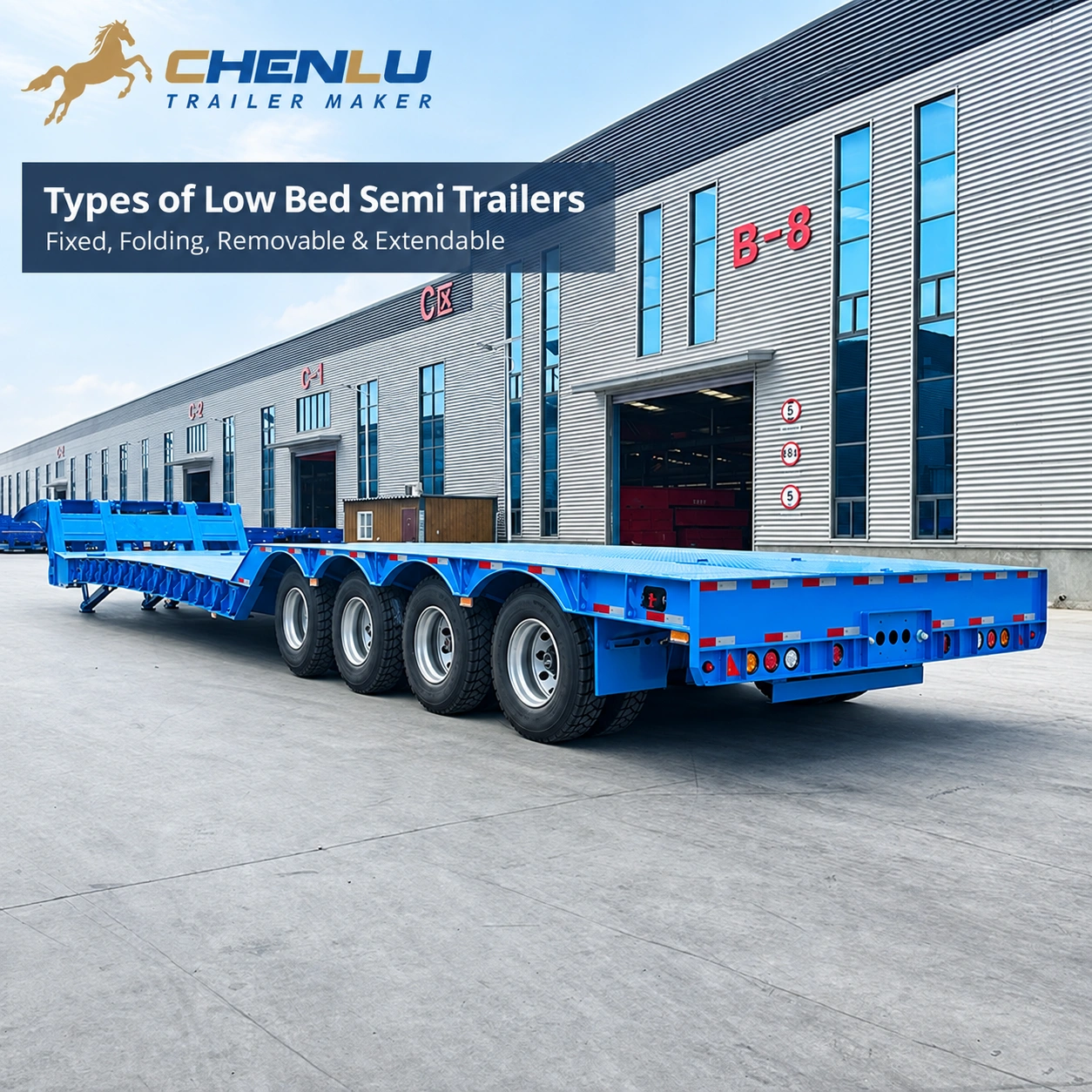
Low bed semi trailers should first be classified by their loading system and by the part of the trailer that moves. A fixed gooseneck trailer normally loads from the rear using ramps. A folding gooseneck remains connected to the frame and changes position to form a front loading slope. A removable gooseneck separates from the main deck so equipment can enter from the front. An extendable trailer must be identified more precisely: either the main deck or the gooseneck may extend.
Axle count, rated capacity and operating power are secondary configuration details. Three, four or five axles describe the running gear. Ratings such as 60, 80 or 100 tonnes describe a load class under stated design conditions. Mechanical or hydraulic describes how a moving mechanism operates. These details affect the trailer design, but they do not replace classifications such as fixed, folding or removable.
CHENLU's heavy-haul trailer range includes low bed semi trailers, removable gooseneck trailers and extendable lowbed trailers. These structures solve different problems involving loading height, front loading and support for long cargo. The correct choice depends on the equipment dimensions, loading site, tractor and transport route.
What Are the Main Types of Low Bed Semi Trailers?
| Type | Gooseneck or deck condition | Main loading direction | Purpose of the structure | Points to verify |
|---|---|---|---|---|
| Fixed-gooseneck low bed | The gooseneck is fixed to the main frame | Rear ramps or crane loading | Maintains a fixed tractor connection and a low cargo deck | Ramp length and width, breakover at the top, equipment ground clearance and rear working space |
| Folding-gooseneck low bed | The gooseneck stays connected and moves between loading and transport positions | Front loading | Creates a front loading path without removing the gooseneck | Folding path, front slope, locking positions, lowest point of the equipment and ground condition |
| Removable-gooseneck low bed (RGN) | The gooseneck separates from the main deck | Front loading | Lowers the front of the main deck into its loading position | Disconnecting method, support and locking, hoses and cables, tractor fifth wheel and operating space |
| Extendable-deck low bed | The main deck extends and locks at specified positions | Depends on the gooseneck and ramp design | Adds effective support length for long cargo | Closed and extended dimensions, locking positions, support points, concentrated loads and load chart for each extended position |
| Extendable-gooseneck low bed | The main deck is fixed while the front gooseneck length is adjustable | Depends on the actual trailer | Changes the front geometry between the kingpin and main deck | Gooseneck extension, tractor fifth wheel, turning clearance, hoses and cables, and locking positions |
These features can be combined. A removable gooseneck may be used with an extendable main deck, while a fixed main deck may have an extendable gooseneck. Kässbohrer also separates fixed or extendable chassis from movable or detachable goosenecks in its low-bed range.[8] The terms “RGN” or “extendable” are therefore not enough on their own. The general arrangement, moving section and applicable load condition must also be checked.
What Is a Low Bed Semi Trailer?
A low bed semi trailer places its main load-carrying area between the gooseneck and the raised platform above the rear axle group. This deck sits lower than the continuous platform of a standard flatbed semi trailer. The lower deck gives tall cargo—such as excavators, loaders, bulldozers, crawler-crane parts and mining equipment—a lower support position.
The first purpose of the low deck is to reduce loaded height. It does not mean that every heavy load must use a low bed. Steel, containers or ordinary machinery may still be carried on a flatbed or another trailer when their height and loading method allow it. Conversely, equipment that is not exceptionally heavy may still need a low deck because its transport height is restricted by bridges, gantries or site entrances.
Lower clearance must be checked at the same time. When the cargo deck is lowered, clearance below the frame may also decrease. Railway crossings, raised road sections, ferry ramps and uneven site entrances can then become limiting points. For construction and mining equipment transport, CHENLU matches rear-loading low beds or front-loading RGN trailers to the equipment's transport height, lowest ground-clearance point and required loading path.
Which Dimensions Determine Whether a Low Bed Fits the Equipment?
Overall length and rated capacity cannot, by themselves, show whether a machine will fit. A technical check should cover at least the following items.
Main-deck Length and Effective Support Length
Overall trailer length includes the gooseneck, low deck, transition section, rear platform and rear overhang. Only part of that length directly supports the machine's tracks, wheels or base. The equipment's overall length is also not the same as the deck length it needs. Confirm the track contact length, wheelbase, axle spacing, outriggers, saddles or other actual support points.
For example, one configuration lists an overall length of 18,000 mm, a 7,900 mm low-deck structural section and a 7,700 mm level low deck. These figures describe the external length, a structural section and the level support area respectively; they are not interchangeable.
Deck Height, Loaded Height and Ground Clearance
The highest loaded point depends on the equipment's transport height measured from its track or wheel contact surface, plus the deck height at that surface. A deck height of 900 mm or 1,300 mm can be used for a route-height check only after the equipment height, tyre deflection, suspension condition and drawing datum are confirmed.
Values from different vehicle states should not be compared directly. A drawing height may refer to the unladen design position. The actual loaded attitude also depends on the tractor fifth-wheel height, suspension and load distribution.
Ramp Angle and Breakover at the Top
The inclined ramp is only one part of the loading path. When the tracks or wheels reach the top, the equipment must move from the slope onto the rear platform or low deck. A long wheelbase, long track contact length or low undercarriage components can cause interference at this change of angle.
A preliminary ramp angle can be calculated from the effective rise and horizontal projection. Whether the machine can pass also depends on the toe and top radii, wheelbase and track profile. The final check should overlay the equipment side profile on the trailer in loading position instead of asking only whether the ramp is long enough.
Body Width, Deck Width and Extended Width
Body width, clear deck width and total width with side extensions are different measurements. Track width must match the actual supporting surface. Transport width is measured to the outermost point of the extensions and cargo. Greater width also affects permits, side clearance and the track position during loading.
Tractor Fifth-wheel Height and Gooseneck Interface
Fifth-wheel height affects the connected trailer's longitudinal attitude, gooseneck clearance and actual deck height. ISO 337 defines the basic and mounting interchange dimensions of the 50.8 mm (2-inch) semi-trailer kingpin. Projects using the UNECE system may also need to consider the mechanical-coupling requirements of UN Regulation No. 55. ISO 1726-1 addresses interchange dimensions and gooseneck clearance for tractors and general cargo semi trailers, but the standard states that it may not apply to special combinations such as low-bed trailers. It can identify interface dimensions that need checking, but it cannot confirm that a particular low bed is compatible. These standards apply only within their stated market and approval scope; they do not mean that every export trailer automatically complies with one version of a regulation. The final interface must be confirmed from the tractor data and approved project documents.[1][2][3]
Load Position, Kingpin Reaction and Axle-group Reaction
The combined weight of the semi trailer and its cargo is carried by the kingpin and the rear axle group. In a simplified static model:
Here, W is the trailer-and-cargo weight included in the calculation, Rk is the kingpin reaction, Ra is the axle-group reaction, x is the horizontal distance from the combined centre of gravity to the kingpin, and L is the horizontal distance from the kingpin to the effective centre of the axle group. Moving the equipment rearward usually increases the axle-group reaction; moving it forward usually increases the kingpin reaction.
This is only a preliminary two-dimensional static relationship. It does not replace checks of local frame strength, axle equalisation, tyres, suspension, brakes, dynamic loads or legal road axle loads. The Talbert operator's manual also treats total vehicle weight and load distribution separately, and requires each tyre, wheel and axle to remain within its rating.[4]
How Does a Fixed-gooseneck Low Bed Load Equipment?
A fixed gooseneck remains connected to the main frame, and equipment normally enters from the rear over ramps. The tractor can stay connected during loading. The structure and operating path are relatively direct, but the machine must pass over the complete rear ramp and the breakover at its top.
This type suits equipment that can align with the trailer from the rear, has enough underbody clearance for the slope changes, and can be loaded where sufficient rear working space is available. Ramp width must match the track or tyre positions. Spring assistance can reduce the force needed to raise mechanical ramps, but it does not change the ramp angle, supporting capacity or machine clearance.
Main Specifications of the CHENLU 100 Ton 4 Axle Fixed-gooseneck Lowbed Trailer
The 100 Ton 4 Axle Fixed-gooseneck Lowbed Trailer has a fixed gooseneck, four rear axles and two mechanical ramps. Its 14 m reference configuration lists the following data:
| Item | Configuration |
|---|---|
| Product structure | Four-axle fixed-gooseneck low bed semi trailer |
| Configuration length | 14 m low-bed configuration |
| Overall width | 3,000 mm |
| Loading-platform height | 1,300 mm |
| Number of axles | 4 |
| Tyre size | 315/80R22.5 |
| Loading direction | Rear loading |
| Rear ramps | Two mechanical ramps with coil-spring assistance |
| Rated load | 100 tonnes; final rating subject to the confirmed quotation and load plan |
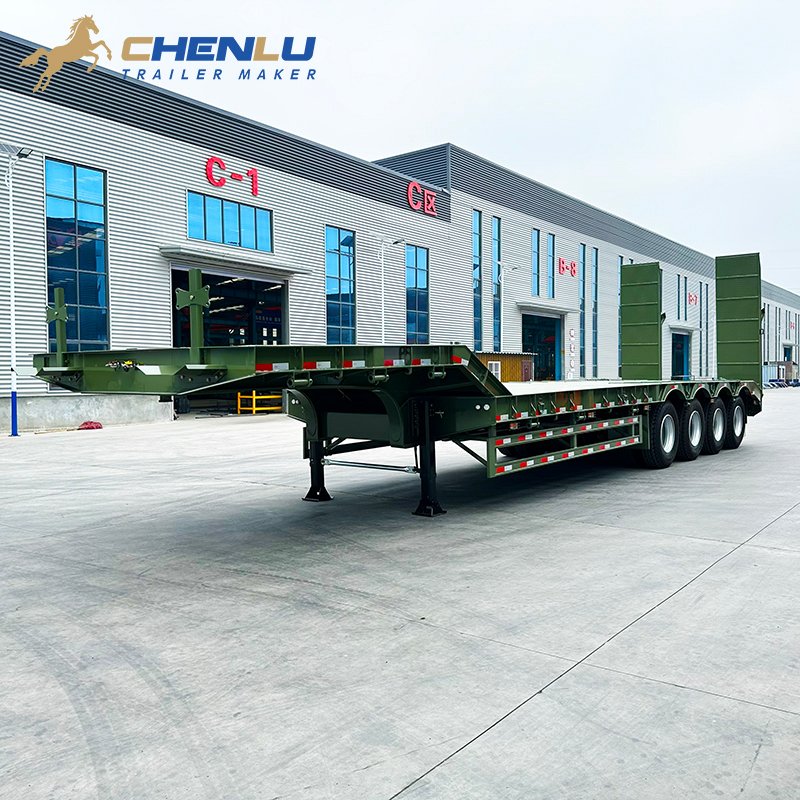
The 14 m configuration does not, by itself, define the effective deck length, axle ratings, suspension ratings or ramp dimensions. For an equipment match, the actual support area, ramp spacing, top transition and load position must be checked against the track or tyre locations.
How Does a Folding Gooseneck Create a Front Loading Path?
A folding gooseneck moves between loading and transport positions while remaining connected to the main frame. Unlike a fixed gooseneck, the front section can form an equipment entry. Unlike an RGN, the entire gooseneck is not removed from the main deck.
Front loading avoids passing over the rear axle platform, but the equipment must still cross the transitions between the ground, folding gooseneck and low deck. Design checks include the folding path, front-slope length, hinge and locking positions, hydraulic or mechanical operating conditions, the machine's lowest point and the available front working space.
A moving gooseneck must also be mechanically locked and fully connected in its transport position. Hydraulics may move the mechanism, but they do not replace the transport lock. The operating sequence must come from the documents for that exact model; procedures from another manufacturer or another gooseneck design should not be applied directly.
Main Specifications of the CHENLU 4 Axle Folding Gooseneck Lowbed Trailer
The gooseneck of the 4 Axle Folding Gooseneck Lowbed Trailer folds between loading and transport positions while remaining connected to the frame. Its main dimensions are:
| Item | Dimension |
|---|---|
| Overall length | 19,600 mm |
| Overall width | 3,500 mm |
| Folding-gooseneck length | 4,000 mm |
| Main-deck length | 8,500 mm |
| Main-deck height | 900 mm |
| Tractor fifth-wheel height | 1,350 mm |
| Number of axles | 4 |
| Axle-spacing group | 1,310 + 1,310 + 1,310 mm |
| Tyre outside diameter | Ø1,120 mm |
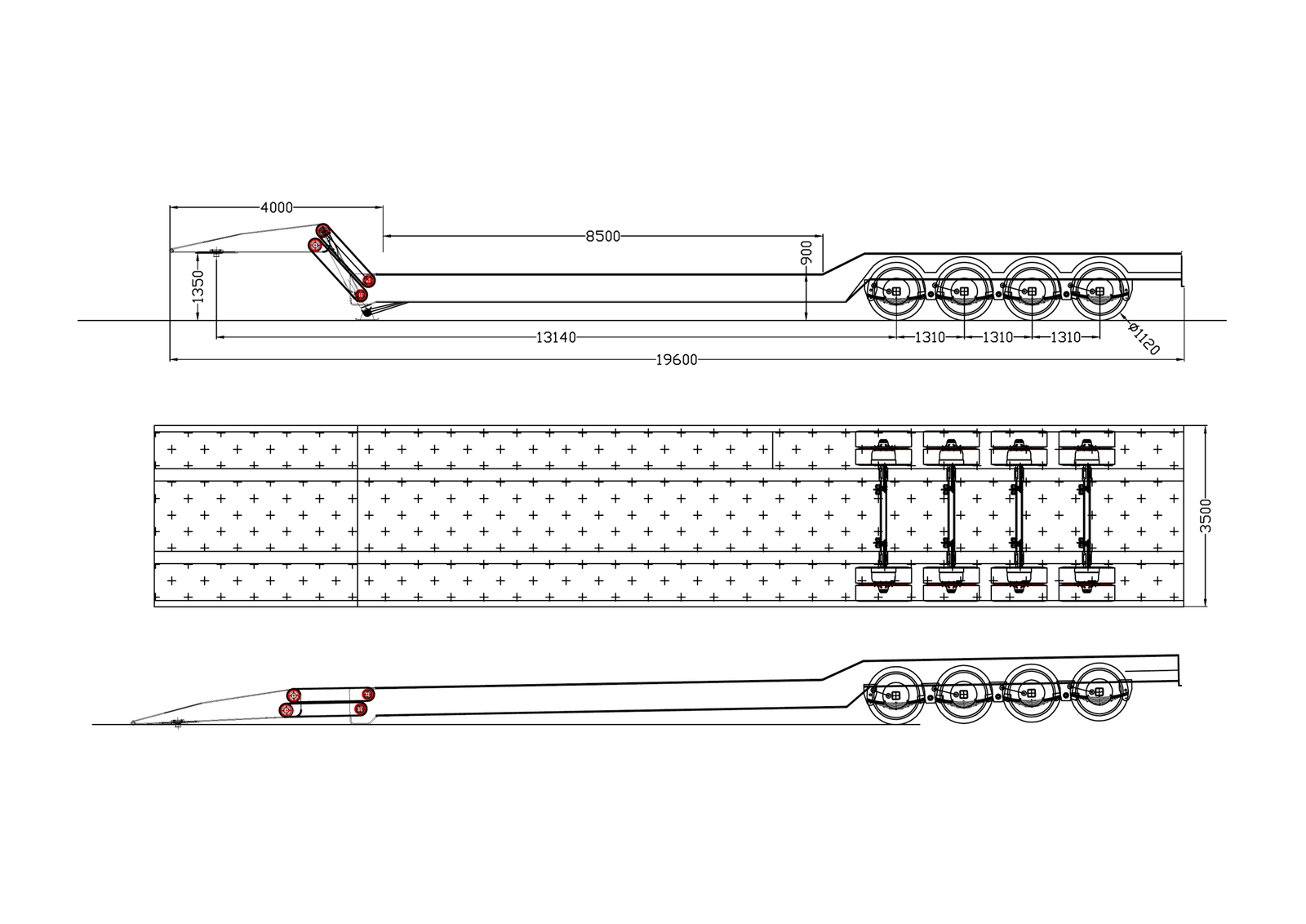
The 8,500 mm figure is the main-deck length, not the overall trailer length. The 900 mm value is the main-deck height of this configuration and should not be treated as a series-wide dimension for every folding-gooseneck model. The equipment side profile should be checked against both the loading and transport positions.
What Is the Basic Difference Between a Removable and a Folding Gooseneck?
On a removable-gooseneck low bed, the gooseneck separates from the main deck during loading and the front of the deck is lowered into position. “Removable Gooseneck” is commonly shortened to RGN; “detachable gooseneck” is another common term. An RGN belongs to the low-bed or lowboy family—it is not a separate deck form outside that family.
Both mechanical and hydraulic RGN systems are available, but their operating procedures differ. In the Fontaine Heavy-Haul Operator's Guide, a mechanical removable gooseneck uses tractor movement, rollers, connecting plates and pins to disconnect and reconnect. A Talbert hydraulic detachable gooseneck uses cylinders, controls, stop pins and adjustment shims. “RGN” only tells us that the gooseneck can separate; the power source, supporting method and reconnection procedure must still be confirmed for the specific model.[4][5]
Site condition is part of the RGN operating plan. The Talbert manual requires the models it covers to be disconnected and loaded on firm, level ground with the equipment aligned to the loading path. The actual CHENLU operating procedure is defined by the instructions supplied with the trailer. During selection, ground bearing capacity, longitudinal slope, cross slope and front operating space should be checked in advance.[4]
Main Specifications of the CHENLU 100 Ton 4 Axle Detachable Gooseneck Lowbed Trailer
The 100 Ton 4 Axle Detachable Gooseneck Lowbed Trailer has a front removable gooseneck. In the CHENLU 2026C099 configuration, the gooseneck, low deck, rear transition and axle platform have the following dimensions:
| Item | Dimension |
|---|---|
| Overall length | 18,000 mm |
| Gooseneck-section length | 3,610 mm |
| Low-deck structural section | 7,900 mm |
| Level low-deck length | 7,700 mm |
| Rear transition | 700 mm |
| Rear-platform length | 5,790 mm |
| Body width | 3,500 mm |
| Outside width with extensions | 4,000 mm |
| Low-deck height | 900 mm; drawing states no pre-camber |
| Front-gooseneck height | 1,600 mm |
| Rear-platform height | 1,250 mm |
| Number of axles | 4 |
| Axle-spacing group | 1,310 + 1,310 + 1,310 mm |
| Rear overhang | 934 mm |
| Tyre envelope | 13R22.5 |
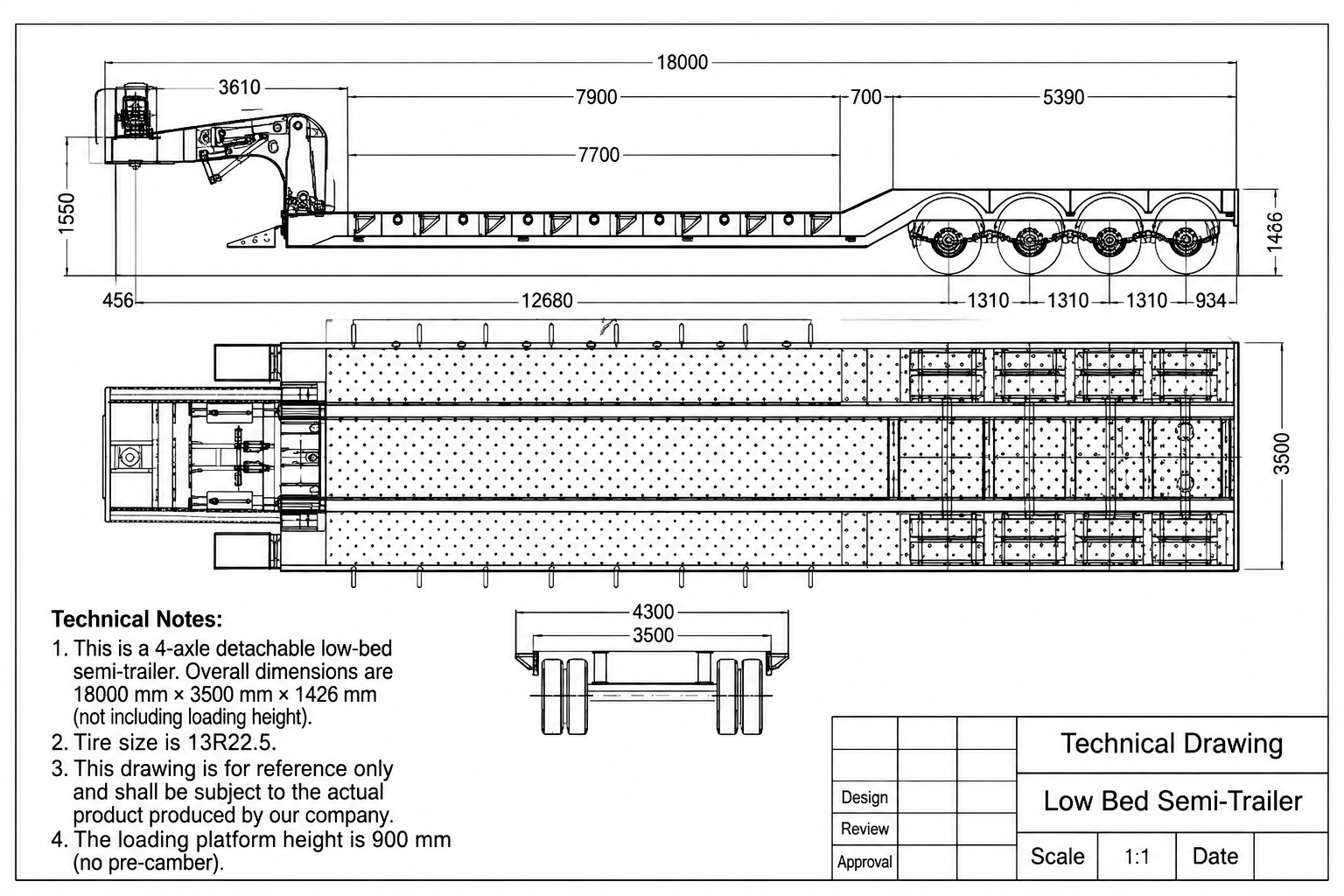
A 3,500 mm body width and a 4,000 mm width with extensions describe two different operating envelopes. Similarly, the 7,900 mm low-deck structural section and the 7,700 mm level support area are not the same dimension. Equipment support points, transport width and route conditions must use the relevant value rather than simply the largest number in the table.
An Extendable Low Bed May Have an Extendable Deck or Gooseneck
The word “extendable” must identify the moving section. Extending the main deck changes the spacing available between cargo support points. Extending the gooseneck changes the connection geometry at the front. These two designs serve different purposes and require different load data and route checks.
An Extendable Main Deck Increases the Support Span
An extendable deck can carry long machinery, beams, steel structures or other loads whose approved support points cannot all sit on a fixed deck. The required extension is determined by the permitted support-point spacing, centre of gravity and concentrated-load positions—not simply by the cargo's overall length.
As the deck extends, deck bending moment, overall vehicle length, tail swing and turning envelope all change. The Fontaine operator's guide gives separate load conditions for closed and open positions on the double-drop extendable models it covers; some partly open conditions require the cargo to act as part of the support system. An extendable low bed must therefore have a load chart and operating limits for each permitted position. A rating for the closed position cannot automatically be applied to every extended position.[5]
For long machinery, beams and steel structures whose support points cannot fit on a fixed deck, CHENLU can supply extendable lowbed semi trailers. The configuration should define the closed length, extended length, permitted locking positions, support points and load conditions at each position.
An Extendable Gooseneck Changes Only the Front Connection Length
An extendable gooseneck is not the same as an extendable main deck, and it does not automatically provide front loading. If the trailer keeps a fixed main deck and rear ramps, equipment still enters from the rear.
CHENLU's 4 Axle Lowbed Semi Trailer with Extendable Gooseneck uses a fixed main deck and an adjustable-length gooseneck. Equipment is still loaded over the rear ramps. Its main dimensions are:
| Item | Dimension |
|---|---|
| Overall length | 15,500 mm |
| Overall width | 3,000 mm |
| Main-deck length | 11,901 mm |
| Main-deck condition | Fixed, not extendable |
| Deck height | 1,250 mm |
| Reference gooseneck length | 3,300 mm |
| Gooseneck extension | Determined by order requirements |
| Tractor fifth-wheel height | 1,350 mm |
| Number of axles | 4 |
| Axle-spacing group | 1,310 + 1,310 + 1,310 mm |
| Rear overhang | 1,487 mm |
| Rear ramps | Two upright ramps |
| Overall height with ramps raised | 3,940 mm |
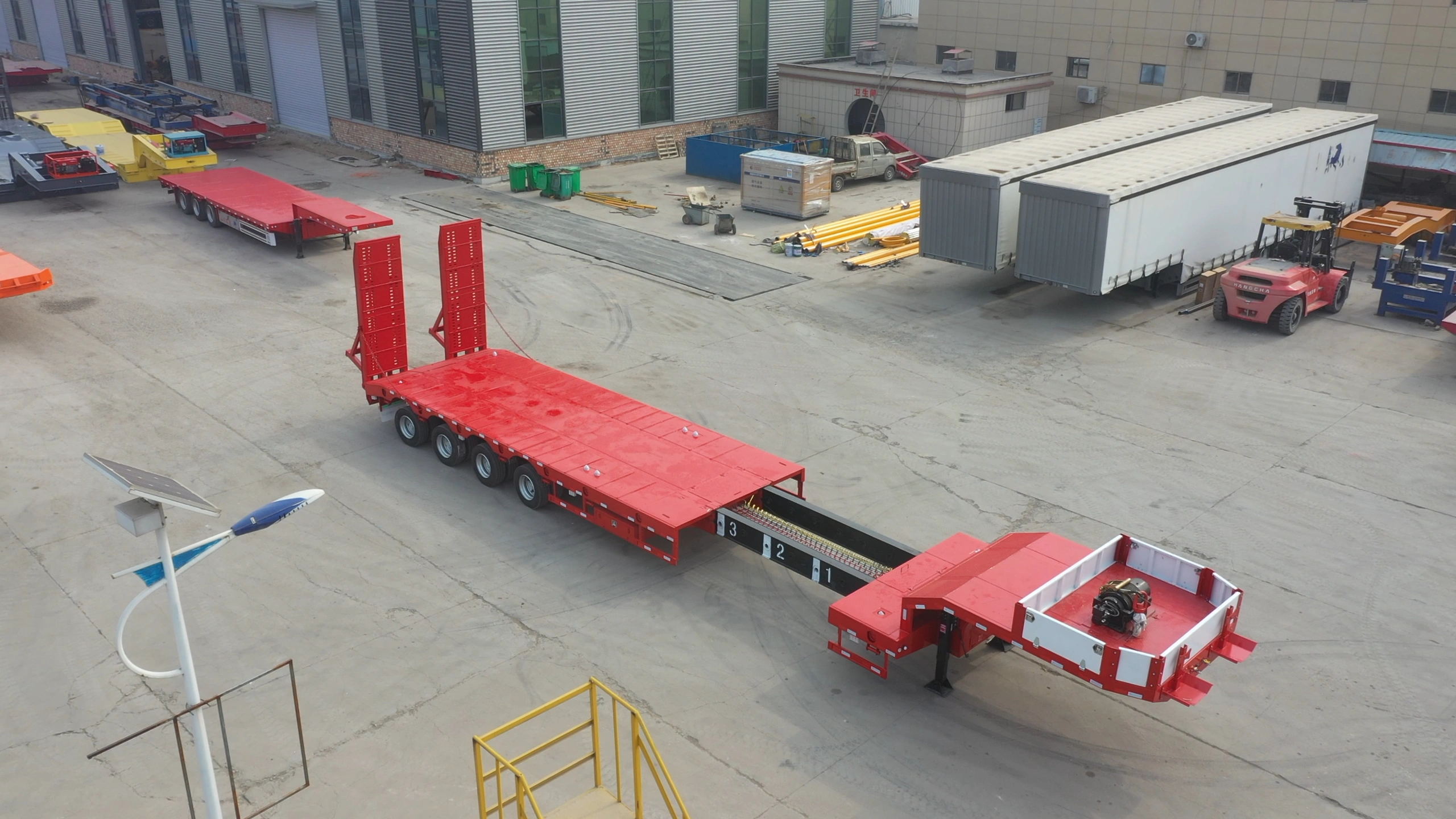
This model still loads over the rear ramps. Its 11,901 mm main deck does not extend when the 3,300 mm reference gooseneck is adjusted. The final gooseneck extension should be checked against the tractor fifth-wheel position, cab and chassis clearance, kingpin location, hose and cable travel, and every permitted locking position.
Main Parameters of Four CHENLU Low Bed Configurations
| Comparison item | Four-axle fixed gooseneck | Four-axle folding gooseneck | Four-axle detachable gooseneck | Four-axle extendable gooseneck |
|---|---|---|---|---|
| Main loading path | Rear ramps | Front folding slope | Front loading after gooseneck removal | Rear ramps |
| Gooseneck condition | Fixed | Connected and folding | Separates from the main deck | Connected and adjustable in length |
| Main-deck condition | Fixed | Fixed | Fixed | Fixed |
| Overall/configuration length | 14 m configuration | 19,600 mm | 18,000 mm | 15,500 mm |
| Overall/body width | 3,000 mm | 3,500 mm | 3,500 mm body; 4,000 mm with extensions | 3,000 mm |
| Main or low-deck length | Not stated as one value for this configuration | 8,500 mm | 7,900 mm low-deck section; 7,700 mm level section | 11,901 mm |
| Main-deck height | 1,300 mm | 900 mm | 900 mm | 1,250 mm |
| Fifth-wheel height | Not stated as one value for this configuration | 1,350 mm | 1,600 mm front-gooseneck height; not the same as fifth-wheel height | 1,350 mm |
| Four-axle spacing | Not stated as one value for this configuration | 1,310 + 1,310 + 1,310 mm | 1,310 + 1,310 + 1,310 mm | 1,310 + 1,310 + 1,310 mm |
These figures apply to four specific CHENLU configurations. A lower deck does not automatically mean a higher rated load, and a longer trailer does not automatically provide a longer effective support area. Different models can be compared directly only when the dimension definitions, vehicle states and load conditions are the same.
Why Do Three, Four or Five Axles Not Define the Trailer Type or Capacity?
Adding axles can change the axle-group reaction and the number of tyre contact patches. It also adds frame length, tare weight, tyres, suspension and brake components. Axle spacing and axle-group position affect tyre scrub during turning, tail swing and the usable equipment position on the deck.
Axle count does not define the gooseneck. A three-axle fixed-gooseneck and a four-axle fixed-gooseneck use the same basic loading system. A four-axle detachable gooseneck belongs to a different type because its front connection can separate.
The braking system must match the final axle group and destination requirements. UN Regulation No. 13 distinguishes the mass carried by the axles from the kingpin load in semi-trailer brake testing. A trailer approved under that system must have its braking configuration and validation based on the applicable axle loads. Other destinations must follow their local requirements.[6]
What Do Low Bed, Lowboy, Double Drop and RGN Mean?
Low bed, lowbed, low loader and lowboy can describe similar low-deck semi trailers in different markets. “Lowboy” is more common in North America; “low bed” and “low loader” are widely used elsewhere. The name does not replace the configuration: deck position, gooseneck and loading direction still need to be confirmed.
Double drop describes a deck profile with a height change at both the front and rear. RGN describes a removable-gooseneck mechanism. An RGN can also have a double-drop profile, but the two terms describe different structural features.
Fixed gooseneck or fixed neck means the gooseneck remains fixed. Folding gooseneck means it stays connected but can fold. Removable gooseneck or detachable gooseneck means it can separate from the main deck. These terms refer to different mechanisms and should not be used as synonyms.
How Do You Select a Low Bed Type from the Equipment and Route?
Step 1: Define the Equipment in Transport Condition
Record the overall length, width, height and operating weight after all transport attachments are fitted. Mark the centre of gravity, track or wheel contact points, wheelbase, track contact length, lowest ground-clearance points, front and rear overhangs, and any areas that cannot carry load.
Step 2: Map the Loading Path
A fixed gooseneck requires checks of the rear ramps, top breakover and rear platform. A folding gooseneck requires a check of the front folding path. An RGN requires checks of gooseneck removal, tractor movement and front approach. For the models it covers, the Talbert manual requires equipment to stay aligned with the ramps and trailer and to be loaded on level ground. Conditions of this kind must be applied through the operating document for the specific trailer and the site plan.[4]
Step 3: Define the Support Areas
Place the permitted support points of the tracks, wheels, outriggers or machine base on the main-deck layout. The UK DVSA heavy-vehicle loading guide also states that when a platform does not fully support wheeled or tracked equipment, the chassis should be properly supported or suitable material such as timber should be used. This is UK regulatory guidance, not a substitute for the rules of every country, but it shows why contact surfaces and support methods cannot be judged from total weight alone.[7]
Step 4: Calculate Kingpin and Axle-group Reactions
Use the actual equipment centre of gravity and the trailer's tare-weight distribution for the static calculation. Compare the results with the applicable ratings at the kingpin, axles, suspension, tyres and frame. Axle count without axle loads and kingpin reaction does not provide a complete load assessment.
Step 5: Check the Route in Loaded Condition
Use the loaded overall height, width and length, front and rear overhangs, axle spacing, individual axle loads and minimum ground clearance. CHENLU supplies several export markets, so an ordinary road limit from one country cannot replace destination regulations, permit requirements and a route-specific review.
Step 6: Record Interfaces and Systems in the Final Documents
The approved drawing or configuration sheet should state at least the gooseneck type, main-deck length and height, width condition, kingpin and fifth-wheel interface, number and spacing of axles, axle and suspension ratings, tyre size and load index, brake and electrical interfaces, ramp or gooseneck operating method, locking arrangements and load limits.
Frequently Asked Questions
Are a Fixed Gooseneck and a Folding Gooseneck the Same Structure?
No. A fixed gooseneck remains fixed during loading and transport. A folding gooseneck stays connected to the frame but moves between loading and transport positions. The two structures normally use rear-ramp loading and a front folding slope respectively.
Is a Folding Gooseneck an RGN?
No. A folding gooseneck stays connected to the main frame while it moves. An RGN can separate from the main deck. Both may provide a front entry, but their connection condition, power system and site procedure are different.
Does an RGN Always Use Hydraulics?
No. Both mechanical and hydraulic removable-gooseneck systems are available. RGN only means that the gooseneck can separate. The power source, support, locking and reconnection procedure must be confirmed from the configuration and operating documents for the specific model.[4][5]
Does an Extendable Low Bed Always Have an Extendable Main Deck?
No. The moving section may be the main deck or only the front gooseneck. The fixed section, moving section, permitted locking positions, hoses and cables, dimensions and load conditions at each position should be identified separately in the final documents.
Does More Axles Always Mean a Higher Permitted Payload?
No. More axles can change axle-group load distribution, but they also add tare weight and change turning behaviour and frame layout. Permitted payload is also limited by kingpin reaction, frame, axles, suspension, tyres, brakes, equipment position and the road conditions at the destination.
Which Low Bed Type Is Suitable for an Excavator?
A fixed-gooseneck model can be considered when the excavator can pass over the rear ramps and top breakover and the site provides enough rear working space. If the undercarriage interferes with the rear transition, compare the front paths of a folding gooseneck and an RGN. The final selection requires the excavator's transport dimensions, operating weight, centre of gravity, track width and contact length, lowest ground-clearance point and loading-site information.
Parameter Scope
The CHENLU figures above apply to four individual configurations and are not uniform specifications for the entire low-bed range. Trailers of the same basic type may use different decks, axle groups, suspension, tyres, brakes and connections to suit the equipment, tractor, destination and route.
The standards, regulatory guidance and manufacturer manuals cited in this article apply within their own stated scope. Final CHENLU dimensions, ratings, operating methods and applicable requirements are defined by the confirmed order configuration, documents supplied with the trailer, destination regulations and transport route.
References
- ISO 1726-1:2000 — Road vehicles — Mechanical coupling between tractors and semi-trailers — Part 1. ISO, 2000; reviewed and confirmed in 2023.
- ISO 337:1981 — 50 semi-trailer fifth wheel coupling pin. ISO, 1981; reviewed and confirmed in 2026.
- UN Regulation No. 55 — Mechanical Coupling. UNECE.
- Talbert Trailers Operator's Manual. Talbert Manufacturing; used for load distribution, component ratings, detachable-gooseneck operation and loading-site conditions.
- Heavy-Haul Operator's Guide. Fontaine Trailer; used for the mechanical removable-gooseneck procedure and examples of load positions on specific extendable decks.
- UN Regulation No. 13 — Heavy Vehicle Braking. UNECE; used for the distinction between axle-carried mass and kingpin load in semi-trailer brake testing under the applicable approval system.
- Securing Loads on HGVs and Goods Vehicles — How to Carry Different Types of Load. UK Driver and Vehicle Standards Agency, 2023; updated in 2026. Used for support of wheeled and tracked equipment and abnormal-load planning.
- Kässbohrer Low-Bed Range. Kässbohrer.
- CHENLU Heavy Haul Trailers.
- CHENLU Low Bed Trailers.
- CHENLU Removable Gooseneck Trailers.
- CHENLU Extendable Lowbed Trailers.
- CHENLU 100 Ton 4 Axle Fixed-gooseneck Lowbed Trailer. 14 m fixed-gooseneck reference configuration.
- CHENLU 4 Axle Folding Gooseneck Lowbed Trailer. Four-axle folding-gooseneck configuration.
- CHENLU 100 Ton 4 Axle Detachable Gooseneck Lowbed Trailer. 2026C099 four-axle detachable-gooseneck configuration.
- CHENLU 4 Axle Lowbed Semi Trailer with Extendable Gooseneck. Fixed main deck with an extendable gooseneck.
MORE FROM OUR NEWSROOM
Related News
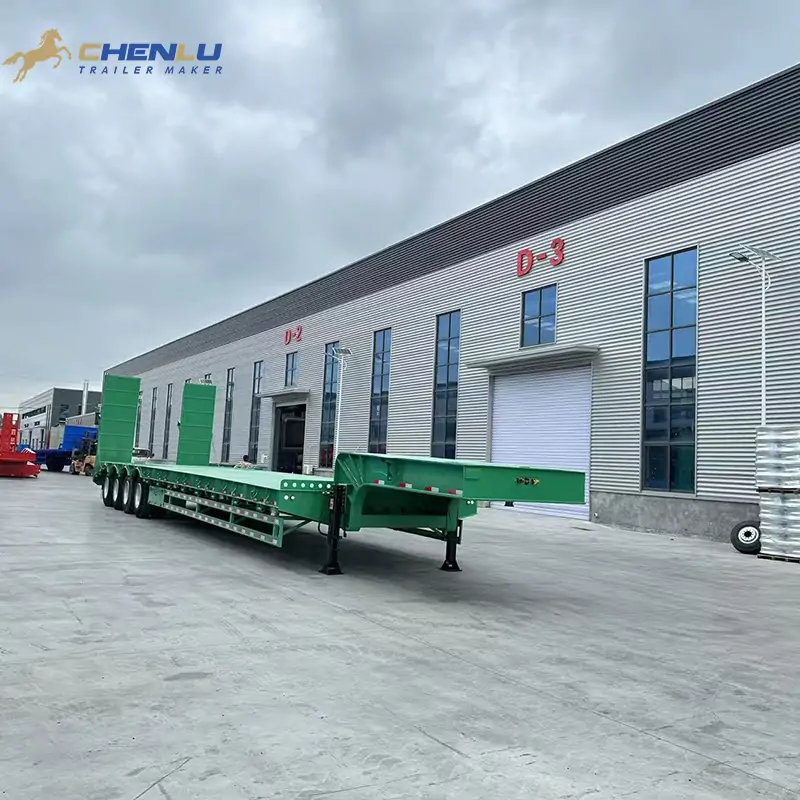
Lowboy vs RGN Trailer: Structural and Loading Differences Between Fixed and Removable Gooseneck Lowbeds
Compare Lowboy vs RGN trailer designs, including fixed and removable goosenecks, loading direction, equipment clearance, site space and maintenance.
Read News ↗
Why are low-platform semi-trailers called “Lowboys”? What is the difference between a “Lowboy,” a “Low Bed,” and a “Low Loader”?
Why is it called a lowboy trailer? Learn how lowboy, low bed, low loader, cama baja and regional terms relate to deck and gooseneck design.
Read News ↗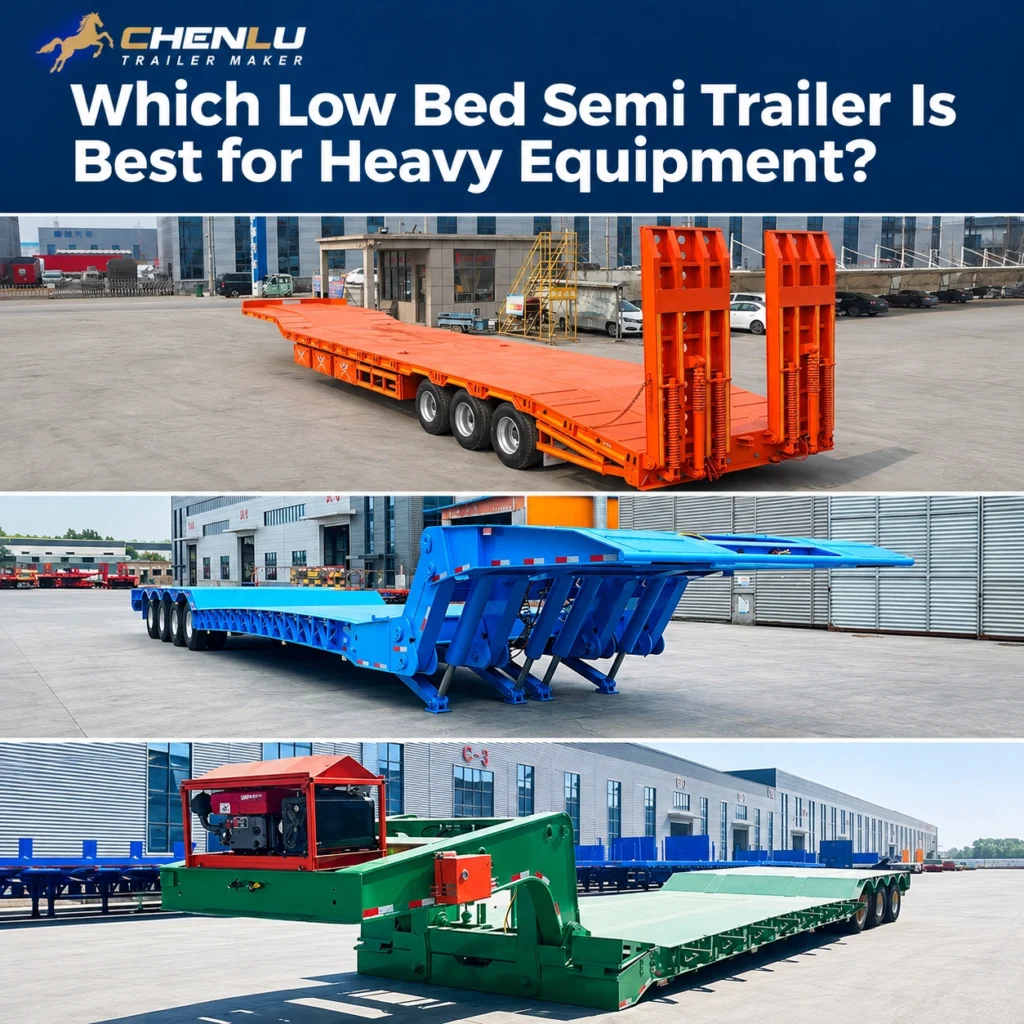
Which Low Bed Semi Trailer Is Best for Heavy Equipment? Fixed, Folding and Detachable Goosenecks
Compare fixed, folding and detachable gooseneck low bed semi trailers for heavy equipment, including loading access, CHENLU dimensions, axle layouts, tractor matching and route checks.
Read News ↗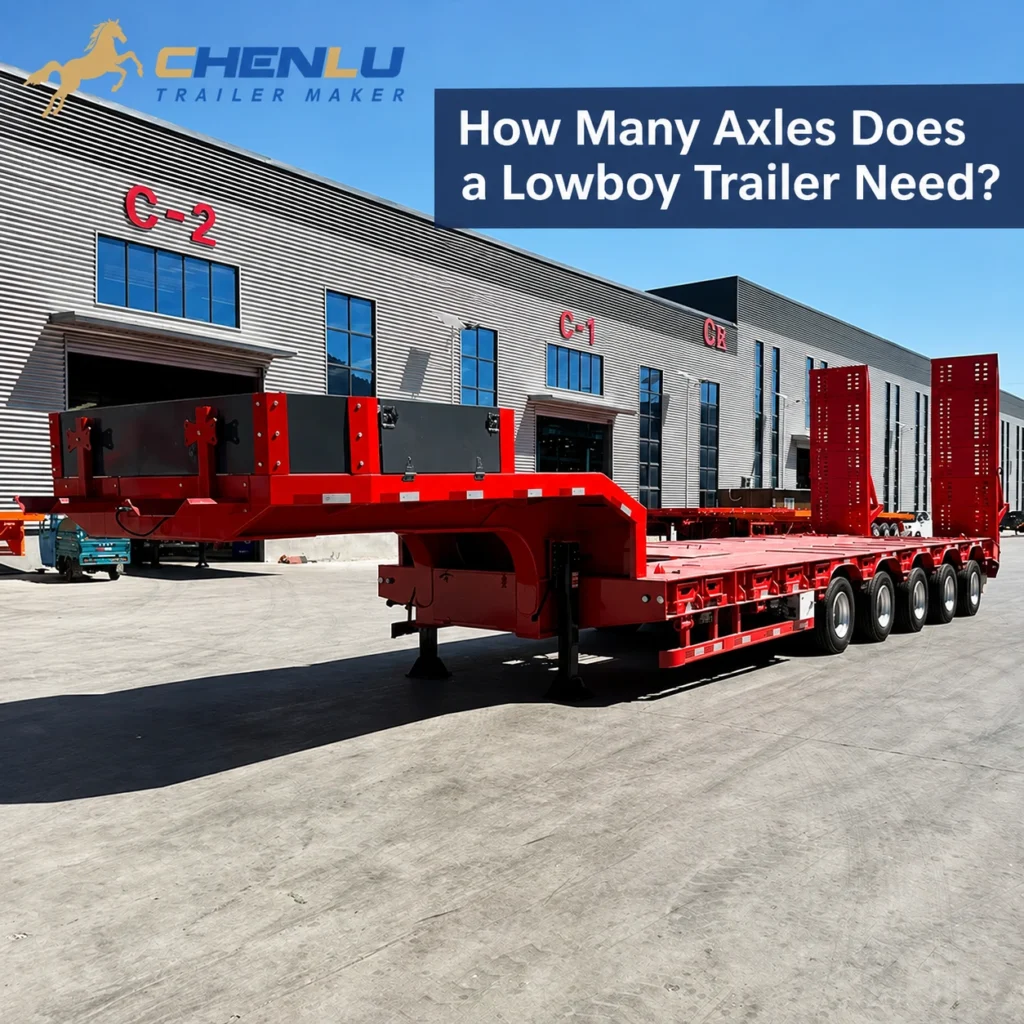
How Many Axles Does a Lowboy Trailer Need? 2-, 3-, 4- and Multi-Axle Configurations
A lowboy trailer may have 2, 3, 4 or more axles. Compare low bed semi trailer axle configurations by cargo weight, axle spacing, tractor and route limits.
Read News ↗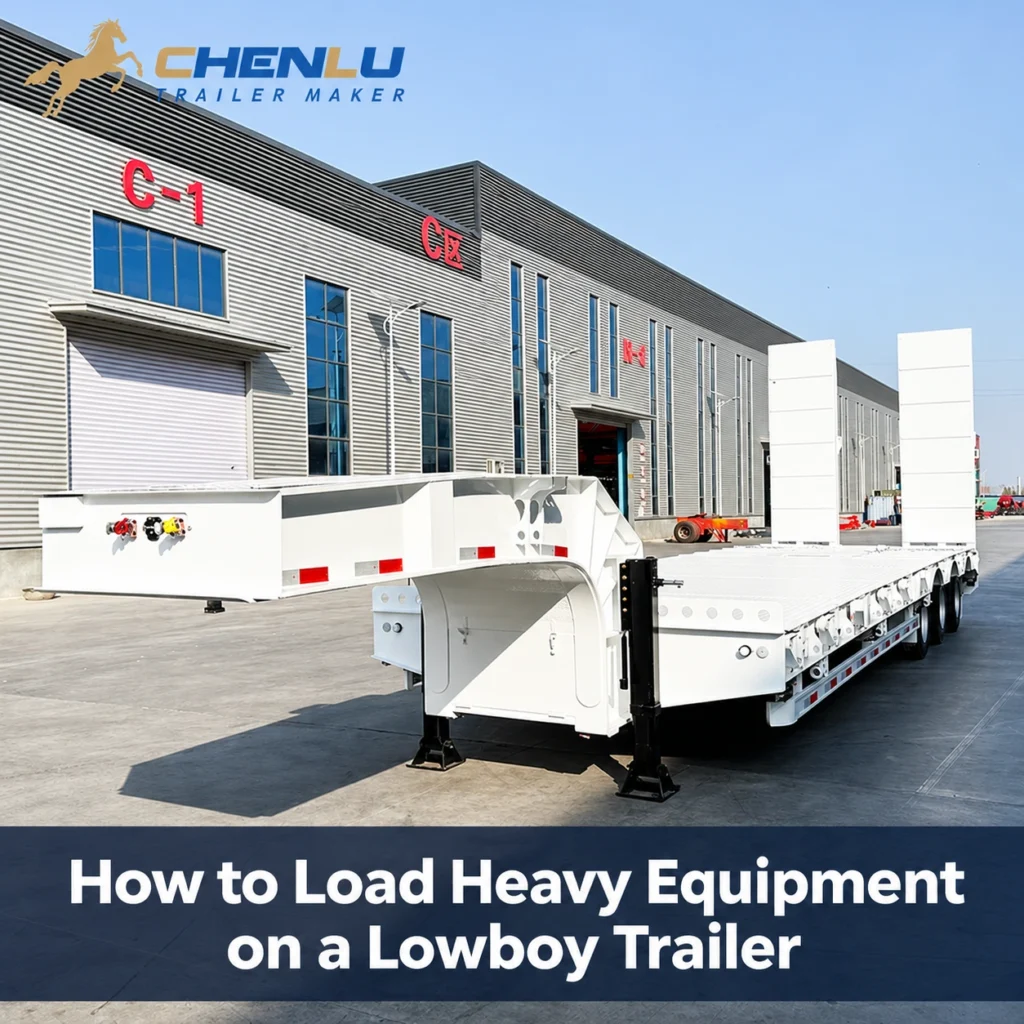
How to Load Heavy Equipment on a Lowboy Trailer: Rear Ramps, Folding Goosenecks and RGN
This lowboy trailer loading guide compares rear ramps, folding and detachable goosenecks for heavy equipment, including loading angle and ground clearance.
Read News ↗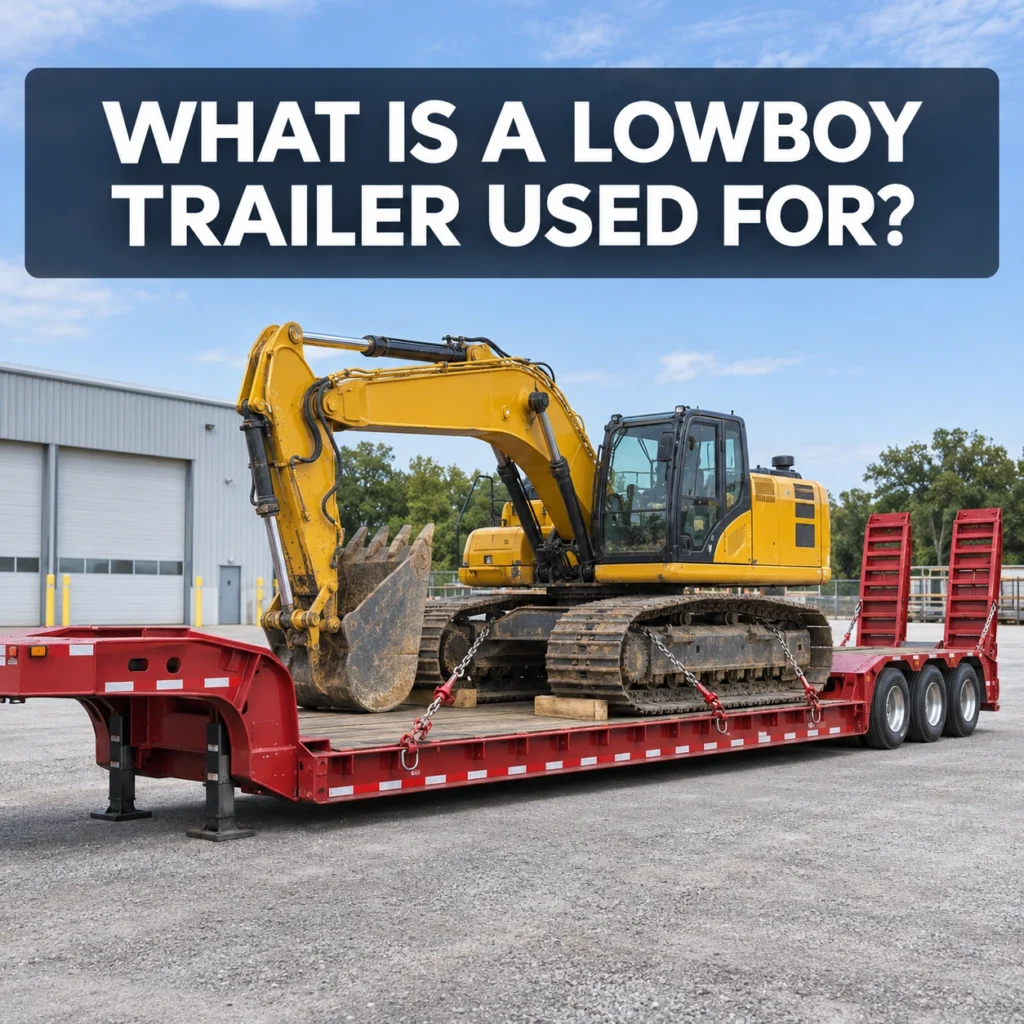
What Is a Lowboy Trailer Used For? Equipment, Loading Methods and Trailer Selection
What is a lowboy trailer used for? See how a heavy equipment lowboy trailer carries excavators, bulldozers, loaders and construction machinery.
Read News ↗