
What Are the Dimensions of a Low Bed Semi Trailer? Overall Length, Deck Length, Width and Deck Height
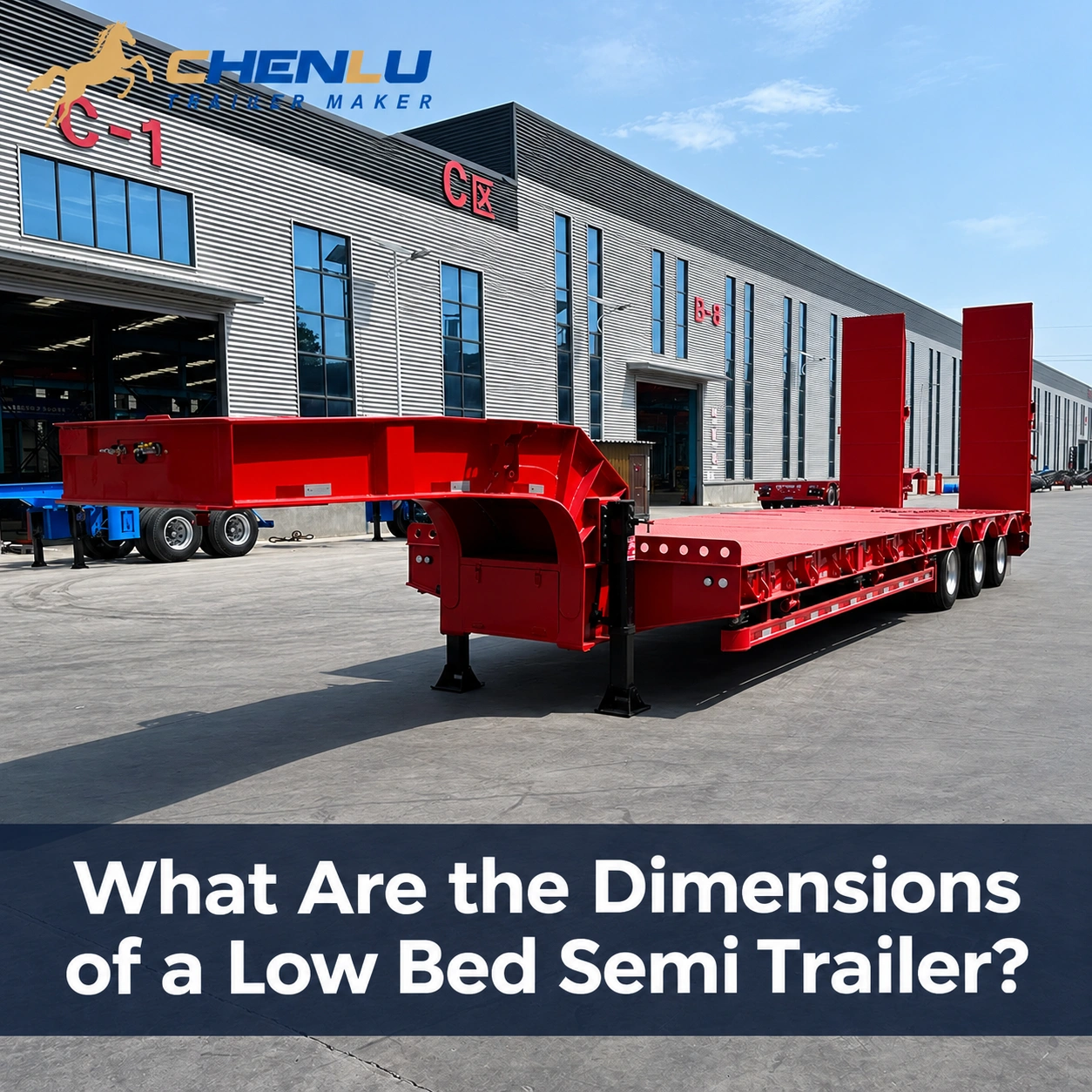
There is no single set of low bed semi trailer dimensions that fits every trailer structure and transport job. A fixed gooseneck, folding gooseneck, detachable gooseneck and extendable structure use different front layouts and loading paths. Axle count, deck sections, tyres and suspension also change the trailer length, deck height and ground clearance. Even two trailers with the same nominal payload may provide very different lengths of level load support.
A trailer should therefore not be selected only by a name such as “13-metre lowbed” or “100-ton lowbed.” The overall length, main deck length, level low deck length, body width, usable support width, deck height, tractor fifth-wheel height, ground clearance, axle spacing and overhangs must be checked separately. CHENLU low bed semi trailers are configured around the machine in transport condition, its support points, the loading method, tractor details and route conditions.
Dimensions of Four CHENLU Low Bed Configurations
The following figures come from four different CHENLU configurations. They show how dimensions change with trailer structure and should not be treated as one standard specification for the full low bed range.
| Configuration | Reference condition | Overall length | Overall or body width | Main deck dimensions | Reference deck height | Loading path |
|---|---|---|---|---|---|---|
| 60-tonne three-axle fixed-gooseneck lowbed | Transport condition with rear ramps upright | 13,000 mm | 3,000 mm overall | Set according to the required machine support area | Confirmed with the selected configuration | Twin rear ramps |
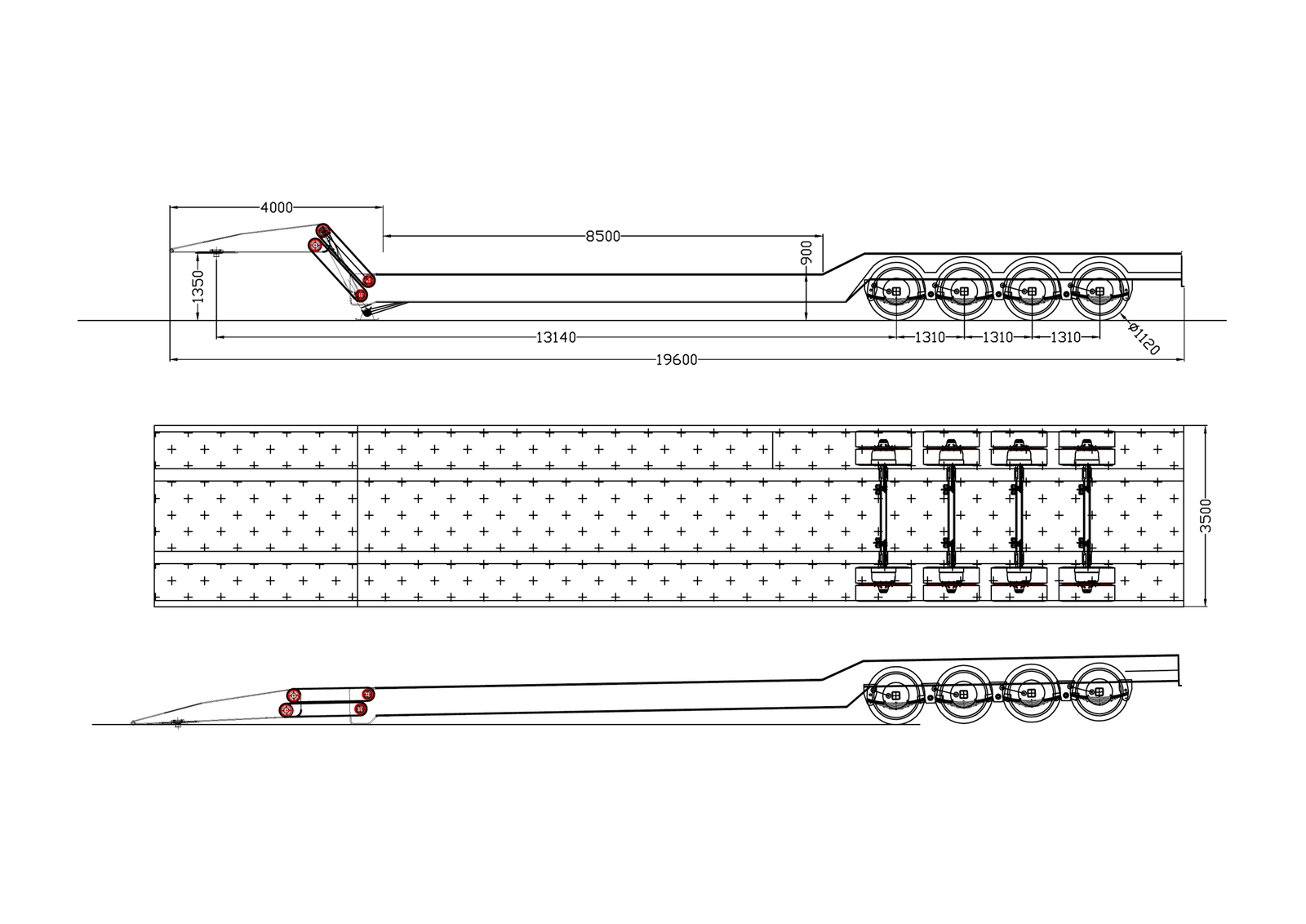
| Four-axle folding-gooseneck lowbed | Reference transport layout | 19,600 mm | 3,500 mm overall | 8,500 mm main deck | 900 mm | Front loading over the folded neck |
| 2026C099 four-axle detachable-gooseneck lowbed | Reference layout with gooseneck connected | 18,000 mm | 3,500 mm body; 4,000 mm with extensions | 8,860 mm main deck; 7,900 mm low deck section; 7,700 mm level low deck | 900 mm | Front loading after the gooseneck is removed |
| Four-axle lowbed with extendable gooseneck | Product reference layout | 15,500 mm | 3,000 mm overall | 11,901 mm fixed main deck | 1,250 mm | Twin rear ramps |
Overall length, main deck length and level low deck length are not interchangeable. The 19,600 mm folding-gooseneck trailer has an 8,500 mm main deck, while the 18,000 mm detachable-gooseneck trailer has a 7,700 mm level low deck. A longer trailer does not automatically provide a longer level support surface.
In the same way, a 3,000 mm or 3,500 mm overall width describes the vehicle envelope or main body. It does not always equal the clear width that can support tracks, tyres or a machine base. Trailer dimensions can only be compared directly when the dimension name, measurement points, trailer condition and support conditions are the same.
Which Low Bed Trailer Dimensions Need to Be Checked?
| Dimension | What it describes | Main purpose |
|---|---|---|
| Overall length | The longitudinal envelope from the front to the rear in a stated connection and transport condition | Route, turning, parking, ferry and permit checks |
| Gooseneck length | The longitudinal space used by the front connection structure | Tractor matching, cab clearance, front swing and loading access |
| Main deck length | The length of the main loading area | Initial check of machine space and support area |
| Level low deck length | The part of the low deck that remains at one level | Checking the actual support position of tracks, wheels or a machine base |
| Transition length and angle | The change in height between the low deck and rear platform | Checking machine clearance, grounding risk and support position |
| Overall body width | The basic outside width of the trailer body or main deck | Checking the vehicle envelope, track width or wheel spacing |
| Usable load-support width | The width that is approved to carry the machine | Checking continuous support under tracks, tyres or a base |
| Width with extensions deployed | The maximum outside width after the side extensions are opened | Checking wide-machine support and oversize route conditions |
| Reference deck height | The support surface height above the ground with stated tyres, suspension and connection conditions | Calculating loaded height and loading clearance |
| Fifth-wheel height | The height of the tractor fifth-wheel coupling surface | Setting trailer attitude and gooseneck clearance |
| Ground clearance | The distance between the lowest part of the frame and the ground | Checking railway crossings, raised roads, ferry ramps and site entrances |
| Axle spacing and rear overhang | Spacing between adjacent axle centres and the distance from the last axle to the rear end | Axle layout, turning, rear swing and load-position checks |
These measurements describe different structural relationships. Rear overhang, for example, is a local dimension from the last axle centre to the rear end. It normally lies within the rear structure and should not be added again as a separate item when calculating overall length.
Why Is There No Single Standard Low Bed Trailer Size?
Low bed dimensions are first determined by the machine in transport condition and the required loading path. A machine that can pass over the crest of rear ramps may use a fixed gooseneck and rear loading. A machine with low ground clearance, a long wheelbase or limited breakover clearance may need a folding or detachable gooseneck to create a front loading path. Changing the gooseneck structure also changes the front length, loading angle, operating space and overall vehicle envelope.
Axle count also affects the layout. Adding axles increases the longitudinal space occupied by the rear running group and changes axle spacing, tare weight, turning behaviour and load distribution. Axle count alone, however, does not determine deck length. A four-axle lowbed may have a longer main deck, or it may have a shorter level low deck because more space is used by the rear axle group and transition.
Names also vary between markets. Low bed and low loader are common in Europe, Africa, the Middle East and other export markets, while lowboy is used more often in North America. The name does not change the checking method: overall length, usable deck, support width, deck height and loading access still have to be confirmed for the actual machine.
Overall Length vs Main Deck and Level Low Deck Length
Overall length describes the transport envelope. Main deck length describes the primary loading area, while level low deck length shows where the machine can receive continuous support at one height. These dimensions have different start points, end points and engineering uses.
The CHENLU 2026C099 four-axle detachable-gooseneck lowbed uses the following longitudinal dimensions:
| Longitudinal dimension | Reference value |
|---|---|
| Overall length | 18,000 mm |
| Main deck length | 8,860 mm |
| Gooseneck section length | 3,610 mm |
| Low deck section | 7,900 mm |
| Level low deck length | 7,700 mm |
| Rear transition | 700 mm |
| Rear deck section | 5,790 mm |
| Rear overhang | 934 mm |
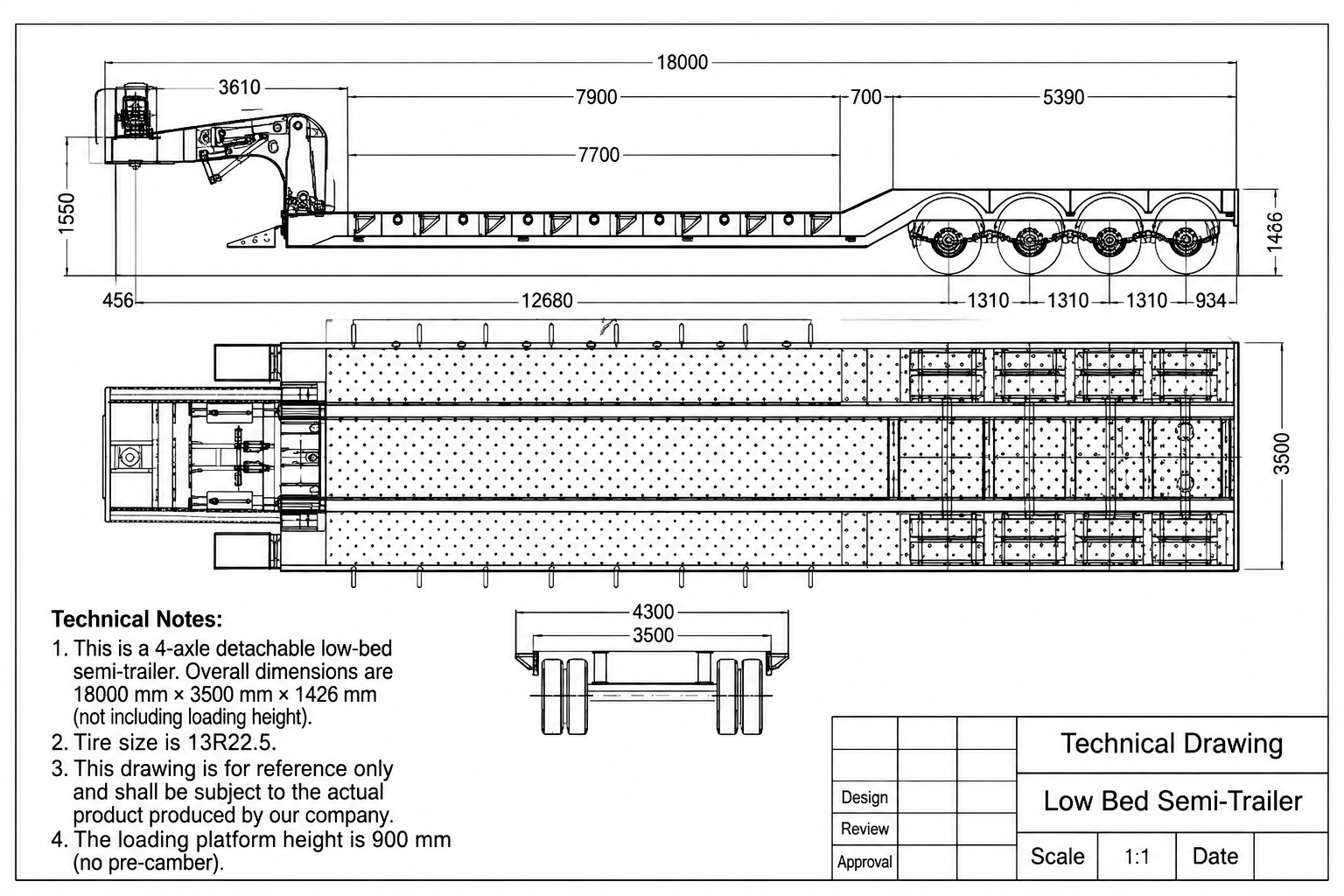
The 8,860 mm, 7,900 mm and 7,700 mm figures refer to different longitudinal measurement ranges. The 7,900 mm figure describes the low deck section, the 7,700 mm figure describes the level part within that section, and 8,860 mm is the stated main deck length. Each figure is used to check a different area. The listed sections and rear overhang should not be treated as separate items in one continuous addition.
If the machine tracks or base must remain on one level, the 7,700 mm level low deck is more useful than the 18,000 mm overall length. The transition and rear axle platform may form part of the loading path or provide support under stated conditions, but they do not automatically become extra level low deck space.
Where a support point is close to the transition, or the machine spans platforms at different heights, the loading layout must also check machine attitude, local reactions, frame support zones and tie-down positions. A machine fitting inside the trailer envelope does not prove that all support points are in suitable positions.
How Should Low Bed Trailer Width Be Read?
A low bed trailer may have at least three different width figures: overall body width, usable load-support width and maximum width with side extensions deployed. They should be stated separately.
The CHENLU 2026C099 detachable-gooseneck configuration has a 3,500 mm main body width and a 4,000 mm width across the deployed side extensions. The first figure describes the basic trailer body; the second describes the extended outside envelope. Whether the machine tracks may use the extensions depends on their structure, approved support area and the actual load arrangement.
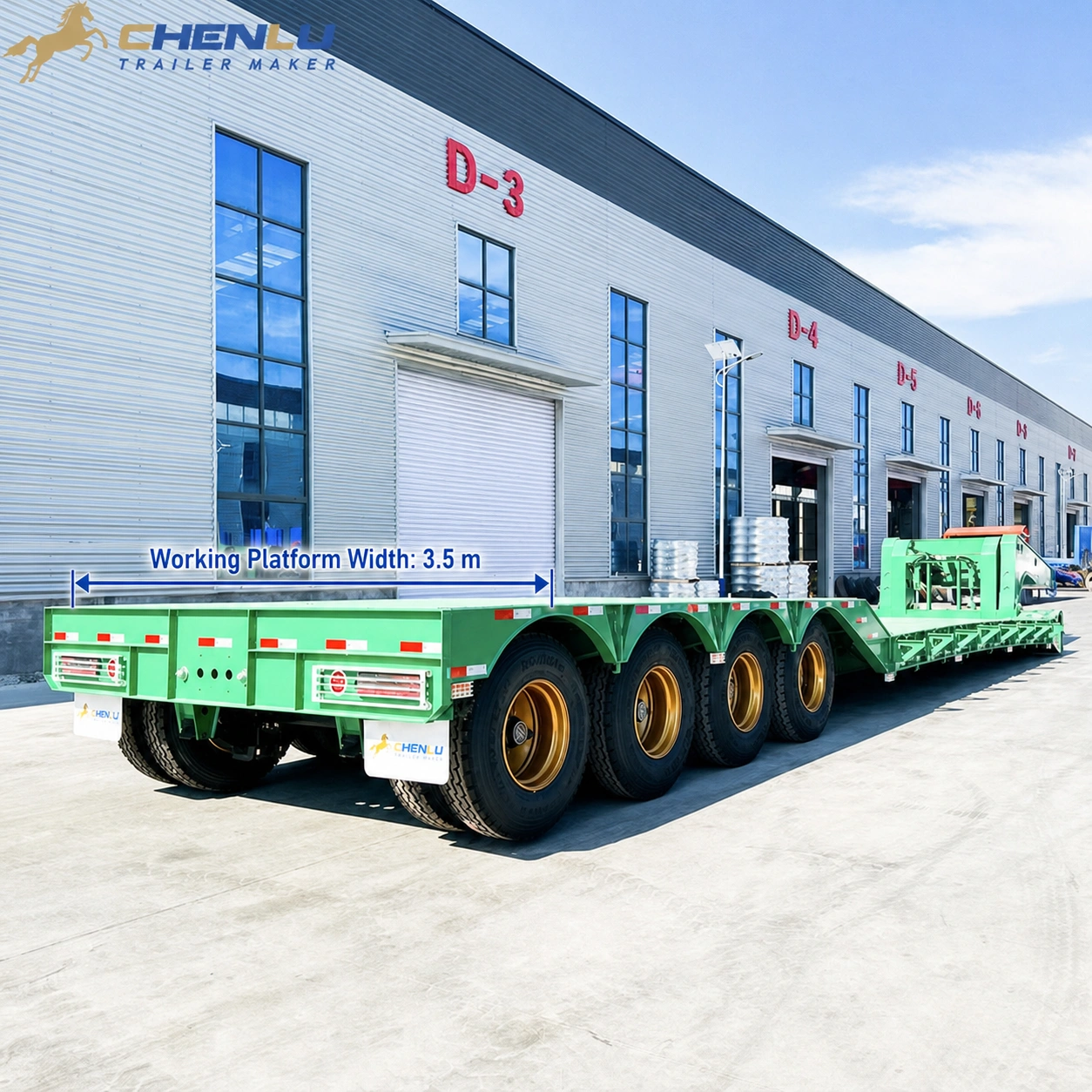
The four-axle lowbed with an extendable gooseneck has a 3,000 mm overall width. Its clear loading width still depends on the main frame, side members and usable support area. The CHENLU 60-tonne three-axle fixed-gooseneck configuration also has a 3,000 mm overall width. In both cases, this figure describes the outside vehicle envelope rather than a confirmed clear loading width.
Loaded width is set by the outermost point of the trailer, extensions or cargo. If the machine is not centred, left and right overhang should be recorded separately. When extensions are deployed, the route check must also cover local oversize rules, lateral road clearance, bridges, toll stations and loading-site space.
Deck Height, Ground Clearance and Loaded Height
Deck height is the distance from the ground to the surface that supports the machine. When the equipment is fully supported on one level deck, the cargo top height can first be estimated as follows:
Machine transport height should be measured from the actual support point, such as the tracks, tyres or base, to the highest point in transport condition. A folded boom, cab, exhaust, transport frame and any attachment left on the machine must be included. If the machine dimensions already include a transport base, the same height must not be added a second time.
The maximum height of the complete vehicle also requires a comparison between the cargo and the trailer structure. Upright locked ramps, gooseneck equipment or another fixed part may be higher than the machine. The highest actual point determines the transport envelope.
The CHENLU four-axle folding-gooseneck lowbed uses a 900 mm main deck height and a 1,350 mm fifth-wheel height in its reference configuration. The four-axle extendable-gooseneck lowbed uses a 1,250 mm deck height with the same 1,350 mm fifth-wheel reference. The same fifth-wheel height does not produce the same deck height because the frame, tyre arrangement and front geometry are different.
Deck height must also be tied to the stated connection condition, tyres, suspension and load condition. A different tractor fifth-wheel height may change the longitudinal attitude of the semi trailer and alter the front and rear deck heights. The 900 mm and 1,250 mm figures are therefore reference values for their specific configurations, not universal lowboy trailer heights.
A lower deck helps reduce loaded height, but it may also reduce ground clearance. Guidance from the U.S. Federal Railroad Administration explains how a raised crossing profile can increase grounding risk for vehicles with a long wheelbase or low ground clearance.[3] Trailer design and route checks must consider loaded height and underbody clearance together.
Why Is Deck Height Different from Overall Trailer Height?
Deck height is used to locate the machine support surface and calculate loaded height. Overall trailer height describes the highest point of the trailer in a stated transport condition. They are different measurements.
The CHENLU 60 Ton 3 Axle Lowbed Trailer is 13,000 mm long and 3,000 mm wide overall. Its empty overall height is 3,950 mm with the rear ramps upright. That 3,950 mm figure comes from the ramp position and is not the main deck height.
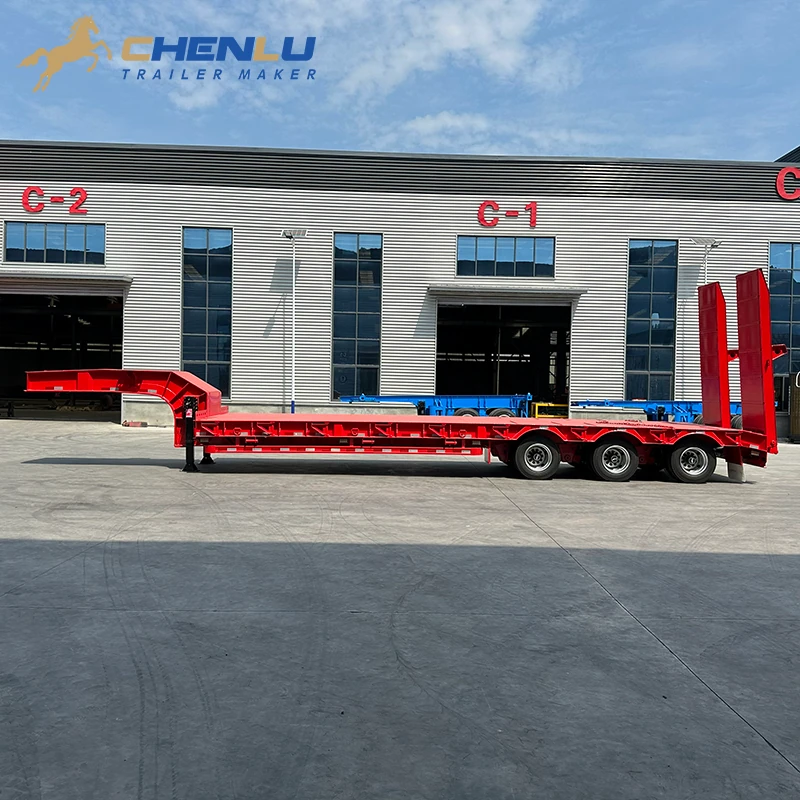
The four-axle extendable-gooseneck lowbed has a 1,250 mm main deck height and a 3,940 mm empty overall height with its rear ramps upright. If the loaded machine rises above 3,940 mm, the machine determines the maximum height. If the machine is lower, the ramps, gooseneck equipment and other fixed structures still have to be checked.
How Gooseneck Design Changes Low Bed Dimensions
Fixed Gooseneck
A fixed gooseneck remains connected to the main frame, and equipment normally enters over the rear ramps. The front structure is relatively simple, but overall length still depends on the main deck, rear axle platform and rear overhang. A fixed gooseneck does not mean every trailer has the same dimensions.
Folding Gooseneck
A folding gooseneck stays connected to the main frame while moving between loading and transport positions. It can form a front loading slope. In addition to transport length and deck dimensions, the layout must check the neck movement, loading angle, machine ground clearance and the working space in front of the trailer.
The CHENLU four-axle folding-gooseneck configuration is 19,600 mm long and 3,500 mm wide overall. It has a 4,000 mm folding neck, an 8,500 mm main deck and a 900 mm main deck height. The 8,500 mm deck should be used for the primary support check, followed by a full loading-path check across the front slope and rear structure.
Detachable Gooseneck
A detachable gooseneck separates from the main frame for loading, allowing tracked or wheeled equipment to enter the low deck from the front. In addition to connected overall length, the layout must check the loading angle after separation, tractor removal space, hydraulic or mechanical connection method and the ground conditions needed to reconnect the neck.
RGN means that the gooseneck can be removed. It does not determine deck length, deck height or rated payload. Different RGN trailers still require separate checks of the main deck, level low deck and rear platform.
Extendable Main Deck vs Extendable Gooseneck
An extendable main deck increases the longitudinal loading area and can provide a more suitable support span for long machinery or components. An extendable gooseneck changes the front connection length. These are different structures.
The CHENLU four-axle extendable-gooseneck configuration keeps a fixed main deck. Its reference layout has a 15,500 mm overall length, an 11,901 mm main deck, a 3,300 mm reference gooseneck length and a 1,250 mm deck height. The 11,901 mm figure is the stated main deck length and does not increase when the gooseneck is extended.
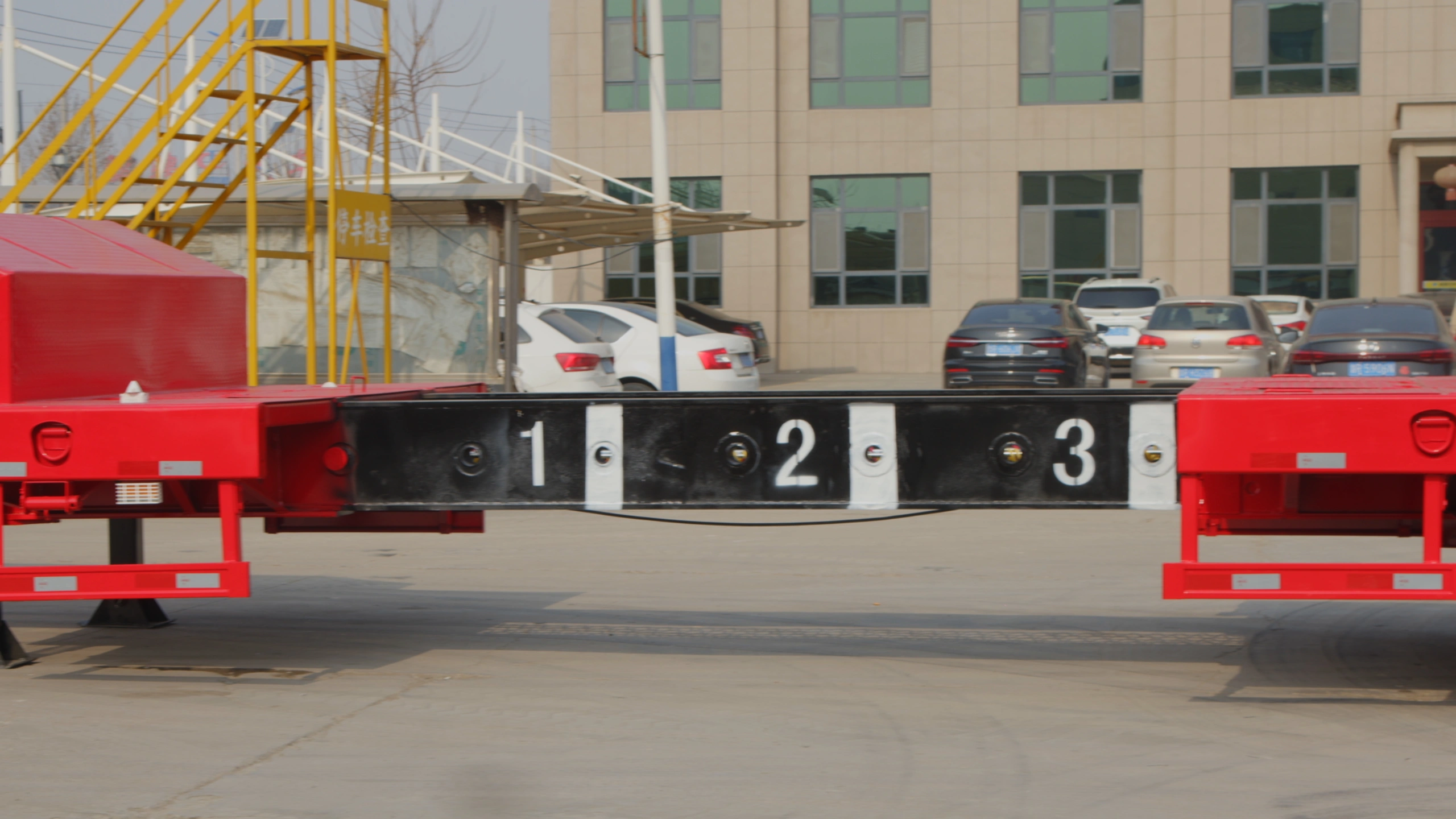
The gooseneck extension is set according to the order. When its position changes, the kingpin position, tractor-cab clearance, connection-line travel, turning envelope, locking points and overall length in that condition must be checked again. The 15,500 mm overall length applies to the reference configuration above; another extension setting requires its own stated overall length.
How to Determine the Required Low Bed Dimensions
1. Use the Machine Dimensions in Transport Condition
Record the machine's overall length, width, height and transport weight after all transport equipment has been fitted. Booms, buckets, cabs, counterweights and removable attachments must be handled according to the actual transport arrangement rather than the maximum working envelope or machine name.
2. Mark the Actual Support Points
For tracked machinery, record track contact length, track centres and overall track width. For wheeled machinery, record wheelbase, track width and tyre contact positions. Equipment with outriggers or a base needs clearly marked approved support points and areas that must not carry load.
UK DVSA heavy-vehicle load-security guidance explains that suitable body support or supporting material is required where the load bed does not adequately support the wheels or tracks.[4] A machine being shorter than the trailer does not prove that every support point is correctly supported.
3. Check the Complete Loading Path
Place the lowest parts of the machine and the track or wheel profile against the ramp foot, ramp crest, low deck, transition and rear platform. This shows whether the machine may ground during front or rear loading and helps identify the highest point after loading.
4. Calculate the Complete Loaded Envelope
Calculate loaded height from the actual support surface, loaded width from the equipment overhang and extension position, and combination length from the cargo overhang and vehicle outline. Route checks use the complete loaded vehicle envelope, not the length in the empty-trailer product name.
5. Check the Tractor Connection
Tractor fifth-wheel height changes the longitudinal attitude of a coupled semi trailer. ISO 337:1981 specifies the basic and mounting/interchangeability dimensions of the 50.8 mm (2 in) semi-trailer fifth-wheel coupling pin.[2] ISO 1726-1:2000 specifies certain interchangeability dimensions for general-cargo tractor and semi-trailer combinations, including gooseneck contours and operating angles. It also states that it may not apply to special combinations such as low-bed or tipper vehicles.[1]
Connection dimensions establish geometric compatibility only. The kingpin, fifth wheel, gooseneck and mounting structure must also meet the required vertical load, towing load and structural ratings. A low bed project still needs to be matched to the actual tractor model, fifth-wheel height, kingpin position and gooseneck structure.
6. Check the Load Position at the Same Time
A machine fitting on the deck does not prove that the kingpin and rear axle-group reactions are suitable. Moving the machine centre of gravity forward or rearward changes the weight carried by the tractor and trailer axles. The related principles are explained in How Much Weight Can a Low Bed Semi Trailer Carry? Dimensions, centre of gravity and axle reactions should be checked in the same loading plan.
What Information Is Needed to Set Low Bed Dimensions?
The data used to determine the trailer dimensions and layout normally include:
- Machine name, model and actual transport condition;
- Overall transport length, width, height and weight;
- Centre-of-gravity position or load data from the machine manufacturer;
- Track contact length, track width and track centres, or wheelbase and wheel track;
- Lowest ground-clearance point, front and rear overhangs, and areas that must not carry load;
- Rear-ramp loading, front loading or crane loading method;
- Tractor model, fifth-wheel height and permitted kingpin load; and
- Destination road width, bridges, height restrictions, bends, gradients, railway crossings and loading-site conditions.
Together, these details determine the gooseneck type, main deck length and height, trailer width, axle-group position, loading access and the complete loaded transport envelope.
Frequently Asked Questions
Is There a Standard Length for a Low Bed Semi Trailer?
No. Fixed, folding, detachable and extendable gooseneck structures use different longitudinal layouts. Axle count and required support length also change the trailer dimensions. Overall length, main deck length and level low deck length should be confirmed separately.
Does a 13-Metre Lowbed Have a 13-Metre Usable Deck?
Usually not. Thirteen metres may describe overall trailer length, including the gooseneck, transition and rear axle platform. The usable deck length must be read separately from the selected configuration.
How High Is a Low Bed Trailer Deck from the Ground?
There is no universal figure. The CHENLU examples above include 900 mm and 1,250 mm reference deck heights, but they apply to different frame and gooseneck designs. Actual height is also affected by the tractor fifth wheel, tyres, suspension and coupled attitude.
Does a 3-Metre Overall Width Provide 3 Metres of Load Support?
Not necessarily. Overall width, body width, usable support width and maximum extended width may be different. The main beams, extensions and the actual contact positions of tracks, tyres or the machine base must also be checked.
Do Three-Axle and Four-Axle Lowbeds Have Fixed Deck Lengths?
No. Axle count affects the rear running group and trailer layout, but deck length still depends on the machine support area, gooseneck structure, load distribution and route conditions.
Does an RGN Trailer Always Have a Longer Deck Than a Fixed-Gooseneck Trailer?
No. RGN mainly describes a removable gooseneck and front loading access. It does not determine main deck length. The two designs still need to be compared using their actual frame and loading layouts.
Application of the Reference Dimensions
The dimensions above come from four specific CHENLU low bed configurations and explain the relationship between overall length, main deck, level low deck, body width, extended width and deck height. They are not one specification for every low bed trailer. Final vehicle dimensions should agree with the confirmed configuration, production documents and vehicle records.
External standards and authority guidance apply within their stated scope. Destination road limits, permits and route conditions must be checked separately. Common dimensions in one market cannot replace the requirements of a specific transport project.
References
- ISO 1726-1:2000 — Road vehicles — Mechanical coupling between tractors and semi-trailers — Part 1: Interchangeability between tractors and semi-trailers for general cargo. International Organization for Standardization. Used for tractor/semi-trailer interchange dimensions, gooseneck contours and the stated scope boundary for special combinations.
- ISO 337:1981 — Road vehicles — 50 semi-trailer fifth wheel coupling pin — Basic and mounting/interchangeability dimensions. International Organization for Standardization. Used for the basic and mounting/interchangeability dimensions of the 50.8 mm coupling pin.
- Crossing Alignment Adjustment for Motor Vehicles. U.S. Federal Railroad Administration. Used for the relationship between crossing profile, vehicle wheelbase and ground-clearance risk.
- Heavy vehicle load security. UK Driver and Vehicle Standards Agency. Used for wheel, track and vehicle-body support principles.
- CHENLU Low Bed Trailers. Product range and structural categories.
- CHENLU 60 Ton 3 Axle Lowbed Trailer. Overall length, overall width, axle group, tyres and upright-ramp dimensions.
- CHENLU 4 Axle Folding Gooseneck Lowbed Trailer. Overall length, main deck length, deck height, fifth-wheel height and axle spacing.
- CHENLU 100 Ton 4 Axle Detachable Gooseneck Lowbed Trailer. Main deck, segmented lengths, body width, extended width and low deck height.
- CHENLU 4 Axle Lowbed Semi Trailer with Extendable Gooseneck. Fixed main deck, extendable gooseneck and reference dimensions.
MORE FROM OUR NEWSROOM
Related News
Lowboy vs RGN Trailer: Structural and Loading Differences Between Fixed and Removable Gooseneck Lowbeds
Compare Lowboy vs RGN trailer designs, including fixed and removable goosenecks, loading direction, equipment clearance, site space and maintenance.
Read News ↗
Why are low-platform semi-trailers called “Lowboys”? What is the difference between a “Lowboy,” a “Low Bed,” and a “Low Loader”?
Why is it called a lowboy trailer? Learn how lowboy, low bed, low loader, cama baja and regional terms relate to deck and gooseneck design.
Read News ↗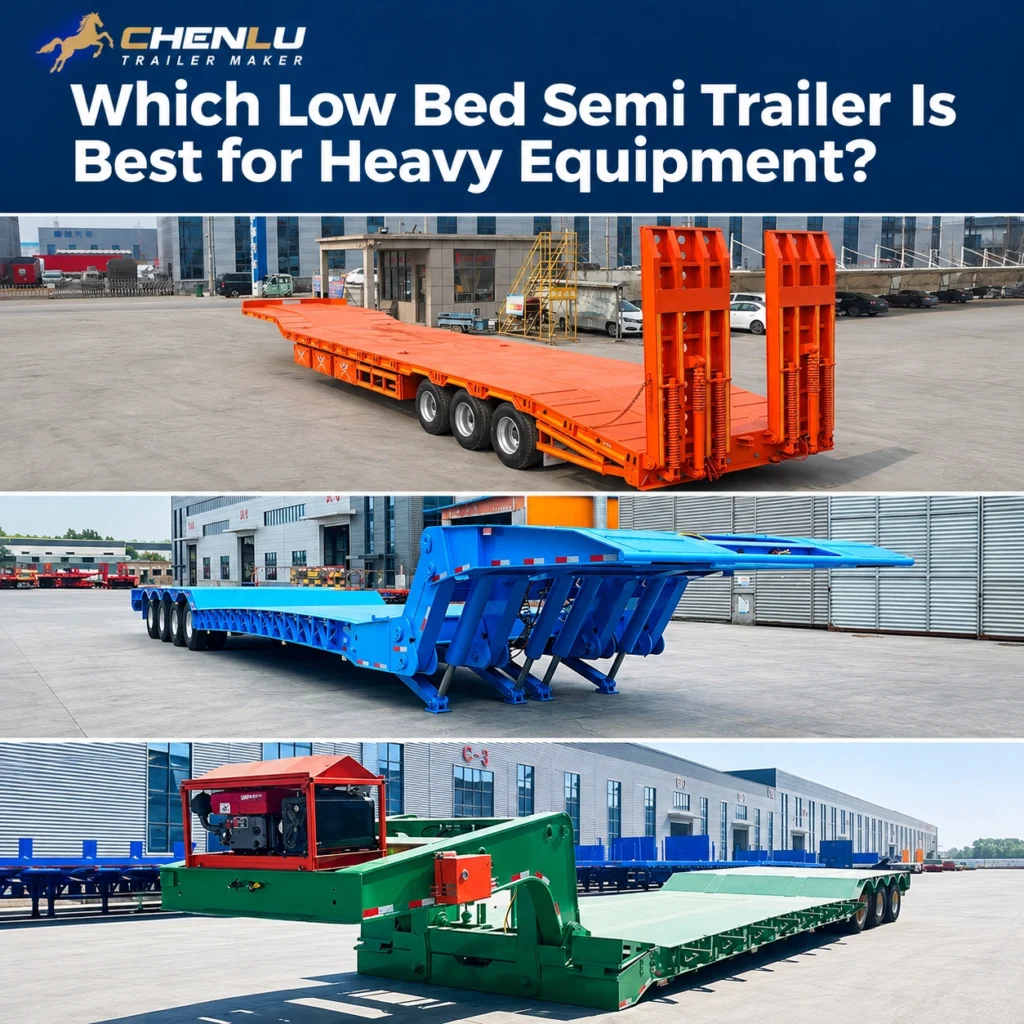
Which Low Bed Semi Trailer Is Best for Heavy Equipment? Fixed, Folding and Detachable Goosenecks
Compare fixed, folding and detachable gooseneck low bed semi trailers for heavy equipment, including loading access, CHENLU dimensions, axle layouts, tractor matching and route checks.
Read News ↗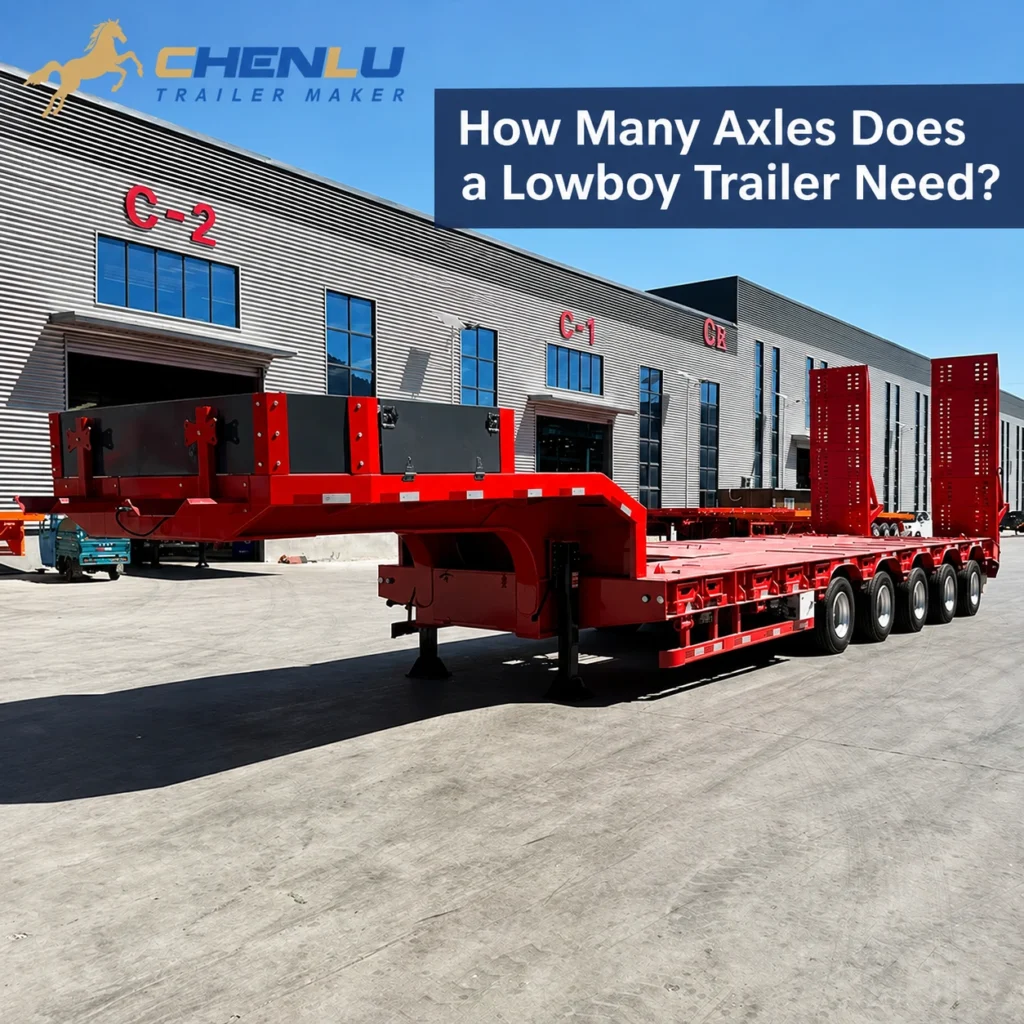
How Many Axles Does a Lowboy Trailer Need? 2-, 3-, 4- and Multi-Axle Configurations
A lowboy trailer may have 2, 3, 4 or more axles. Compare low bed semi trailer axle configurations by cargo weight, axle spacing, tractor and route limits.
Read News ↗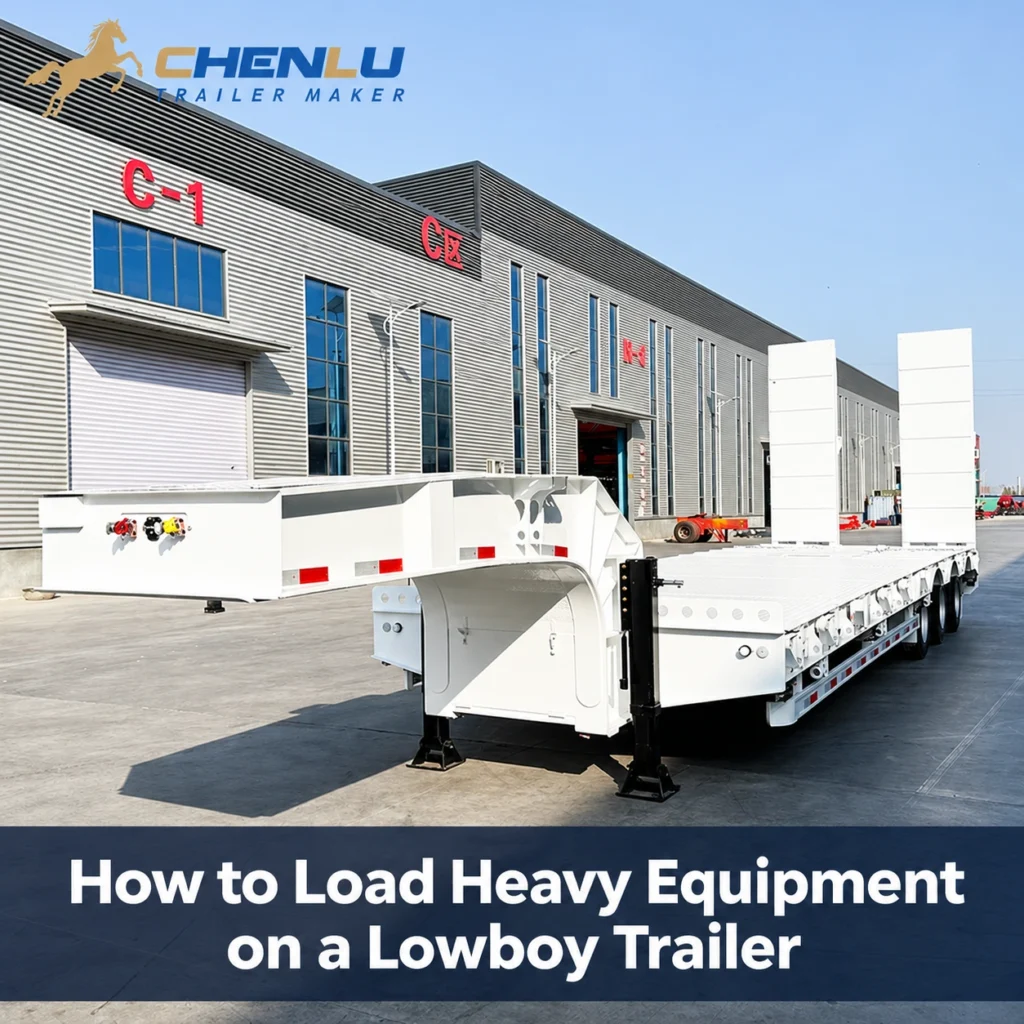
How to Load Heavy Equipment on a Lowboy Trailer: Rear Ramps, Folding Goosenecks and RGN
This lowboy trailer loading guide compares rear ramps, folding and detachable goosenecks for heavy equipment, including loading angle and ground clearance.
Read News ↗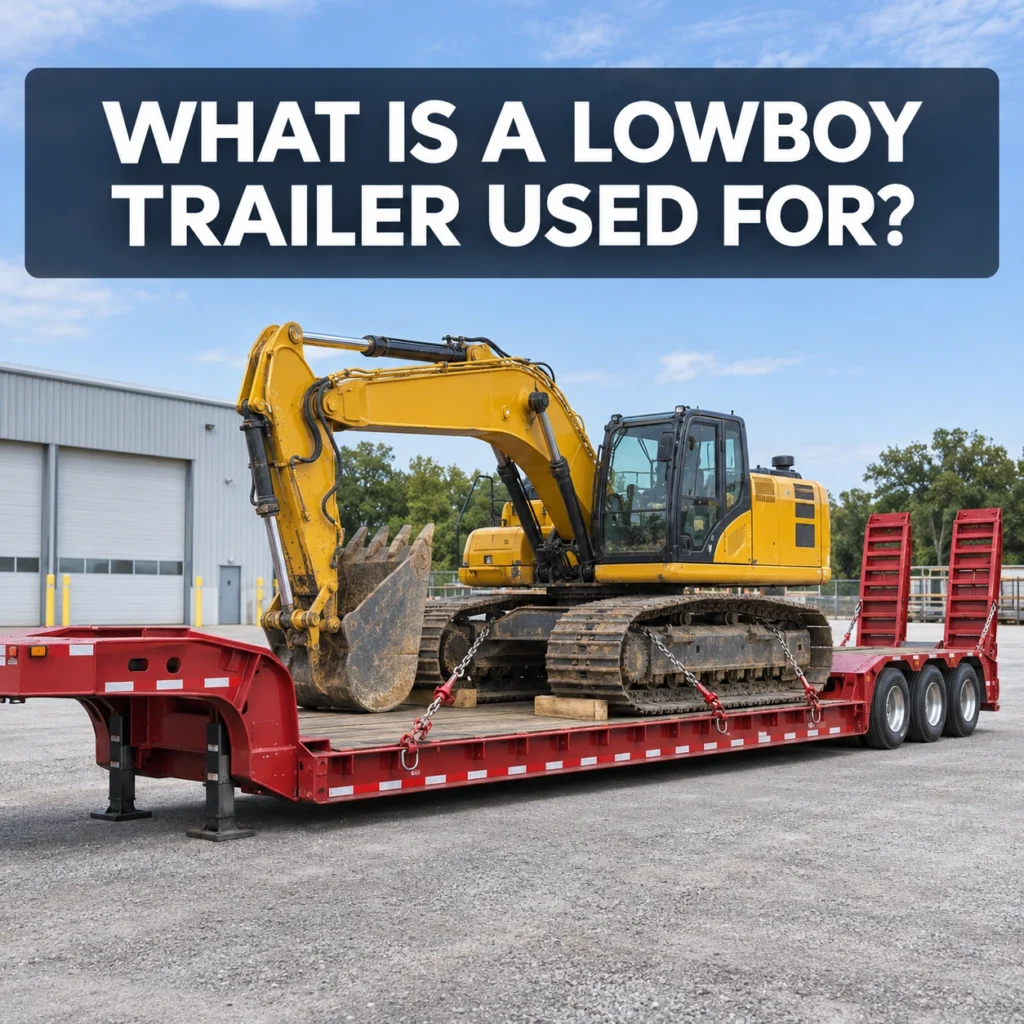
What Is a Lowboy Trailer Used For? Equipment, Loading Methods and Trailer Selection
What is a lowboy trailer used for? See how a heavy equipment lowboy trailer carries excavators, bulldozers, loaders and construction machinery.
Read News ↗