
What Is a Lowboy Trailer Used For? Heavy Equipment and Loading Methods
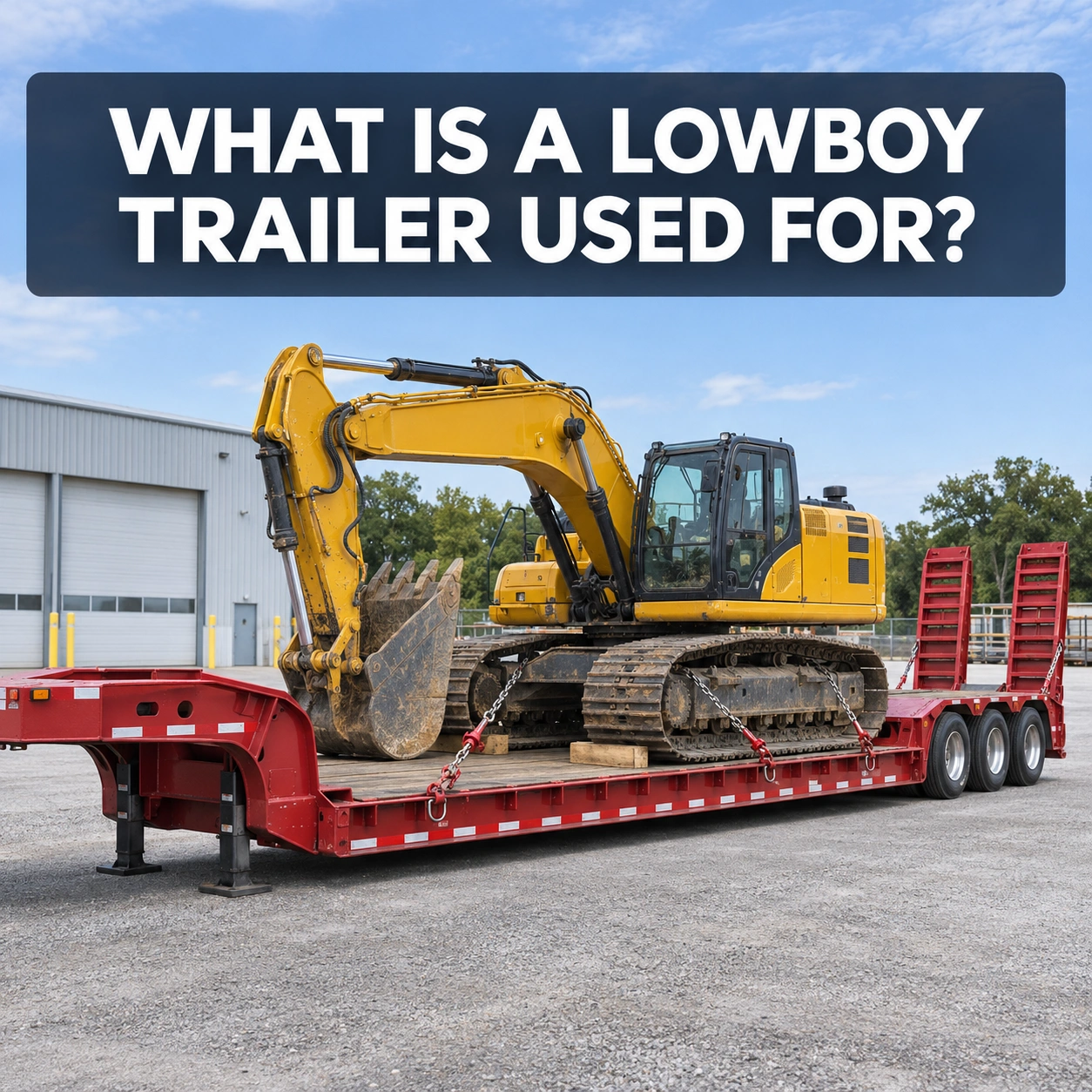
What is a lowboy trailer used for? A heavy equipment lowboy trailer mainly carries machinery that is tall, heavy or easier to move on a low loading deck. Common loads include excavators, bulldozers, wheel loaders, motor graders, road rollers, pavers and some agricultural, forestry, lifting and industrial equipment.
The equipment name only gives a starting point. The actual trailer match depends on the machine's transport dimensions and weight, center of gravity, track or wheel support area, ground clearance, loading access and route conditions. Even two machines of the same model may need different trailer configurations if their attachments, loading sites or transport routes are different.
In different export markets, a low bed semi-trailer may also be called a lowboy, low bed or low loader. CHENLU selects the configuration according to the machine's transport size, support positions and loading conditions. Equipment that can approach from the rear may use a fixed gooseneck and rear ramps. A folding or detachable gooseneck may be more suitable when the machine has limited ground clearance or cannot pass safely over the rear breakover point.
What Can a Lowboy Trailer Haul?
| Equipment group | Common examples | Typical loading method | Main points to check |
|---|---|---|---|
| Earthmoving and construction machinery | Excavators, bulldozers, wheel loaders, graders, rollers and pavers | Driven onto the trailer or assisted by a winch | Transport height, track or wheel width, ground clearance, breakover angle, boom and bucket position |
| Mining and quarry equipment | Large loaders, drilling rigs, tracked machinery and transportable crushing or screening units | Driven on, winch-assisted or crane-loaded | Concentrated loads, center of gravity, dismantled condition, support points and site roads |
| Agricultural and forestry machinery | Combine harvesters, large tractors and forestry machines | Driven on or loaded after attachments are removed | Tire width, cab height, attachment position, ramp width and ramp angle |
| Lifting and access equipment | Crawler crane components, rough-terrain cranes, telehandlers and access platforms | Driven on, transported in sections or crane-loaded | Transport condition, wheelbase, outriggers or base supports, removed attachments and center of gravity |
| Industrial equipment | Generator sets, transformers, compressors and machinery modules | Crane lifting, skidding or a purpose-made loading system | Base supports, lifting positions, concentrated loads, transport envelope and securement method |
These are common lowbed trailer applications, but being listed in the table does not mean that every lowboy can carry the equipment. The required deck and loading structure change with the machine model, transport position and site conditions. The trailer's usable capacity also depends on the frame, axle group, suspension, tires, kingpin load and road limits at the destination.
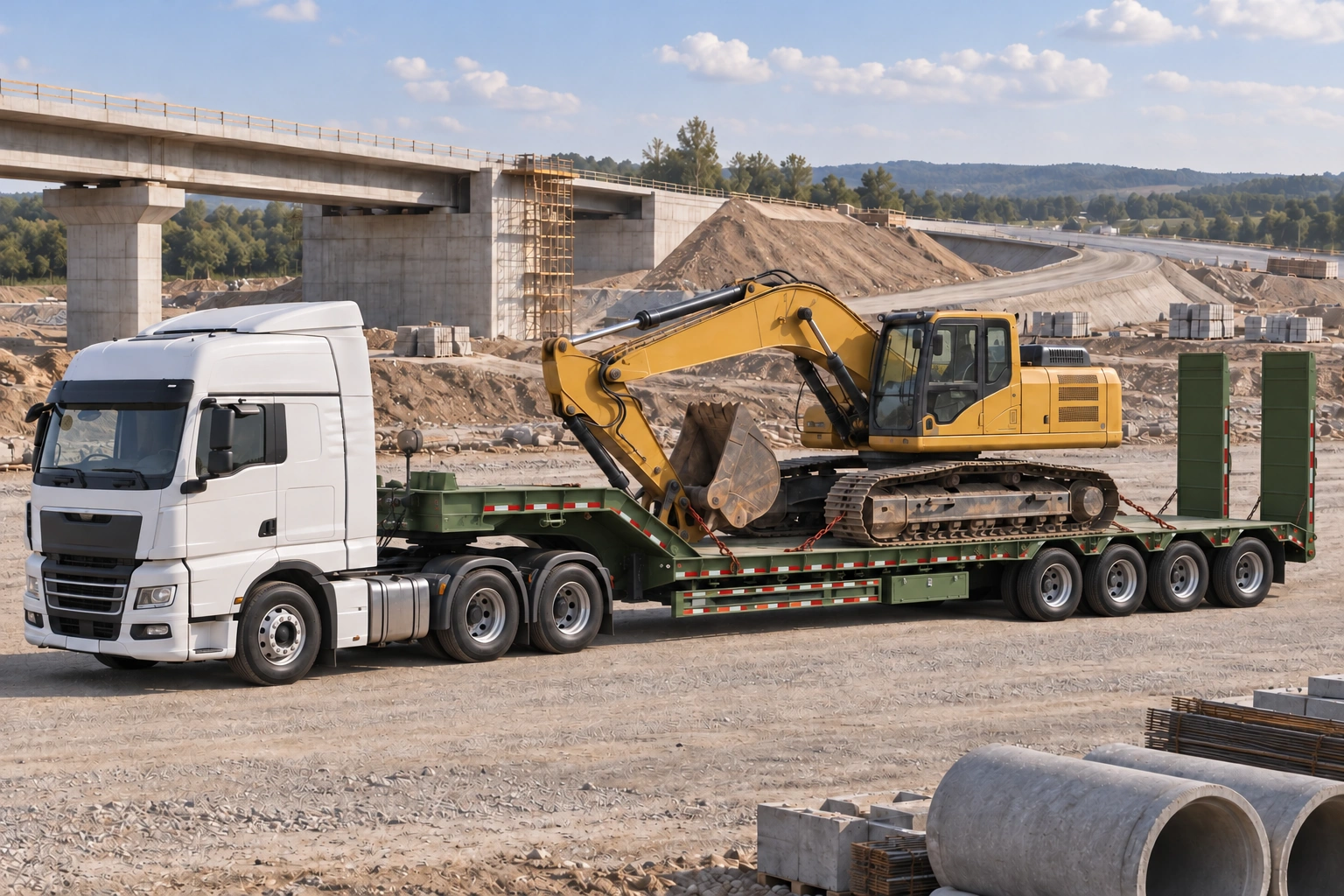
Why Use a Lowbed Trailer for Heavy Equipment?
The main loading deck sits between the gooseneck and the rear axle platform, lower than the deck of a standard flatbed. Lowering the machine's support surface reduces the total loaded height and leaves more clearance under bridges, gantries and other overhead restrictions. This low-deck layout is why the lowboy is widely used as a heavy equipment transport trailer.
The low deck also changes how the machine enters the trailer. A fixed-gooseneck trailer normally loads over rear ramps. A folding gooseneck forms a loading slope at the front. After a detachable gooseneck is separated from the main frame, the machine can enter the low deck from the front. Wheelbase, track length, overhang and the lowest point under the machine all affect which entrance is suitable.
The deck must also support tracks, wheels, rigid bases or specified support points. UK DVSA guidance for wheeled and tracked machinery states that suitable support or packing may be needed when the platform does not fully support the wheels or tracks.[6] A deck that is long enough for the outside dimensions may still place some load points outside the intended frame support area.
How a Lowboy Equipment Trailer Handles Different Machines
Lowboy Trailer for Excavator and Bulldozer Transport
Excavators and bulldozers are among the most common lowboy loads. When selecting a lowboy trailer for excavator transport or a lowbed trailer for bulldozer transport, use the actual track contact length, overall track width and track center distance. The total track length does not show the exact area transferring weight into the deck. The boom, bucket, blade and counterweight must also be included in the planned transport position.
Tracks that are narrower than the deck do not automatically have full support. A track may sit close to a side member, deck extension or outer edge. If part of it is unsupported, the load becomes concentrated over a smaller area. The loading layout should match the real track contact area to the longitudinal beams, crossmembers and permitted support zones.
Tracked machines also need enough clearance at the foot and top of the loading slope. A long undercarriage or a low point beneath the machine may contact the transition between the ramp and deck. A machine that can pass safely over the rear breakover point may use a fixed gooseneck with rear ramps. If it cannot, the front entrance provided by a folding or detachable gooseneck may offer a better loading path.
Lowboy Trailer for Construction Equipment with Wheels
Wheel loaders, motor graders, road rollers and other wheeled machines transfer their weight through several tire or drum contact areas. Tire positions, wheelbase, track width and individual axle loads are therefore important when arranging the machine on the deck, especially while it crosses ramps, hinges and changes in deck angle.
Long-wheelbase machines such as motor graders can be affected by the angle at the top of the ramp and the transition into the main deck. A wheel loader bucket, grader moldboard or roller drum can also change the transport profile, lowest point or local support condition. Cab height and total machine weight provide only part of the information required.
Loading and road transport are different operating conditions. While the machine crosses the ramps, its wheels or tracks create moving loads over the ramp, hinge area and breakover point. After the machine reaches its transport position, the deck, kingpin and axle group carry the load. Ramp capacity, contact width and hinge loading should therefore be checked separately from the trailer's deck capacity.
Agricultural and Forestry Machinery
Combine harvesters, large tractors and forestry machines often have wide tires, high cabs or large working attachments. A low deck helps control transport height, but the tires may extend beyond the basic deck width. The actual wheel support positions and permitted load on any side extensions must be confirmed.
Removing a header, grapple, boom or other attachment may reduce the main machine's height or length. Those removed parts still need their own support and tie-down positions. Record the transport dimensions and weight of the main machine and its attachments separately rather than relying on the complete machine's working dimensions.
Lifting and Industrial Equipment
Crawler crane components, generator sets, transformers and machinery modules may not be able to drive onto the trailer. They can require crane lifting, winching, skidding equipment or an approved loading frame. In these cases, the lowboy is selected mainly to reduce loaded height or provide a lower support surface, not because the equipment can use the ramps.
A rigid base or a small number of support points can concentrate a large load over limited areas. Having enough deck space does not prove that the beams and crossmembers can carry those local reactions. The trailer should be checked against the base layout, center of gravity and permitted support points supplied by the equipment manufacturer. Extremely heavy, unusually shaped or specially supported industrial loads may require purpose-built heavy-haul equipment or hydraulic modular trailers instead of a conventional lowboy semi-trailer.
When Is a Lowboy Not the Best Trailer Choice?
Trailer type should match the cargo shape, loading method and securing system. Weight is only one part of the decision.
- Sand, aggregate, ore and soil normally need a dump semi-trailer for loading and discharge. A lowboy has no bulk body or tipping system.
- Shipping containers are normally carried on a container chassis with matching support points and twist locks. Sufficient deck length does not replace the correct container locking system.
- Diesel, gasoline and other liquids require a tanker matched to the cargo, capacity and loading or discharge connections.
- Steel, timber, pallets and packaged cargo may be easier to load from the side or above on a flatbed, sidewall or curtain-side trailer when a low deck is not needed.
- Long beams, pipes and structural members may need an extendable flatbed or extendable lowbed, depending on support spacing and route conditions.
CHENLU matches the trailer structure to the transport application. Moving construction machinery, carrying loose material, transporting steel or packaged goods and delivering fuel require different loading and securing arrangements. Work inside a mine or active excavation area may also require dedicated off-road equipment; a road-going lowboy cannot replace every site transport vehicle.[2]
Fixed, Folding or Detachable Gooseneck: Which Loading Path Fits?
The equipment category provides a starting point, but the loading path usually decides the gooseneck structure. Even the same excavator may use a different entrance when its attachment position, ground clearance, loading site or loading frequency changes.
| Structure | How the machine enters the deck | Main equipment or site conditions to check |
|---|---|---|
| Fixed gooseneck with rear ramps | The machine travels up the ramps from the rear | Approach and breakover clearance, ramp capacity and straight loading space behind the trailer |
| Folding gooseneck | The gooseneck moves to form a front loading slope | Front slope, mechanism travel and operating space ahead of the trailer |
| Detachable gooseneck | The gooseneck separates and the machine enters from the front | Ground clearance, level deck support length, ground condition and reconnection space |
| Crane or assisted loading | A crane, winch or other device places the equipment on the deck | Equipment base, approved lifting locations, auxiliary equipment capacity and working space |
A fixed gooseneck is mechanically straightforward, but the machine must pass over the complete rear loading path. On the CHENLU folding configuration discussed below, the gooseneck stays connected to the main frame while it forms a front slope. A detachable gooseneck reduces the need to cross the raised rear axle platform, but adds separation, support, reconnection and hydraulic or mechanical operating steps.
For example, an excavator that can pass safely over the rear ramps and breakover point may use a fixed-gooseneck trailer. If its tracks are long or a low underbody point may contact the top of the rear slope, a folding front approach can provide a better entry angle. When the machine needs to enter directly from a low position, a detachable gooseneck can create a more continuous path into the main deck. This comparison concerns loading access; it does not mean that one gooseneck type automatically has a higher rated capacity.
Operating steps are not the same for fixed, folding and detachable goosenecks. Support arrangements, hydraulic controls and connection sequences vary by design, so the operating procedure for another model should not be used as a substitute for the documents supplied with the actual trailer.
Three CHENLU Configurations for Different Loading Methods
The following trailers show three loading entrances. They are not a controlled comparison of equal dimensions or rated loads. Axle count and gooseneck type alone do not determine how much equipment a trailer can carry.
Three-Axle Fixed Gooseneck Lowbed: Rear Loading
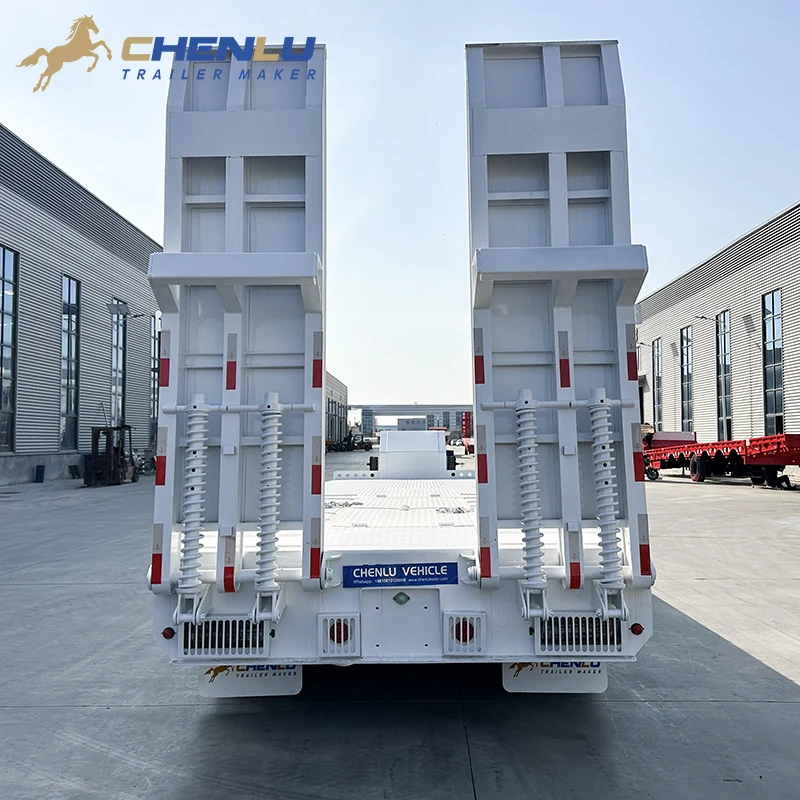
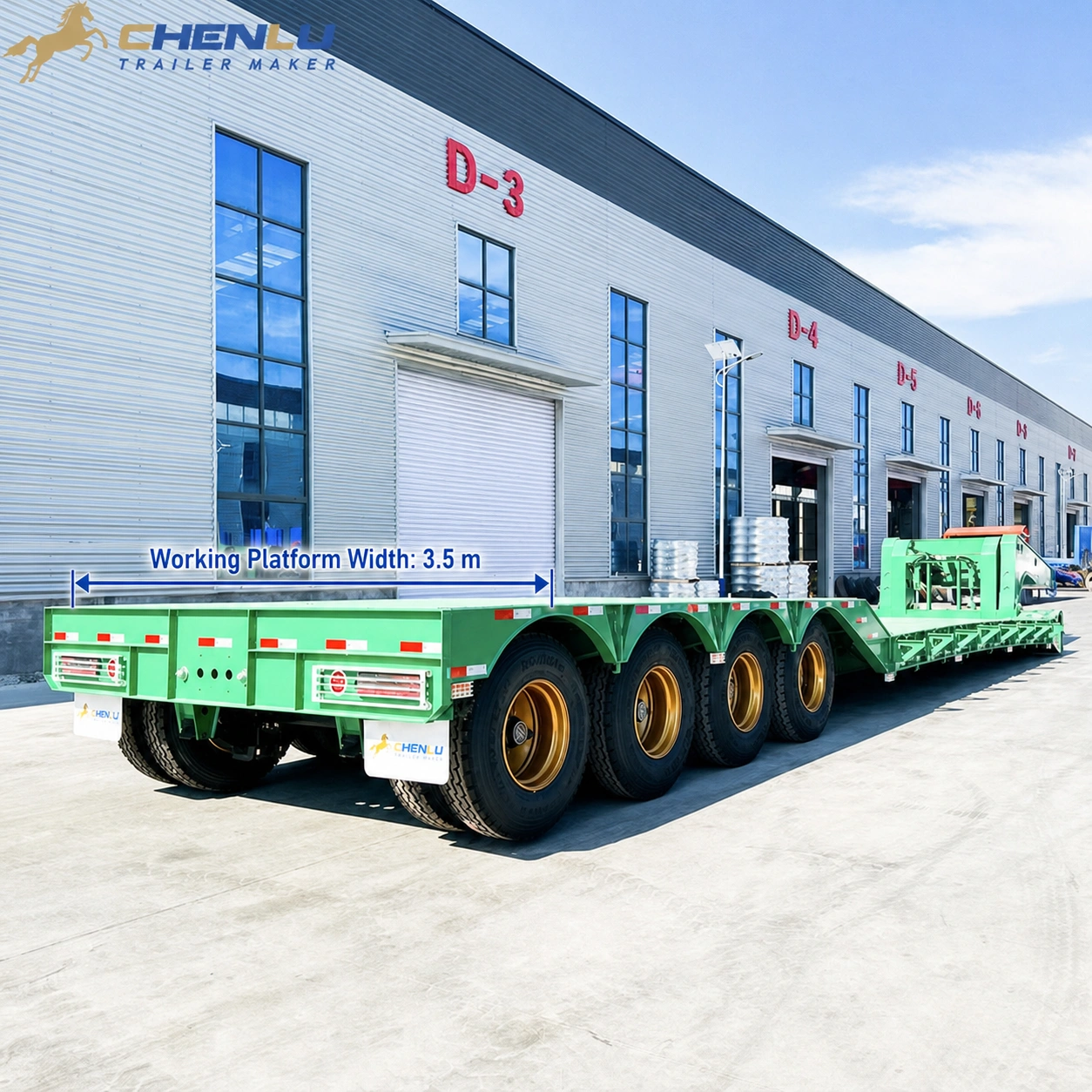
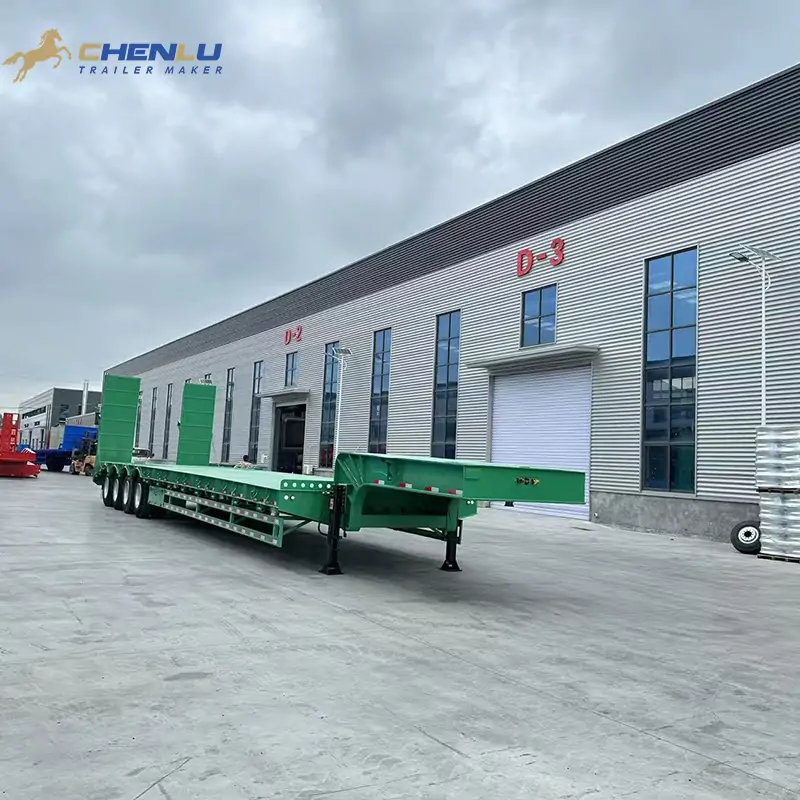
The CHENLU 2026 three-axle fixed-gooseneck lowbed has a fixed front neck and two rear loading ramps. This reference configuration is 13,000 mm long and 3,000 mm wide, with a 9,000 mm main deck. When the machine enters from the rear, its track or wheel profile should be checked against ramp width, the bottom and top of the slope, and the main deck support area.[3]
The 9,000 mm deck is a dimension of this specific configuration. It can suit tracked or wheeled machines that remain within the approved support area and pass safely over the rear loading path. It does not mean that every three-axle fixed-gooseneck lowbed has the same dimensions or capacity.
Four-Axle Folding Gooseneck Lowbed: Front Loading Slope
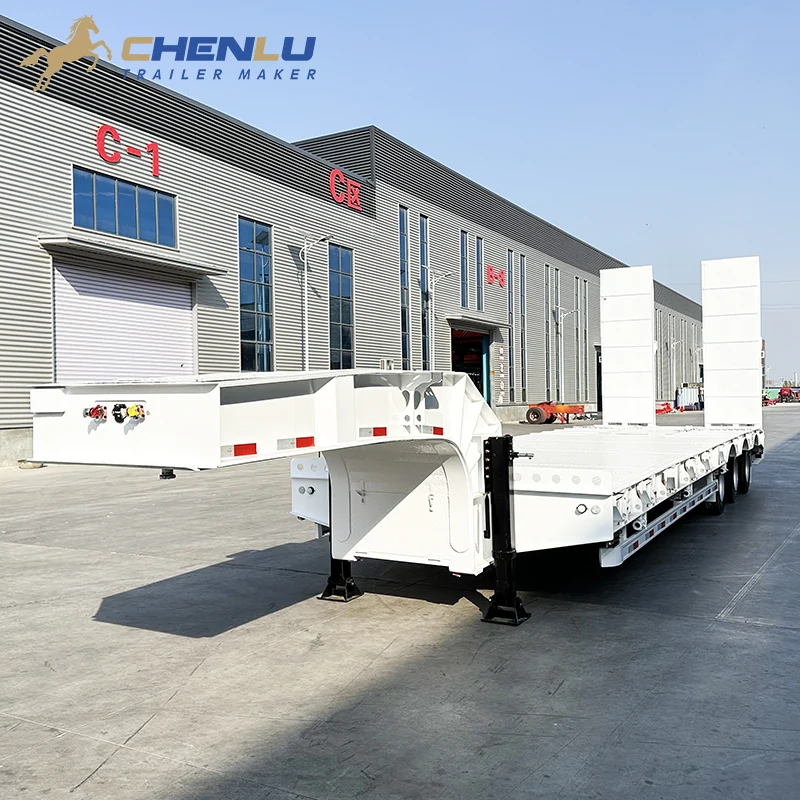
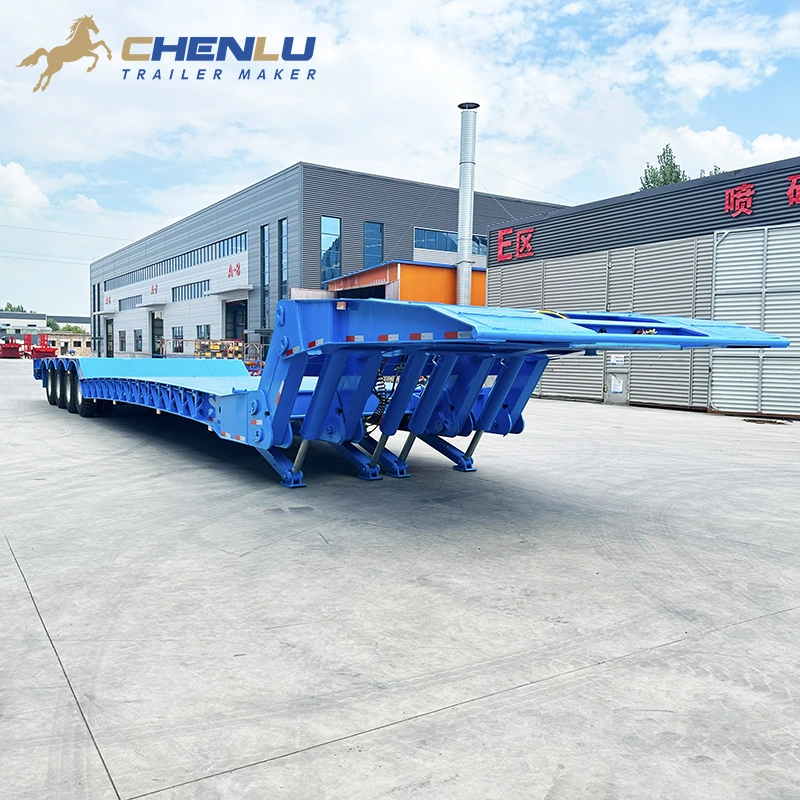
The CHENLU four-axle folding-gooseneck lowbed has an overall length of 19,600 mm, an 8,500 mm main deck and a 900 mm main deck height. The neck stays connected to the main frame and forms a front slope in the loading position.[4]
The 8,500 mm main deck should be matched to the machine's actual support length. The lowest point under the machine, track or tire contact positions and the working space required by the folding mechanism must also be checked.
Four-Axle Detachable Gooseneck Lowbed: Direct Front Loading
The CHENLU 2026C099 four-axle detachable-gooseneck lowbed provides a front loading path after the gooseneck is removed. The overall trailer length is 18,000 mm. The product information uses different measurement ranges: the main deck is 8,860 mm, the low deck section is 7,900 mm, and the level low deck within that section is 7,700 mm long. The low deck height is 900 mm.[5]
For equipment support, the 7,700 mm level low deck is more useful than the 18,000 mm overall length or the full 8,860 mm main deck dimension. Loading also requires enough space to move the tractor away, stable ground for the separated deck and the correct conditions for reconnecting the gooseneck.
What Equipment Information Is Needed to Match a Lowboy?
1. Transport Dimensions and Profile
Record overall length, width and height in the actual transport position. Mark the undercarriage, differential, attachments and any other lowest points. Excavator booms and buckets, bulldozer blades, grader moldboards and harvester headers should be shown in their planned transport positions.
2. Transport Weight and Center of Gravity
Use the actual transport weight and record the center of gravity relative to the tracks, axles or base frame. Moving the center of gravity forward or backward changes the load carried by the kingpin and rear axle group. This relationship is explained further in How Much Weight Can a Low Bed Semi Trailer Carry?
3. Equipment Support Positions
For tracked machines, provide track contact length, track width and center distance. For wheeled machines, provide wheelbase, track width, tire contact positions and individual axle weights. For rigid-base equipment, provide the support pad dimensions, spacing and any areas that must not carry load.
4. Loading Method and Site Conditions
State whether the equipment will be driven on, winched or lifted by crane. Include the available straight-line space, side clearance and ground condition at the loading site. UK HSE guidance states that loading areas should be level where possible, kept clear of unrelated traffic and managed so that the vehicle remains stable during loading.[7]
5. Tractor and Transport Route
The tractor's fifth-wheel height affects the trailer's connected running angle. The route should also be checked for road width, bridges, gantries, bends, slopes, railway crossings, ferry ramps and loading-site access. Permitted dimensions and axle loads depend on the specific country, region and route.
What Must Be Checked After the Equipment Is Loaded?
After loading, the tracks, wheels or base supports should sit within the approved support areas. The load distribution between the kingpin and axle group must also match the confirmed trailer configuration. Placing the machine too far forward can increase kingpin and tractor rear-axle load. Placing it too far back can overload the trailer axle group and reduce load on the tractor drive axles.
Securement should use approved locations on both the machine and trailer. Lifting eyes, towing attachments and transport tie-down points serve different purposes and should not be treated as interchangeable unless the equipment manufacturer permits it. DVSA guidance notes that heavy engineering machinery may require chains, suitable anchor points, blocking or packing and should not rely on friction alone.[6] For transport on US roads, 49 CFR 393.130 provides specific securement requirements for heavy vehicles, equipment and machinery.[9] Chain and anchor ratings, quantity and layout should follow the machine information, trailer documents and destination requirements.
Frequently Asked Questions
What does a lowboy trailer haul?
A lowboy trailer hauls excavators, bulldozers, loaders, graders, rollers and other machines that benefit from a low loading deck. It can also carry some agricultural, forestry and industrial equipment when their dimensions, support positions and loading method match the trailer.
Can a lowboy trailer carry an excavator?
Yes. A lowboy trailer for an excavator should be matched to the machine's transport weight, track contact area, outside width, center of gravity, boom and bucket position and lowest ground-clearance point. Excavator tonnage alone does not determine axle count, deck size or gooseneck type.
Can a bulldozer and a wheel loader use the same lowboy?
Possibly, but the support conditions are different. A bulldozer transfers load through its track contact areas, while a wheel loader transfers load through several tire contact patches. Their centers of gravity, transport profiles and breakover requirements can also be different.
Can a lowboy carry a transformer or generator?
It can when the base supports, concentrated loads, loading method and transport envelope match the trailer configuration. Equipment that cannot drive onto the deck may require lifting, skidding or a purpose-made support frame. Very heavy industrial loads may need a transport system designed for the individual project.
Is a fixed or detachable gooseneck better for an excavator?
It depends on track length, ground clearance and available site space. A machine that can pass safely over rear ramps and the breakover point may use a fixed gooseneck. A detachable gooseneck may be more suitable when the machine should enter the deck from a lower front position. The gooseneck mainly changes loading access; it does not directly define rated capacity.
Can the trailer carry any machine below its stated payload?
No. Total machine weight is only one check. Load distribution to the deck, kingpin and axle group must be acceptable, and the tracks, wheels or base supports must sit within approved support areas. Route axle-load and dimensional limits also apply.
Scope of the Dimensions and Sources
The dimensions above come from three specific CHENLU lowbed configurations and are used to explain rear-ramp, folding-gooseneck and detachable-gooseneck loading paths. They do not mean that every trailer with the same axle count or neck type has the same dimensions or capacity. Final configuration should follow the machine's transport data, confirmed trailer specifications, production documents and vehicle manuals.
The external loading and securement sources apply within their stated jurisdictions. They support the general discussion of equipment support, loading areas and cargo securement, but they do not create one road-transport rule for every destination.
References
- CHENLU Low Bed Trailers — product range, loading structures and equipment information.
- CHENLU Applications — trailer selection for construction, infrastructure, mining, quarrying and other transport tasks.
- CHENLU 2026 New 3 Axle Lowbed Trailer — fixed gooseneck, rear ramps and reference main-deck dimensions.
- CHENLU 4 Axle Folding Gooseneck Lowbed Trailer — folding front loading path and reference dimensions.
- CHENLU 100 Ton 4 Axle Detachable Gooseneck Lowbed Trailer — detachable gooseneck, low-deck sections and front loading structure.
- Securing loads on HGVs and goods vehicles: how to carry different types of load, UK Driver and Vehicle Standards Agency — support and securement considerations for wheeled and tracked machinery.
- Safe driving: loading and unloading, UK Health and Safety Executive — loading areas, vehicle stability and safe loading conditions.
- Lowboy Trailer Questions, Reddit r/Truckers — an informal source for practical questions about fixed goosenecks, rear ramps and detachable goosenecks. It is not used as evidence for CHENLU specifications or rated capacity.
- 49 CFR 393.130 — Specific securement requirements for heavy vehicles, equipment, and machinery, Electronic Code of Federal Regulations — US securement requirements and their jurisdictional scope.
MORE FROM OUR NEWSROOM
Related News
Lowboy vs RGN Trailer: Structural and Loading Differences Between Fixed and Removable Gooseneck Lowbeds
Compare Lowboy vs RGN trailer designs, including fixed and removable goosenecks, loading direction, equipment clearance, site space and maintenance.
Read News ↗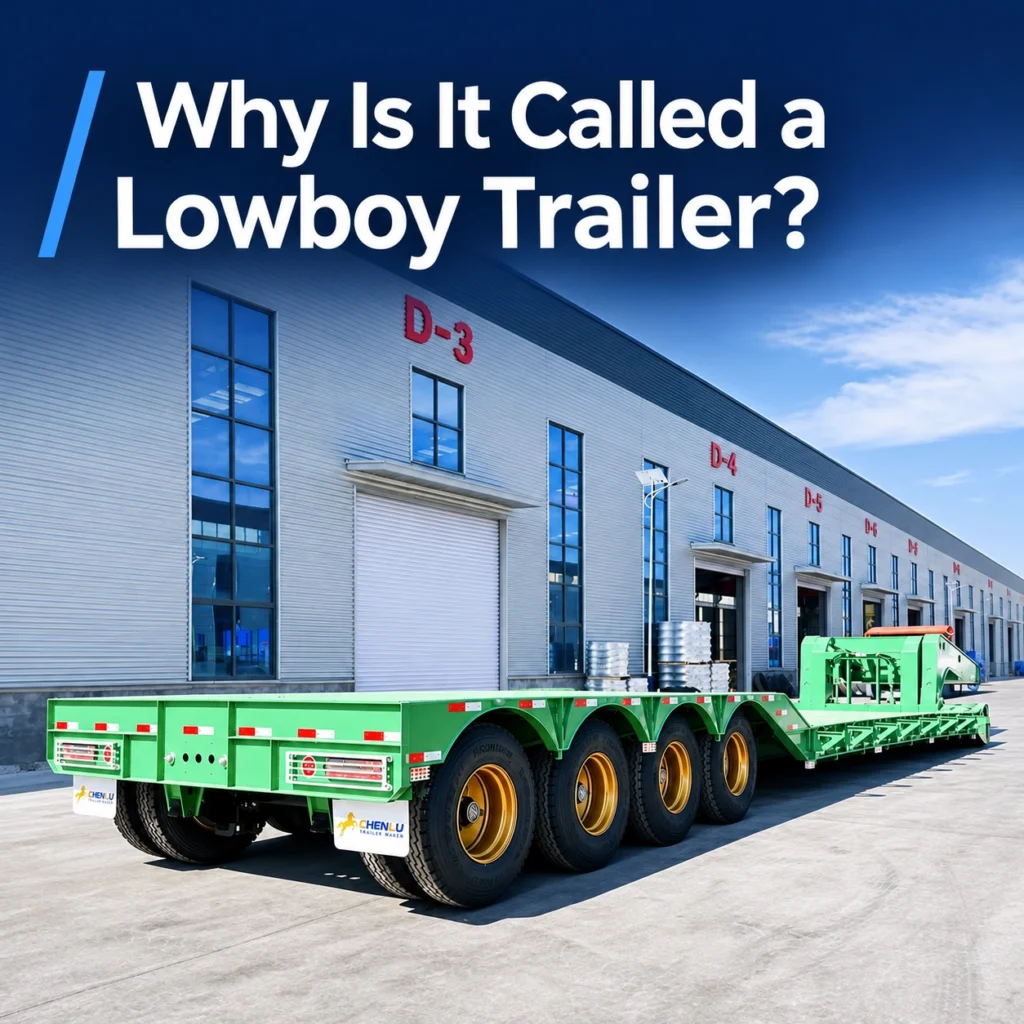
Why are low-platform semi-trailers called “Lowboys”? What is the difference between a “Lowboy,” a “Low Bed,” and a “Low Loader”?
Why is it called a lowboy trailer? Learn how lowboy, low bed, low loader, cama baja and regional terms relate to deck and gooseneck design.
Read News ↗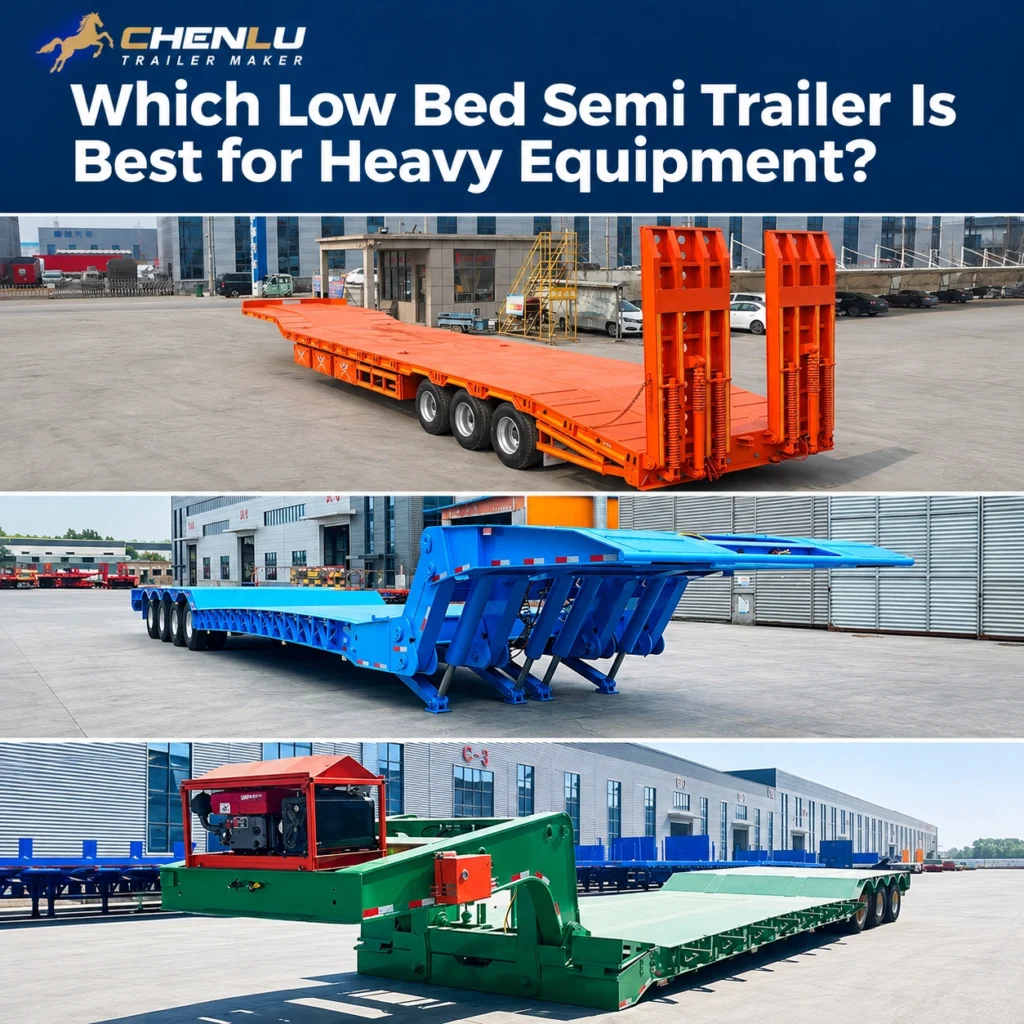
Which Low Bed Semi Trailer Is Best for Heavy Equipment? Fixed, Folding and Detachable Goosenecks
Compare fixed, folding and detachable gooseneck low bed semi trailers for heavy equipment, including loading access, CHENLU dimensions, axle layouts, tractor matching and route checks.
Read News ↗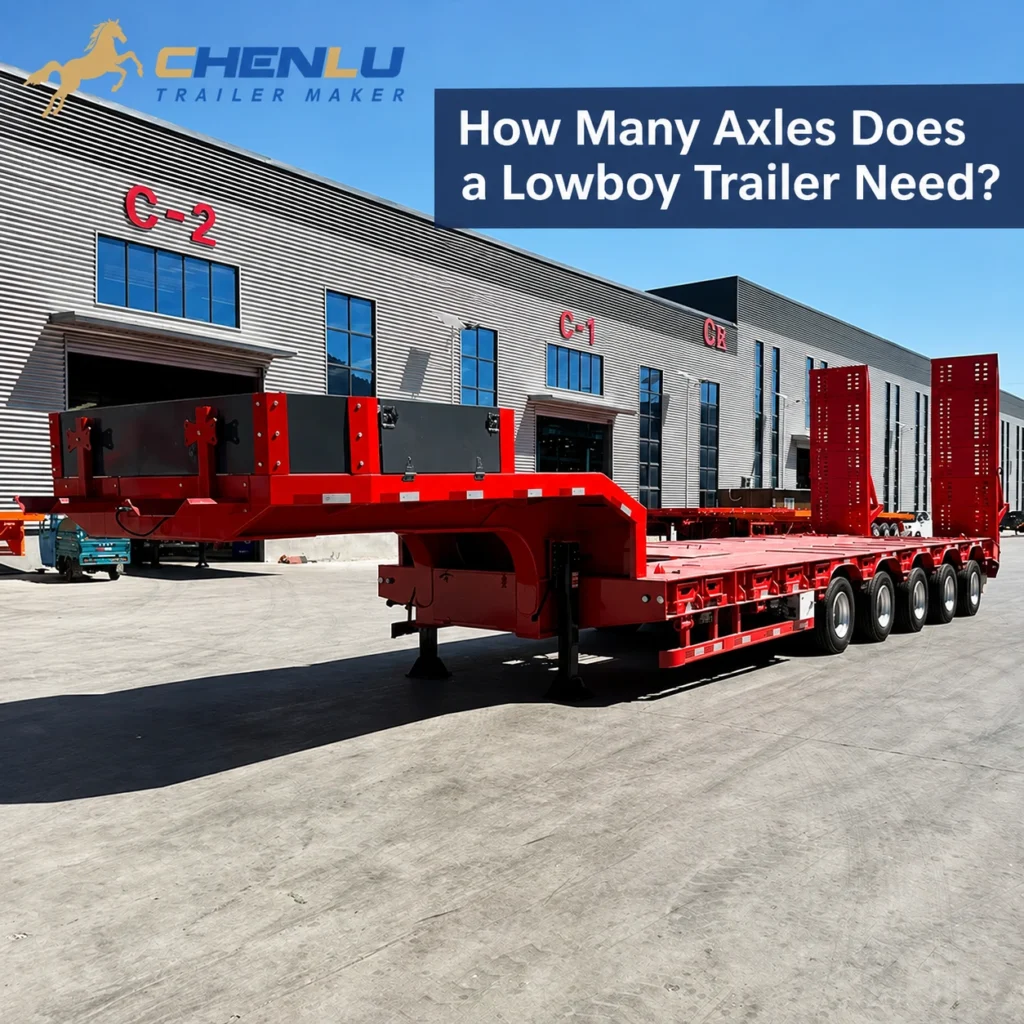
How Many Axles Does a Lowboy Trailer Need? 2-, 3-, 4- and Multi-Axle Configurations
A lowboy trailer may have 2, 3, 4 or more axles. Compare low bed semi trailer axle configurations by cargo weight, axle spacing, tractor and route limits.
Read News ↗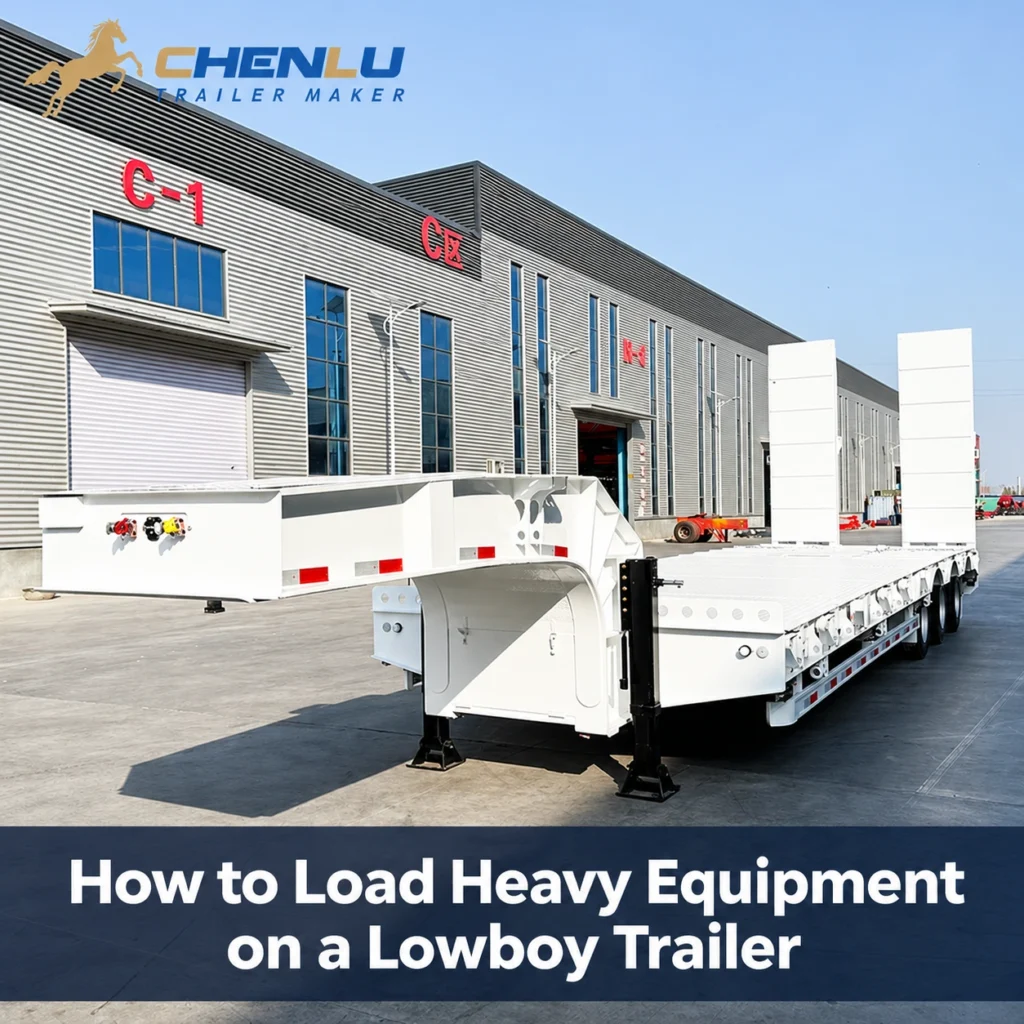
How to Load Heavy Equipment on a Lowboy Trailer: Rear Ramps, Folding Goosenecks and RGN
This lowboy trailer loading guide compares rear ramps, folding and detachable goosenecks for heavy equipment, including loading angle and ground clearance.
Read News ↗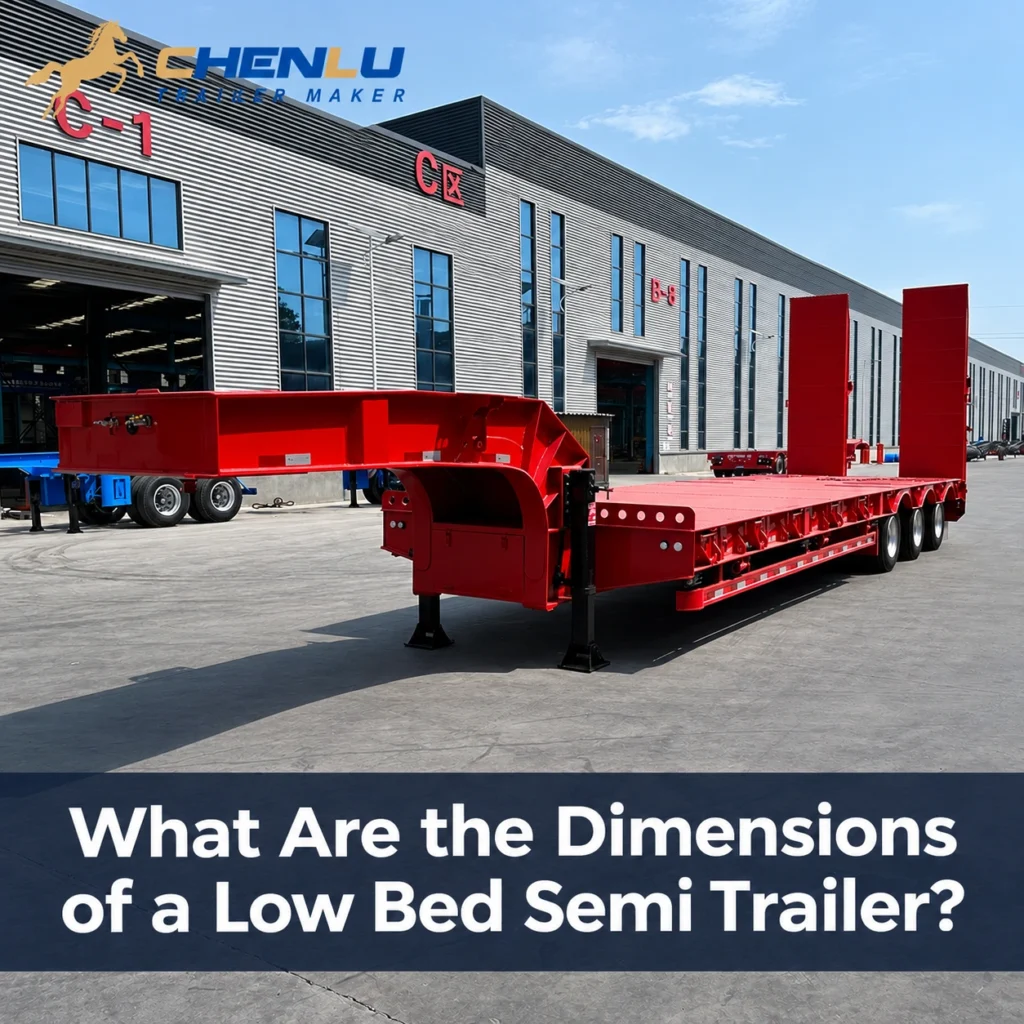
What Are the Dimensions of a Low Bed Semi Trailer? Overall Length, Deck Length, Width and Deck Height
Compare low bed semi trailer length, usable deck length, width and deck height using CHENLU fixed, folding, detachable and extendable gooseneck configurations.
Read News ↗