
Fuel Tanker Compartments: Matching Fuel Types, Delivery Quantities and Unloading Order
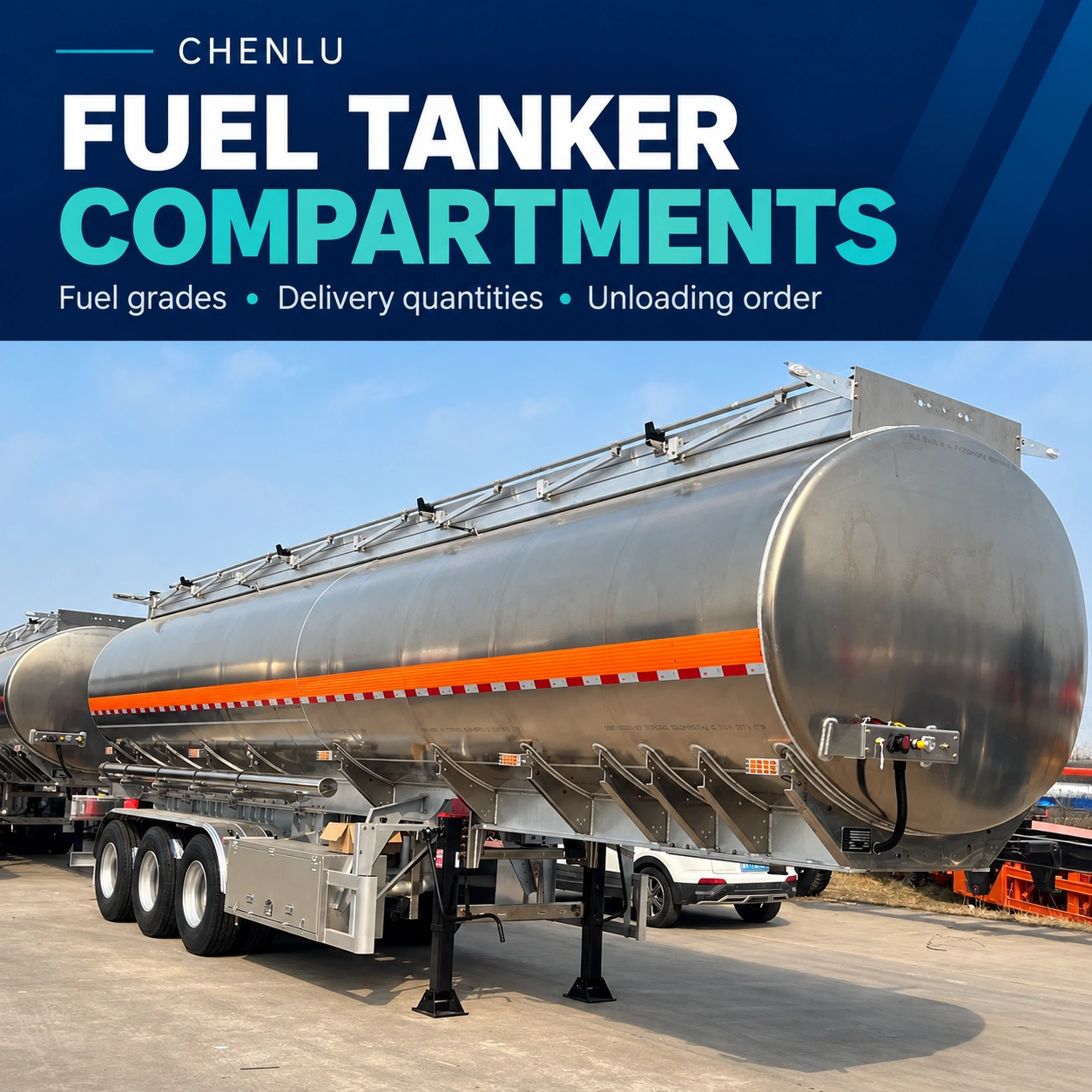
Petrol and diesel need separate cargo spaces on the same delivery trip. Two filling stations, however, may order the same grade of diesel. The first situation calls for product segregation. The second raises a different choice: carry both orders in one compartment and deliver measured quantities, or assign them to separate compartments. That choice also changes which compartments are empty and which still contain fuel after the first stop.
CHENLU fuel tanker semi-trailers transport fuel between depots, filling stations, fleet yards and other delivery sites. A separate tractor pulls the semi-trailer. The tank may have one compartment or several independent cargo spaces, with corresponding valves, pipes and outlets for loading and unloading. For multi-stop deliveries, read the compartment drawing alongside the delivery schedule. Different arrangements can leave different quantities in each compartment during the trip, even with the same products and initial total load.
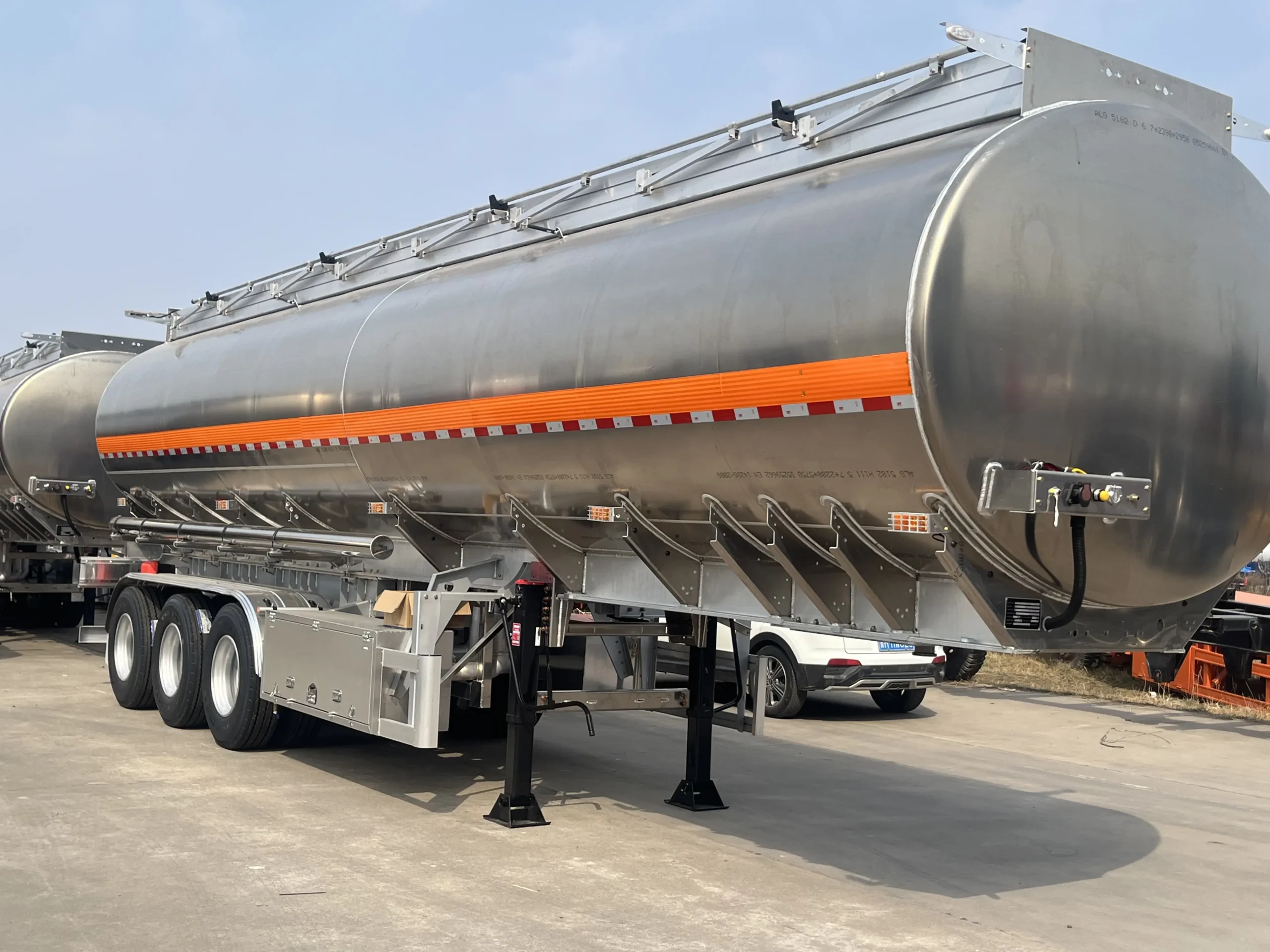
How should compartments match the delivery plan? Product segregation determines which fuels need separate spaces. Delivery quantities affect the usable volume required in each compartment. Unloading order changes the remaining load in each compartment along the route. Compartment count, size and transfer pipework should be planned together around these requirements.
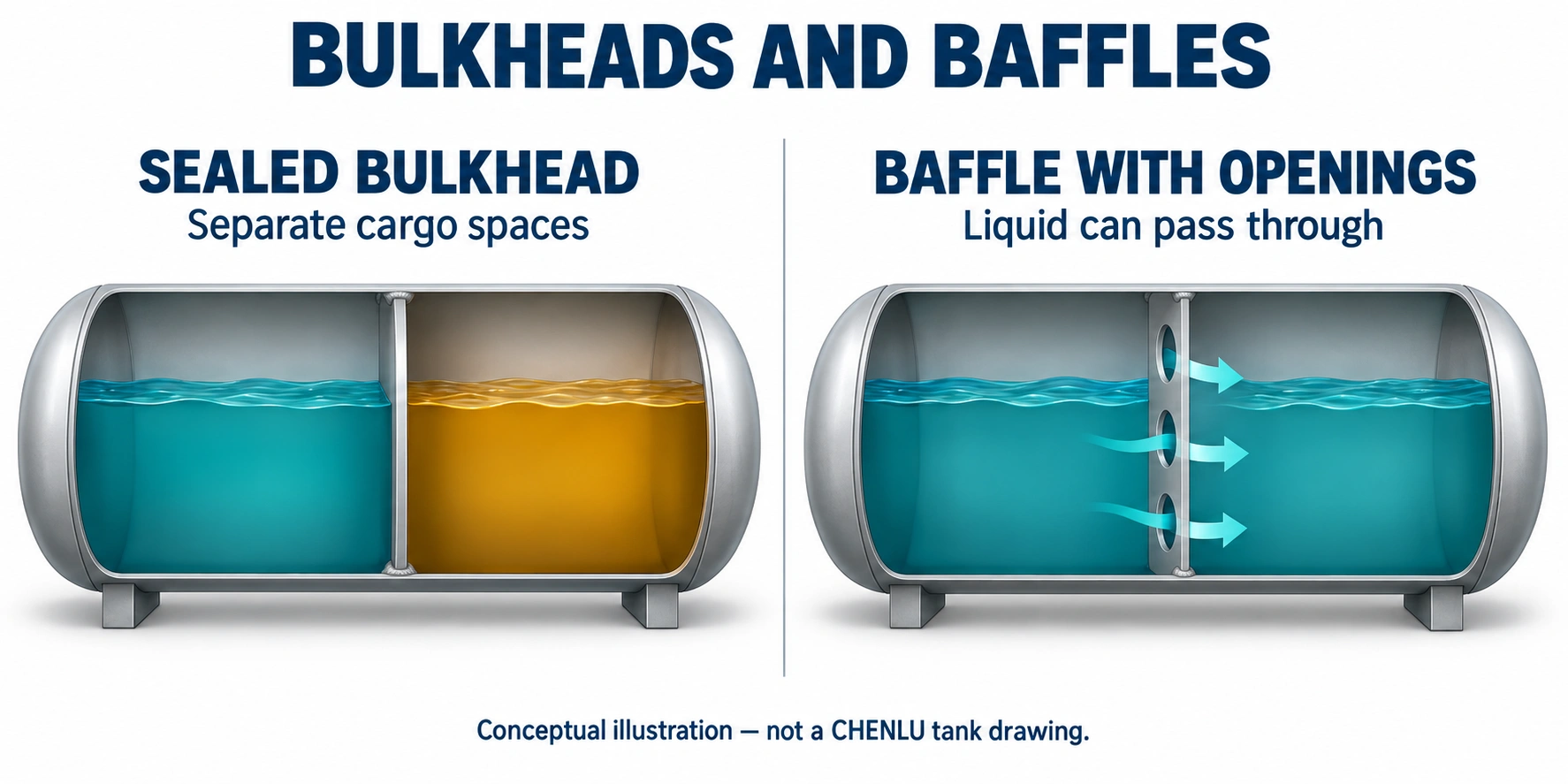
Bulkheads and Baffles Serve Different Functions
A sealed bulkhead divides the tank into independent cargo spaces. A baffle has openings that let liquid pass through. It mainly limits forward and backward surge. Because liquid can pass through it, a baffle cannot separate petrol from diesel.[1]
Several internal plates on a drawing do not necessarily mean several independent fuel compartments. Identify each compartment's boundaries, number and volume, then check where the baffles sit within it. Separate cargo spaces and structures that control liquid movement serve different purposes.
Two Fuel Types and Three Stops: How Should the Load Be Divided?
Consider this hypothetical delivery schedule. The trailer visits A, B and C in that order. All quantities use the same volume basis. The figures explain the configuration choices; they are not a customer order or the specification of a CHENLU model.
| Stop order | Receiving site | Fuel | Planned delivery |
|---|---|---|---|
| First stop | Site A | Diesel | 6,000 L |
| Second stop | Site B | Petrol | 4,000 L |
| Third stop | Site C | The same grade of diesel | 3,000 L |
The total is 9,000 L of diesel and 4,000 L of petrol. The two diesel orders could be considered for one compartment or separate compartments. Each arrangement leaves a different loading condition during the route.
If one compartment carries all 9,000 L of diesel, 3,000 L remains after the 6,000 L delivery at Site A. That is one-third of the initial diesel load. It is not the compartment's fill ratio, which also requires its actual capacity. The method for measuring split deliveries and the permitted partial-load conditions must suit the route.
If separate compartments carry the two diesel orders, one is planned to be empty after Site A. The other retains the diesel for Site C. This separates the delivery batches, but also adds bulkheads, valves and pipework. The position of the last diesel load still affects load distribution on the next leg.
The schedule therefore does not establish a rule of two compartments for two products, or three compartments for three customers. Compare the feasibility of measured deliveries from one compartment, the load conditions with separate compartments, and the other orders the trailer will regularly carry.
Compartment Volume Is Measured in Litres; Payload Also Requires Mass
The same 1,000 L of petrol and diesel may have different masses. ORLEN publishes a density range of 820–845 kg/m³ at 15°C for Ekodiesel ULTRA diesel. ORLEN Unipetrol lists 720–775 kg/m³ at 15°C for BA 95 Natural petrol. These ranges apply to the named products. Use the batch data for the fuel actually being transported.[3], [4]
For the delivery example, assume diesel has a density of 840 kg/m³ and petrol 740 kg/m³, with all volumes stated at 15°C. These are calculation assumptions, not fixed fuel densities or measured values.
Cargo mass (kg) = volume (L) × density (kg/m³) ÷ 1,000.
The diesel for Site A therefore weighs 5,040 kg, the petrol for Site B 2,960 kg, and the diesel for Site C 2,520 kg. The initial cargo totals 10,520 kg, or 10.52 t. Combination mass must also include the actual masses of the tractor, semi-trailer, carried equipment and other relevant items.
Using these assumed densities, each 1,000 L of diesel weighs 100 kg more than petrol. Equal compartment volumes do not mean equal axle loads or remaining payload capacity with different fuels. Density stated at 15°C also cannot be multiplied directly by an uncorrected volume measured at another temperature.
The compartment needs space for fuel expansion as temperature rises. State nominal capacity, permitted loading quantity and customer delivery quantity separately. The required allowance depends on the fuel, temperature conditions, vehicle documents and applicable rules.[2]
CHENLU's published three-axle aluminium fuel tanker semi-trailer has a nominal tank volume of 45 m³ / 45,000 L, with compartments configured for the order. That total does not establish five 9,000 L compartments. It also does not mean the trailer can deliver 45,000 L of any fuel. The arrangement must account for each compartment's usable loading quantity and the vehicle's load limits.
After Each Delivery, Check Which Compartments Still Carry Fuel
The example leaves the following planned quantities after each delivery:
| Stage | Planned fuel remaining | Remaining cargo mass |
|---|---|---|
| Departure | 9,000 L diesel and 4,000 L petrol | 10.52 t |
| Leaving Site A | 3,000 L diesel and 4,000 L petrol | 5.48 t |
| Leaving Site B | 3,000 L diesel | 2.52 t |
| After delivery at Site C | All scheduled fuel delivered | 0 t, referring only to the example cargo |
After Site B, the planned remaining cargo is 2.52 t of diesel. If it sits in a front compartment, its load contribution at the kingpin and trailer axle group differs from the same cargo in a rear compartment. Equal remaining quantities do not mean equal load distribution. Driver guidance also advises against concentrating too much weight at the front or rear during compartment loading and unloading.[1]
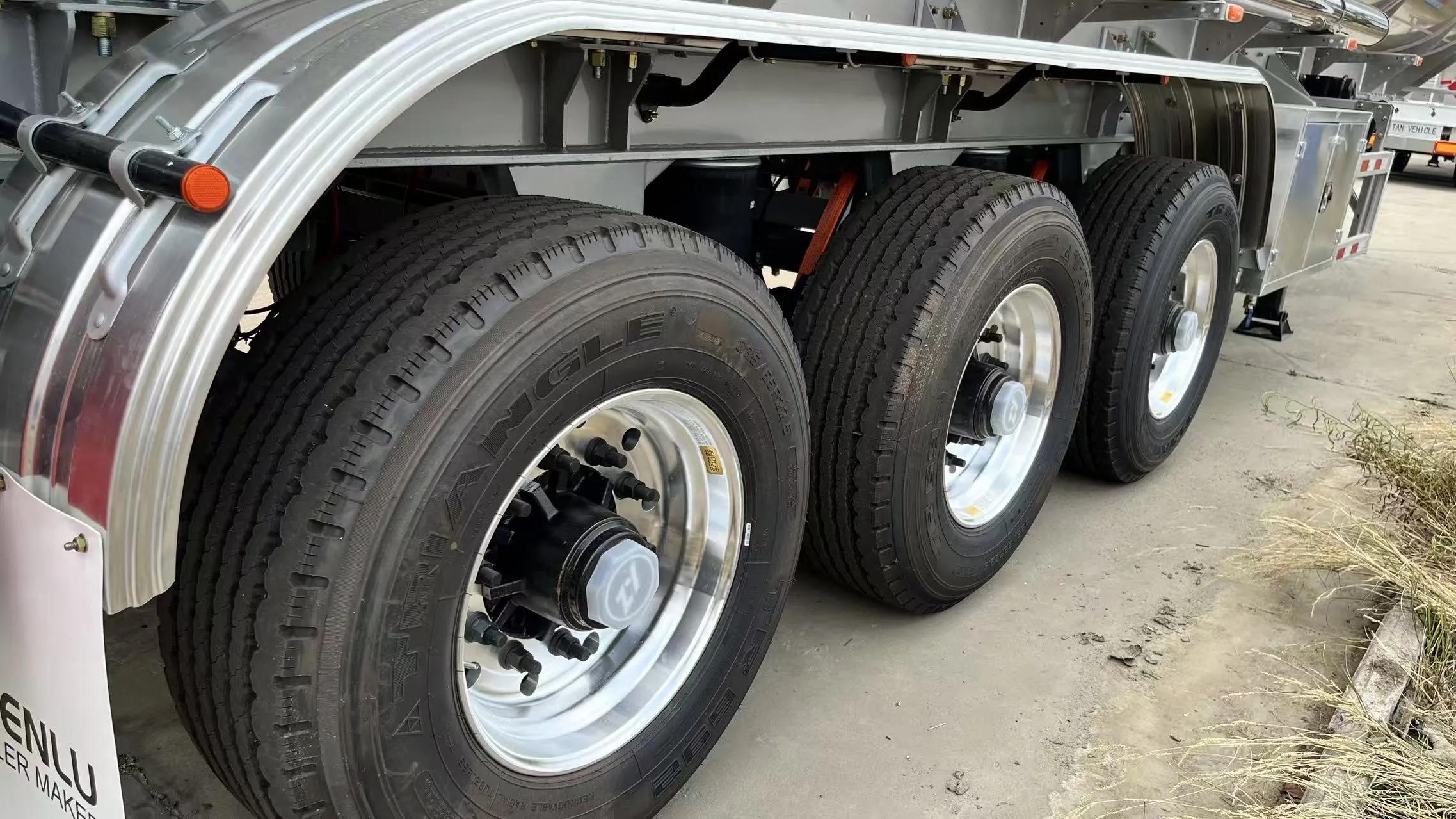
Plan the route order and compartment arrangement together. Visiting a site earlier or later changes which compartments empty first and which remain loaded. If one trailer works several routes, check the usual unloading sequences for each. Identify the uneven load distributions and partial-load conditions they may produce.
Partial loading also involves liquid movement. Baffles limit forward and backward surge but do not eliminate side-to-side movement. Passing a static load-distribution check does not establish that all dynamic operating conditions are acceptable.[1] Heil's manual also discusses liquid movement and handling in partially loaded tanks separately.[2]
Which Equipment Do the Compartments Share During Delivery?
Bulkheads separate the spaces inside the tank. After leaving a compartment, fuel may follow its own outlet pipe or pass through a manifold connected to a pump, meter or hose. If different fuels use shared equipment, the residue from the previous product needs to be addressed.
Emco Wheaton's manifold documentation describes compartments connected to pumping or metering circuits. Some of its systems use a product return device when changing fuels. This equipment example shows the need to manage product changes in shared circuits. It does not establish that every multi-compartment tanker has the same device.[5]
Review the fuel path from a compartment to the final connection. Check for shared pipe sections after the bottom valve, which compartments use the pump and meter, and whether the hose delivers different fuels. Specify independent paths where the fuels require them. Tank divisions alone do not establish that the fuels remain segregated during delivery.
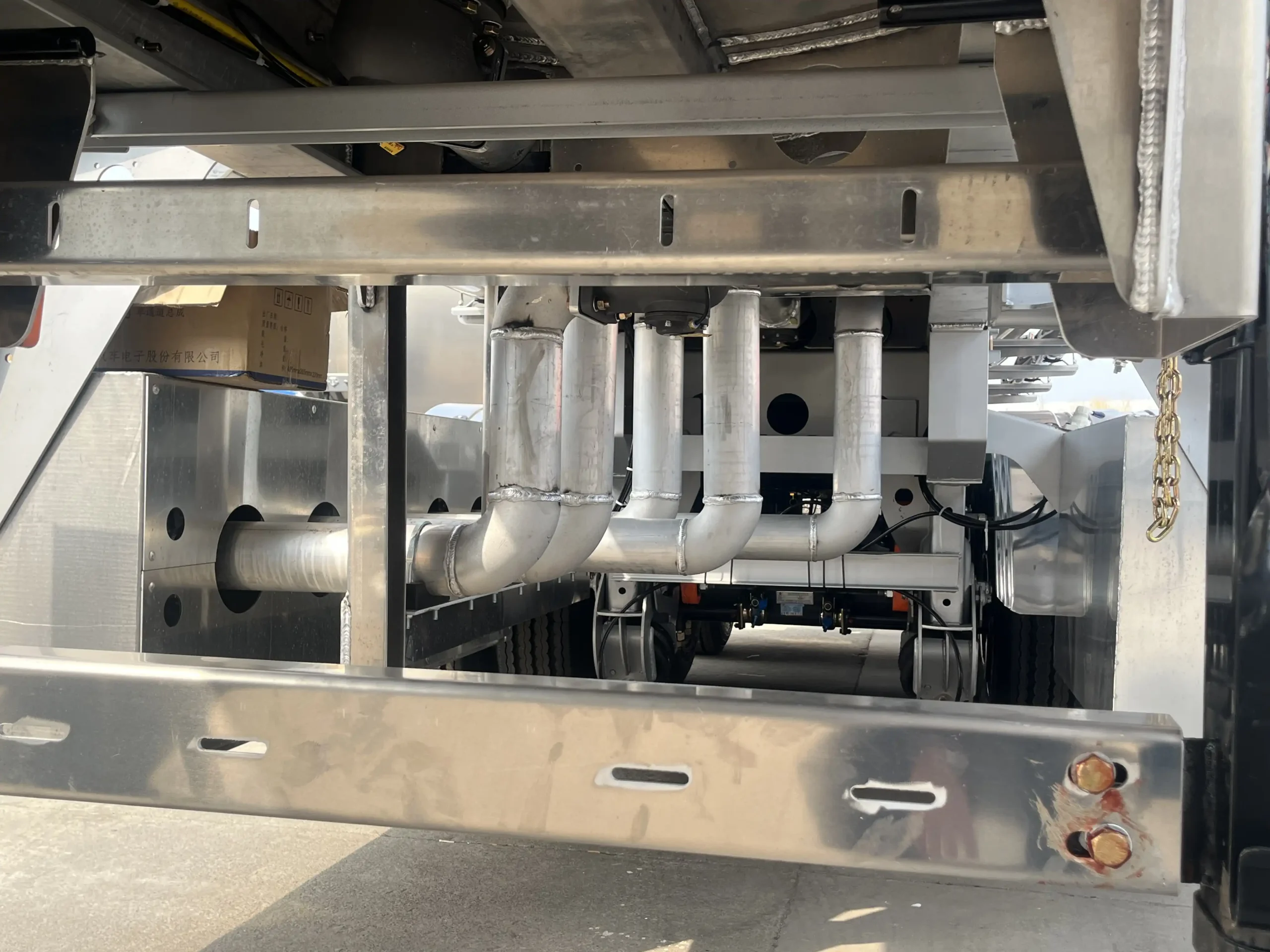
Compartment numbers and outlet labels must also match the delivery record. An entry for "Site C diesel" should lead to the compartment carrying that batch and its corresponding outlet. Operators should not have to identify it from the connection's appearance. Product grade indicators help identify each compartment's fuel. The actual configuration determines the labels and controls used.[6]
A Reduced Delivery Can Leave Fuel in a Compartment Planned to Be Empty
The scheduled quantity must fit the receiving site's available capacity at the time of delivery. Suppose Site A orders 6,000 L of diesel but can accept only 5,000 L on arrival. An extra 1,000 L remains on the trailer. At the assumed density, that is 840 kg.
With separate compartments assigned to each site's order, this 840 kg remains in a compartment that was planned to be empty. The departure condition differs from the table above. Replan the cargo and check where the extra fuel sits. Adding 1,000 L to the remaining total does not make the original loading assessment applicable.
Insufficient receiving capacity is not the only cause. OPW/Civacon also discusses equipment conditions and parking position as reasons why fuel may not be fully delivered. Delivery records need to match the actual remaining quantity. Otherwise, retained fuel may also affect the next loading operation.[7]
Use the Delivery Schedule to Define a CHENLU Compartment Layout
The example schedule provides a starting point for a CHENLU compartment configuration. List regular orders in stop order, then add fuel density, the volume measurement basis and the range of delivery quantities. Loading-terminal and receiving-site connections, any need for on-board pumping or metering, and details of the tractor to be used help define the transfer system and load conditions.
With the compartment and piping drawings, each order should map to a compartment and outlet. Calculate how much cargo remains in each compartment after every stop. If one compartment regularly serves split deliveries, check the metering and partial-load conditions. If an order regularly needs several compartments, confirm how those compartments will deliver it.
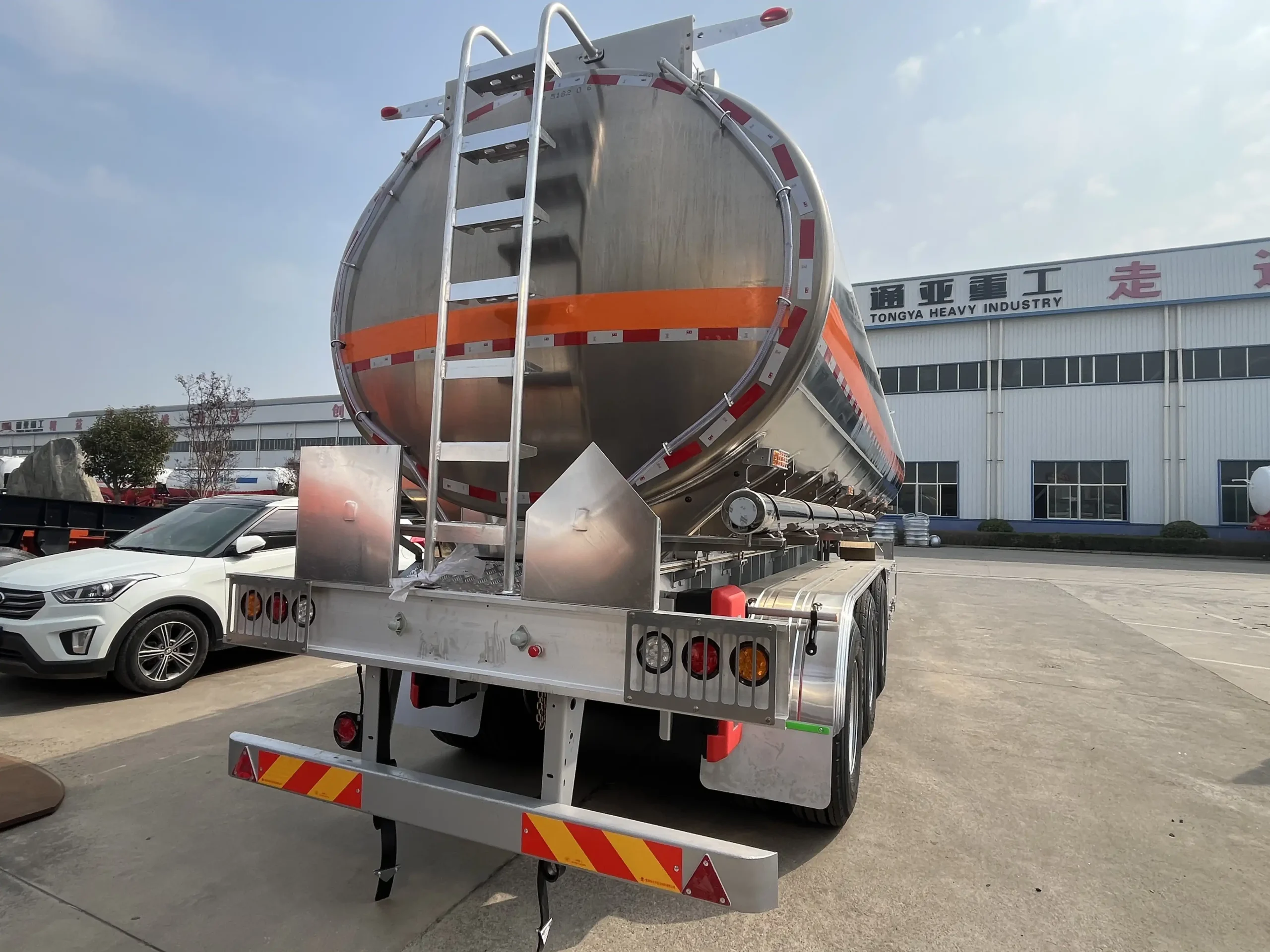
For the example route, the specific decisions are how to allocate the 9,000 L of diesel and where the final 3,000 L sits after the 6,000 L delivery. Once those are clear, compartment capacity, outlets and remaining loads can be checked against the delivery plan. The CHENLU configuration should be recorded in the corresponding order and vehicle documents.
Frequently Asked Questions
If a site reduces its order, can the remaining fuel go straight to the next stop?
First confirm that the next site accepts the same fuel grade and has enough space. Then check the revised delivery record and remaining load in each compartment. A site needing diesel does not automatically mean it can accept this extra quantity. The compartment holding the undelivered fuel may also differ from the original route plan.[7]
Can a compartment carry diesel on one trip and petrol on the next?
Before changing products, confirm that the tank, seals, valves and transfer equipment suit the intended fuel. Address residues and any required cleaning according to fuel quality requirements and the vehicle's instructions. Shared pipes and hoses may retain fuel even when the compartment is empty. Update the product identification and loading record to match the actual cargo. CHENLU fuel tanker configuration guidance
Does a bottom-loading connection let the trailer load at every fuel terminal?
Check the coupling type, connection layout, overfill-system connection, vapour recovery and terminal entry requirements. Beall's manual notes that loading facilities may have different requirements. Those requirements determine the equipment and wiring needed. The term "bottom loading" alone does not confirm compatibility.[8]
References and Calculation Scope
This article covers compartments and multi-stop delivery of refined fuels. The density ranges come from the named suppliers' product data. The 840 and 740 kg/m³ values are calculation assumptions. The delivery schedule and static support model are illustrative examples. Actual loading quantities, compartment arrangements and operating requirements must follow the vehicle documents, fuel batch data, loading and receiving facilities' requirements, and applicable rules.
- California DMV: Commercial Driver Handbook, Section 8 — Tank Vehicles: bulkheads, baffles, weight distribution and liquid movement.
- Heil: Petroleum Trailer Owner's/Operator's Manual, revised June 2012: partial loading and capacity checks before loading.
- ORLEN: Ekodiesel ULTRA Product Data: the named diesel product's density range at 15°C.
- ORLEN Unipetrol: BA 95 Natural Product Data: the named petrol product's density range at 15°C.
- Emco Wheaton: Manifold Assembly/System: shared circuits and product-change arrangements.
- Emco Wheaton: Product Grade Indicator: compartment fuel and connection identification.
- OPW/Civacon: The Next Generation of Retained Product Monitoring: undelivered fuel and receiving conditions.
- Beall: Operations Manual — Petroleum Tank Trailers: loading-facility and overfill-system compatibility.
MORE FROM OUR NEWSROOM
Related News
Container Chassis vs Flatbed: Choosing for Your Loads | CHENLU
Compare container chassis an…
Read News ↗
Cement Tanker Unloading: Air Supply & Silo Matching | CHENLU
Check cement tanker unloadin…
Read News ↗

CHENLU Studies East Africa’s Semi-Trailer Market and Manufacturing
From September 10–22, 2026, …
Read News ↗
CHENLU Participates in GCC Vehicle Inspection for Saudi Arabia Semi-Trailer Export Projects
CHENLU joined a technical br…
Read News ↗