
Which Low Bed Semi Trailer Is Best for Heavy Equipment? Fixed, Folding and Detachable Goosenecks
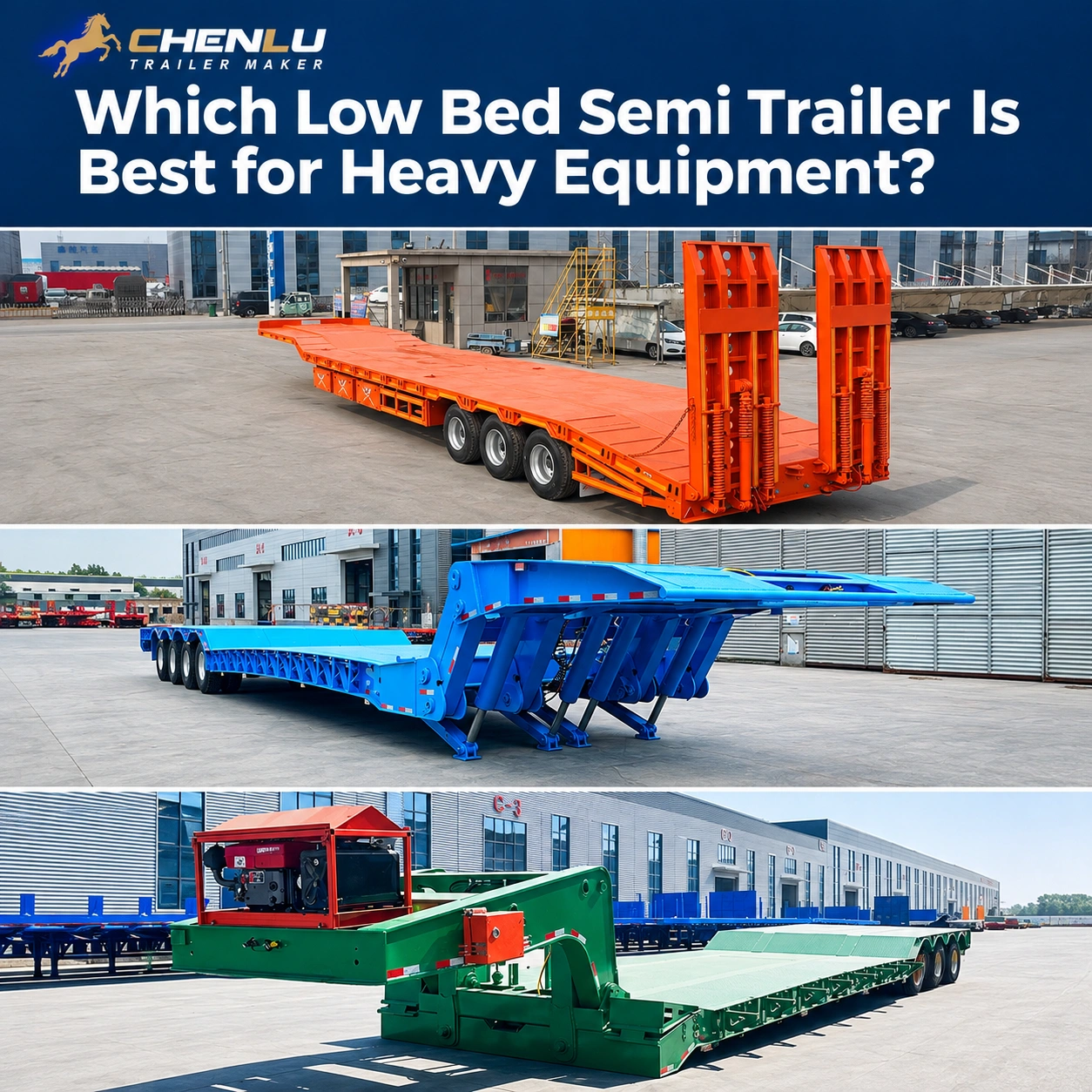
There is no single low bed semi trailer that is best for every job. A suitable trailer must allow an excavator, bulldozer, loader or other heavy machine to reach the deck. Its tracks, tyres, base or specified support points must then sit within the permitted load-bearing area. Once connected to the tractor, the complete combination must also meet the required load distribution, overall dimensions and route conditions.
Selection starts with the machine in its transport condition. Record its weight, overall dimensions, centre of gravity, support positions, loading method and planned route. Designs that do not meet the load, loading geometry or route requirements can then be removed before fixed, folding and detachable goosenecks are compared.
For an explanation of fixed, folding, detachable and extendable structures, see What Types of Low Bed Semi Trailers Are There? The next step is to compare those structures against the actual machine, loading site and transport route.
How Should You Choose Between Fixed, Folding and Detachable Goosenecks?
| Transport condition | Layout to consider | Main checks |
|---|---|---|
| The machine can use rear ramps, and the loading site has enough straight space behind the trailer. | Fixed-gooseneck low bed | Ramp rating, width and spacing; clearance at the ramp foot and crest; track or tyre position |
| Front loading is required, and the machine can pass over the approach formed by the folding structure. | Folding-gooseneck low bed | Folding geometry, drive and support mechanism, mechanical locks, ground conditions and space in front |
| The machine should not travel over the rear platform, and the site allows the neck to be separated and reconnected. | Removable gooseneck low bed (RGN) | Front entry, neck support, undercarriage clearance and reconnection conditions |
| The machine or structure needs more supported length than the fixed deck provides. | Extendable lowbed | Extension length, locking positions, load in the extended state, support points and route space |
| The equipment cannot move onto the deck under its own power. | A suitable low bed with a separate loading plan | Lifting or assisted transfer method, approved machine support points, trailer stability and site equipment |
Start with the way the machine will reach the deck. Then use its weight, support positions and centre of gravity to select the deck and axle arrangement. Check the tractor interface, loaded dimensions and route before the configuration is released. A machine may fit on the deck but still be unsuitable for the available tractor or planned route.
What Determines Whether a Low Bed Suits a Machine?
The Machine Must Reach the Deck Safely
Rear loading requires checks at the ramp foot, along the ramp and across the crest where the ramp meets the main deck. Front loading requires checks around the approach formed by the folding or detachable neck, the machine's lowest point, the ground surface and the working space ahead of the trailer. If the machine cannot move under its own power, a separate lifting, winching or assisted-transfer plan is required.
The Machine Must Be Supported as Its Manufacturer Allows
A tracked machine transfers weight through its specified track-contact area. A wheeled machine loads the deck through its tyres. Industrial equipment may allow support only beneath its base or at designated lifting and support points.
Those support requirements must match the permitted load-bearing areas and local structural capacity of the deck. A machine that physically fits on the platform is not automatically supported correctly.
Weight Must Be Shared Between the Kingpin and Rear Axle Group
Two machines with the same total weight can produce different reactions in the main beams, cross-members, kingpin and rear axle group if their centres of gravity and support positions differ. A model name, nominal tonnage or axle count cannot replace a load-distribution calculation.
The Loaded Combination Must Fit the Route
Loaded height, width and overall length are only part of the route review. Ground clearance beneath the low deck, breakover clearance, railway crossings, ferry ramps, site entrances, turning space and single-axle or axle-group limits may also change the trailer choice.
If one of these conditions is not met, revise the load, loading geometry or route plan as a complete system. Adding thicker beams, more axles or a lower deck may not solve the original problem.
When Is a Fixed-Gooseneck Low Bed the Better Choice?
A fixed-gooseneck low bed keeps its front connection in one position. Machinery normally enters over rear loading ramps. This layout suits equipment that can climb the approach, clear the ramp foot and crest, and load at a site with enough space behind the trailer.
Loading depends on more than the machine's ability to climb. The machine first meets the ramp foot, travels along the ramp and then passes over the crest into the main deck. Long wheelbases, long tracks and low undercarriage parts can contact the trailer at any of these points. The ramp rating, width, spacing and surface must also suit the tracks or tyres.
CHENLU's 13m 3 Axle Lowbed Semi Trailer with Rear Ramps is one example of a fixed-gooseneck, rear-loading layout. Its product drawing lists:
- Overall length: 13,000 mm
- Overall width: 3,000 mm
- Main deck length: 9,150 mm
- Main deck height: 1,000 mm
- Two rear ramps: 3,010 × 850 mm each
- Adjacent axle spacing: 1,310 + 1,310 mm
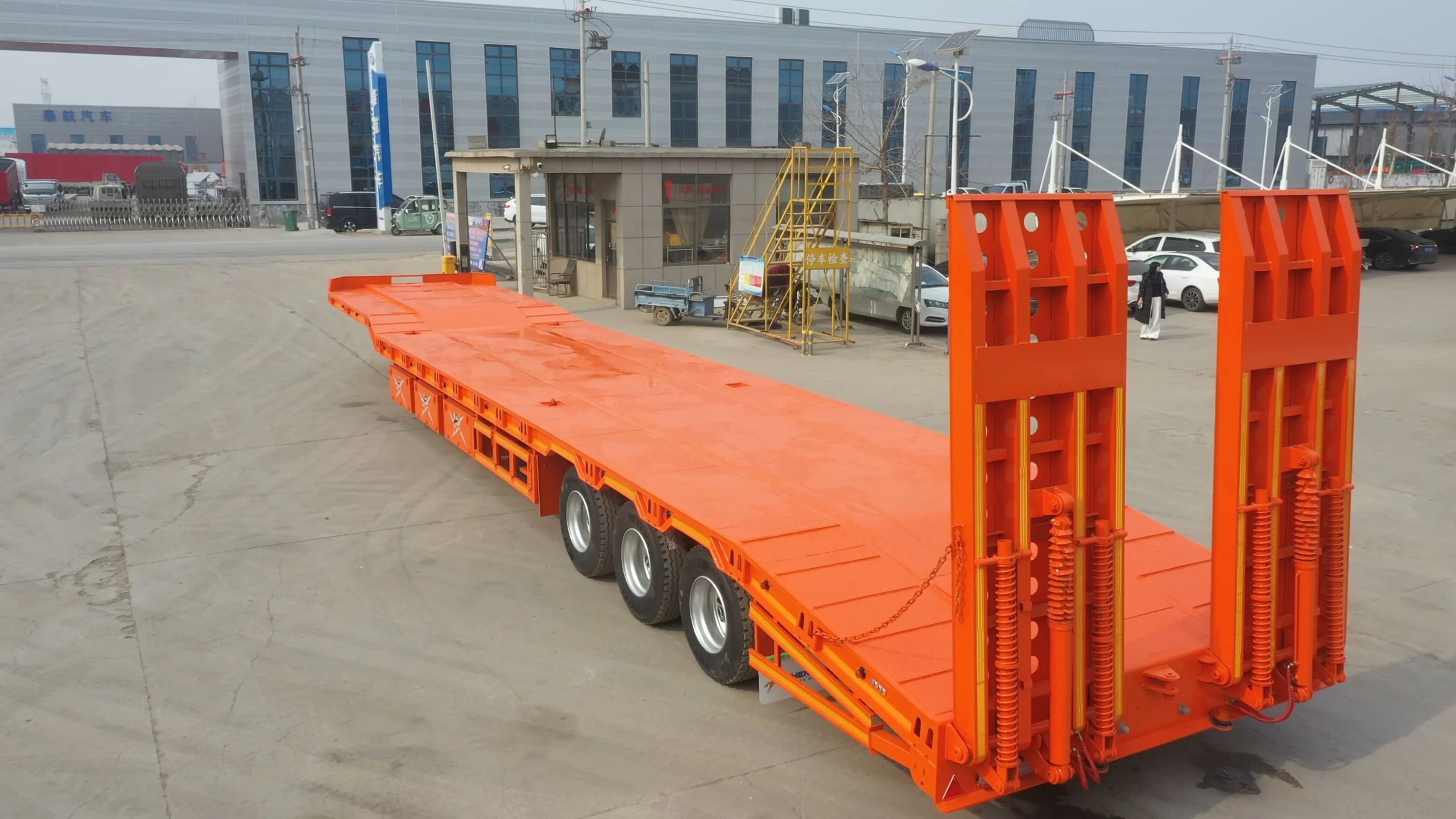
For this 13 m lowbed, set the two ramps to match the machine's track centres or wheel track. Use the machine's side profile to check clearance at the ramp foot, along the incline and over the crest.
The 9,150 mm main deck does not by itself confirm that the machine will sit correctly. The actual contact positions of the tracks, tyres or base remain important. If a support area extends into a front or rear transition, confirm the local loading condition against the trailer drawing.
For a more detailed check of the ramp foot, incline and crest, see How to Load Heavy Equipment on a Lowboy Trailer.
When Should You Consider a Folding Gooseneck?
The CHENLU configuration discussed here changes the position of the front structure while the gooseneck remains connected to the main frame. This creates a front approach onto the main deck. Other models may use different drive, hinge, support and locking arrangements, so the operating procedure must match the selected trailer.
A folding gooseneck suits a job that needs front loading and has a machine capable of crossing the specific approach and transition. Check the working space required by the neck, the relationship between the approach and the machine's underside, the bearing condition of the ground and the mechanical locks used in transport. The hydraulic system moves the structure, but the trailer must still be seated and mechanically secured before travel.
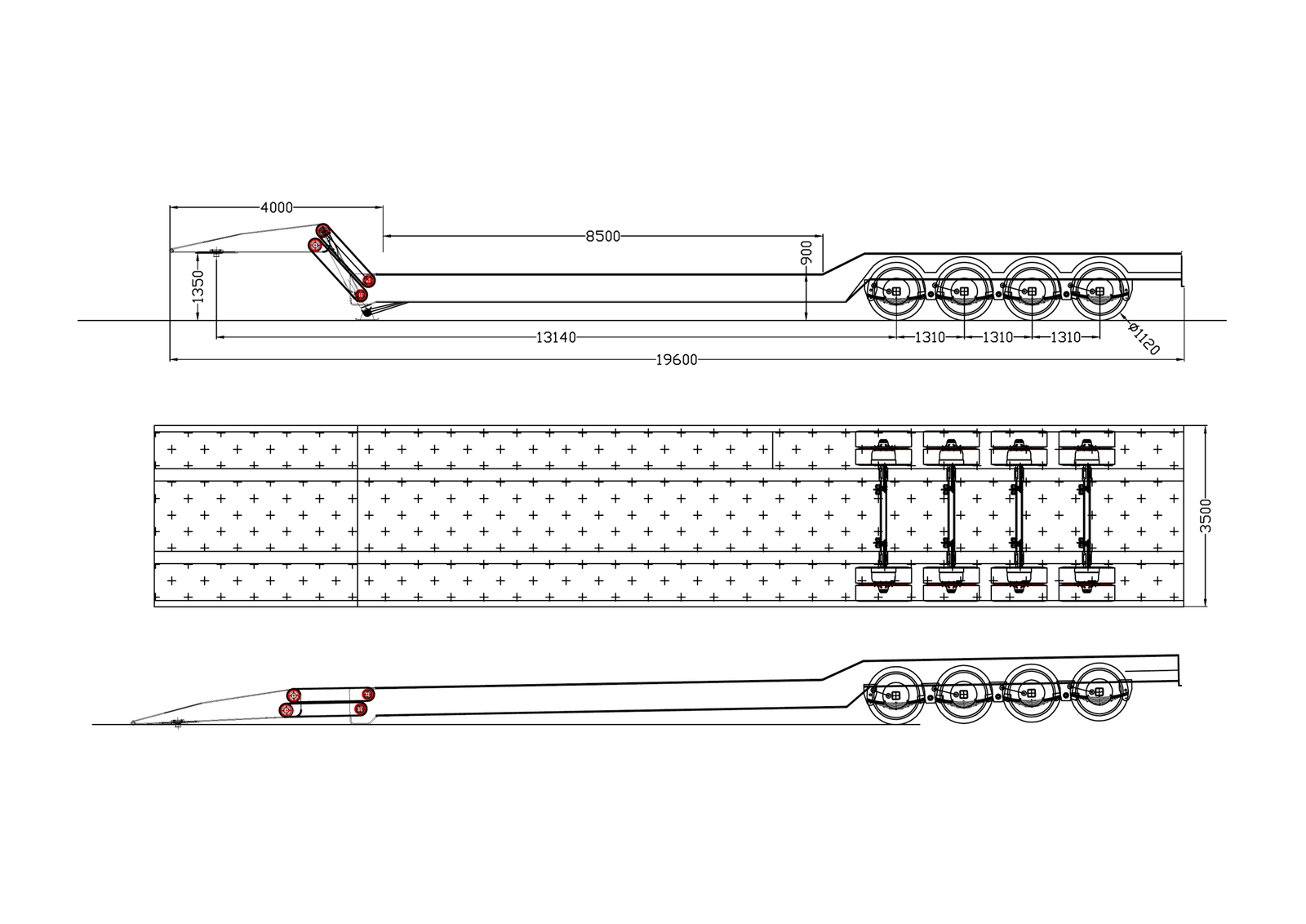
The drawing for the CHENLU 4 Axle Folding Gooseneck Lowbed Trailer gives the following reference dimensions:
- Overall length: 19,600 mm
- Overall width: 3,500 mm
- Main deck length: 8,500 mm
- Main deck height: 900 mm
- Reference fifth-wheel height: 1,350 mm
- Adjacent axle spacing: 1,310 + 1,310 + 1,310 mm
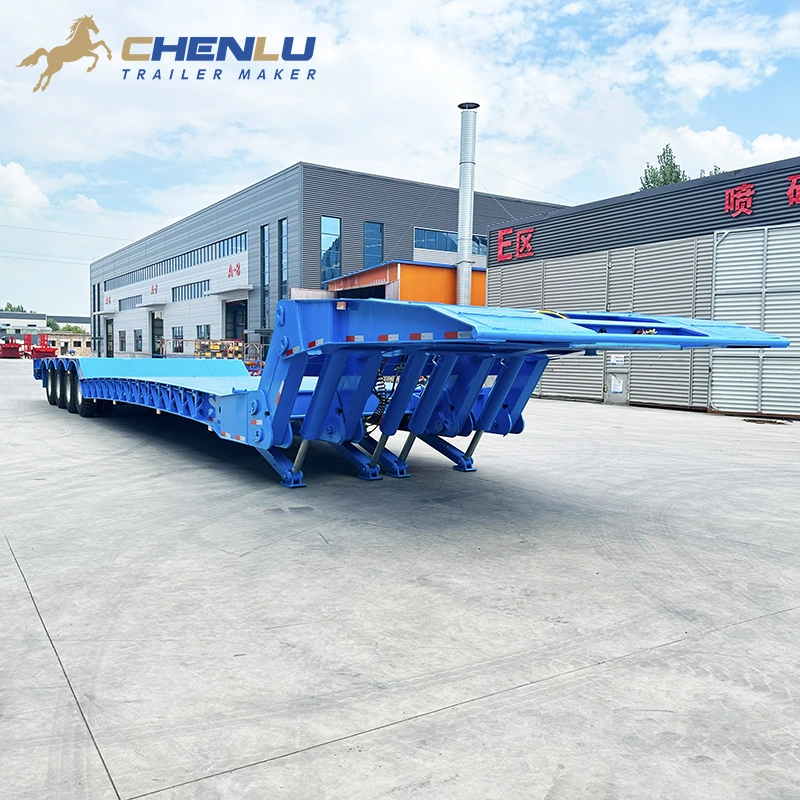
On this configuration, the 900 mm main deck height helps control the machine's loaded height. The 1,350 mm reference fifth-wheel height affects the trailer's attitude after the neck is connected to the tractor. Match the neck to the fifth-wheel height of the actual tractor, then check undercarriage clearance while the machine uses the front approach and while it rests on the main deck.
When Is a Detachable Gooseneck Low Bed More Suitable?
A removable gooseneck low bed is also called an RGN, or removable gooseneck trailer. The neck separates from the main deck so suitable machinery can enter from the front without travelling over the rear axle platform and long rear ramps. This loading path may suit self-propelled machines with long tracks, a long wheelbase or limited undercarriage clearance.
The main purpose of an RGN is to change the loading entrance. The name alone does not mean that every RGN has a lower deck or a higher load rating. Separating and reconnecting the neck requires suitable ground, support conditions, working space and the correct model-specific procedure.
The Talbert detachable-gooseneck operator's manual asks operators to consider gross weight and load distribution before loading and to follow the specified unlocking and hydraulic sequence. Neck mechanisms, locking positions and hydraulic circuits can differ between manufacturers. A CHENLU trailer should therefore be operated according to its own vehicle documents.
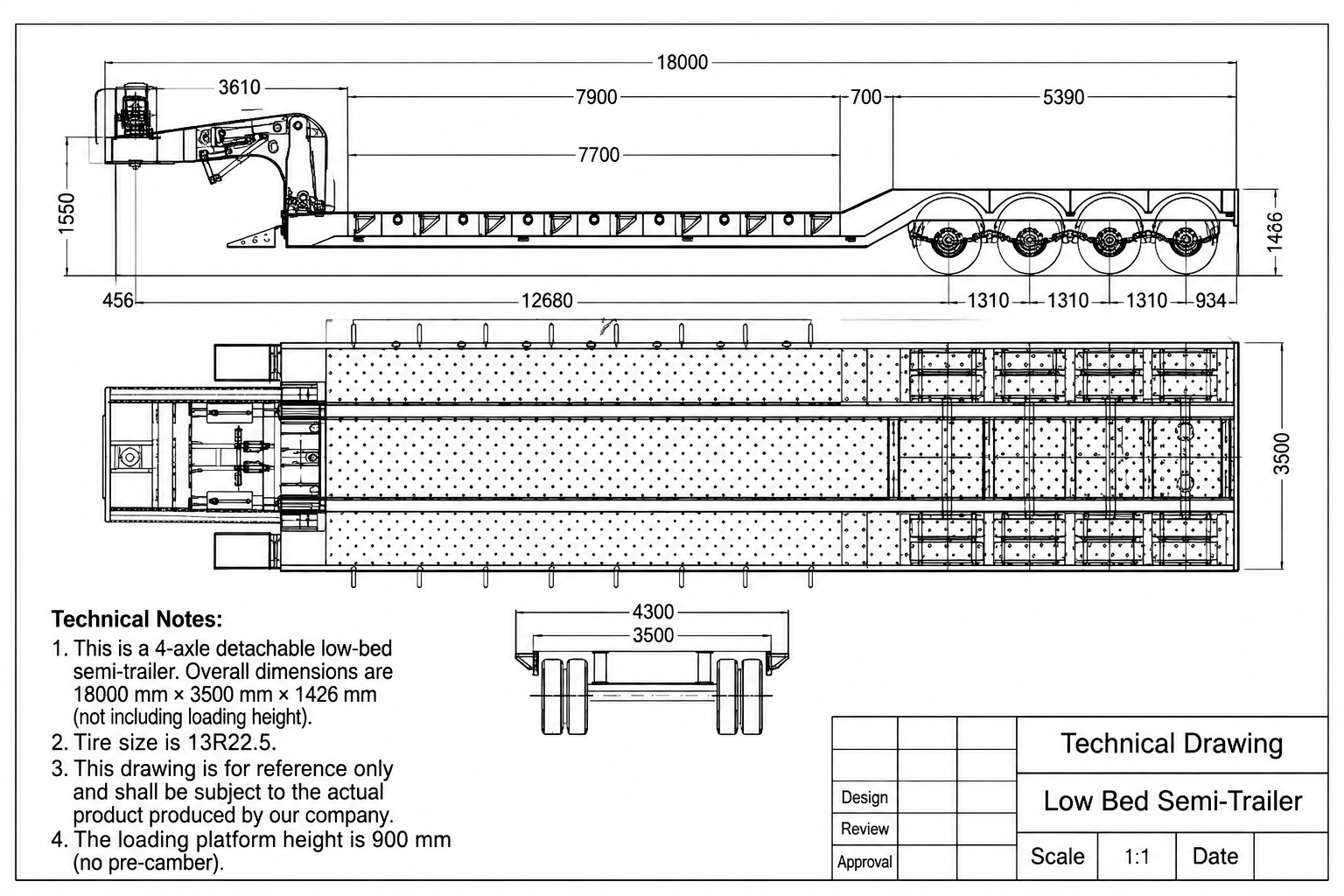
The CHENLU 100 Ton 4 Axle Detachable Gooseneck Lowbed Trailer uses a removable front neck and a four-axle rear group. Drawing 2026C099 lists:
- Overall length: 18,000 mm
- Main body width: 3,500 mm
- Low-deck section: 7,900 mm
- Level low-deck length: 7,700 mm
- Low-deck height: 900 mm
- Adjacent axle spacing: 1,310 + 1,310 + 1,310 mm
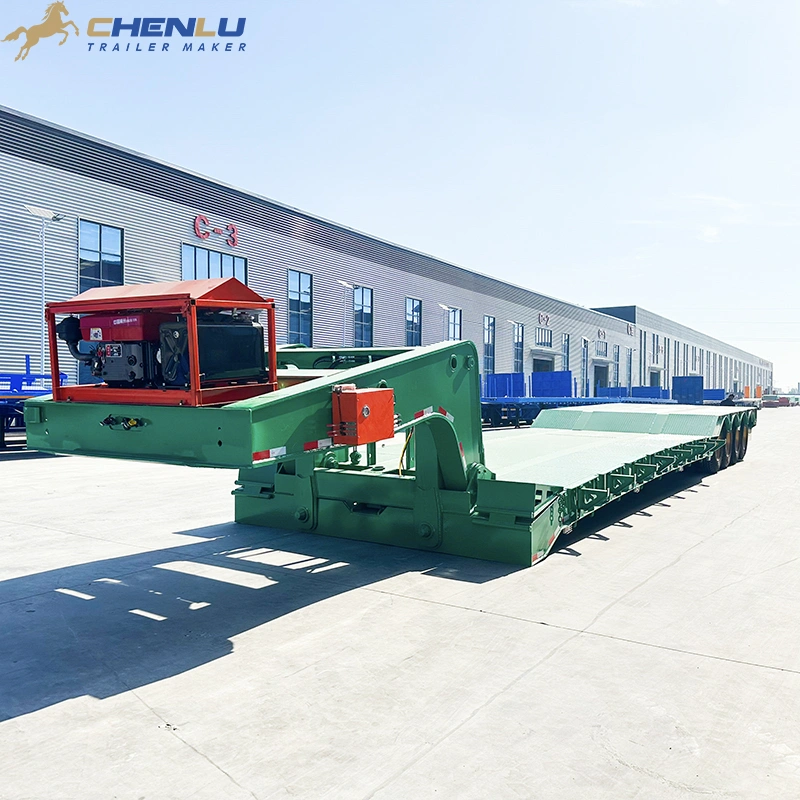
The 7,900 mm low-deck section includes its transition areas. Within it, the level area available for positioning the machine is 7,700 mm long. Machine fit should be checked against this level area and the actual support positions, not against the 18,000 mm overall trailer length.
This product uses a 100-tonne-class configuration. The final project still requires kingpin and rear axle-group load calculations based on the machine's centre of gravity and deck position. Axles, suspension, tyres and route conditions must also be included in the released technical specification.
How Do the Three CHENLU Configurations Differ?
| CHENLU configuration | Loading structure | Reference deck data | Axle group | Main selection question |
|---|---|---|---|---|
| 13m 3 Axle Lowbed Semi Trailer with Rear Ramps | Fixed gooseneck and twin rear ramps | 9,150 mm main deck; 1,000 mm deck height | Three axles; 1,310 + 1,310 mm spacing | Can the machine pass over the two ramps and ramp crest, and is there enough space behind the trailer? |
| 4 Axle Folding Gooseneck Lowbed Trailer | Folding gooseneck and front loading | 8,500 mm main deck; 900 mm deck height | Four axles; 1,310 + 1,310 + 1,310 mm spacing | Does the front approach suit the machine, and can the drive, support and locking system operate at the site? |
| 100 Ton 4 Axle Detachable Gooseneck Lowbed Trailer | Detachable gooseneck and front loading | 7,700 mm level low deck; 900 mm deck height | Four axles; 1,310 + 1,310 + 1,310 mm spacing | Can the site support neck separation, ground support and reconnection, and does the complete load plan suit the machine? |
The three trailers use different loading entrances, deck dimensions and axle arrangements. A rear-ramp trailer is checked around the climbing path and space behind the trailer. A folding gooseneck requires checks around the front approach and locking mechanism. A detachable gooseneck also requires enough ground support and space to separate and reconnect the neck.
A lower deck, more axles or a longer trailer does not by itself make one design better than another.
Why Can the Same Machine Need a Different Gooseneck on Another Job?
The machine's weight and dimensions may remain unchanged while the loading site, route and operating conditions change. The most suitable trailer structure can change with them.
| Project condition | Structure to consider | Reason and further checks |
|---|---|---|
| Project A: The machine can use the confirmed rear ramps, and the site has enough space behind the trailer. | Fixed gooseneck | A workable rear-loading path already exists. Load distribution, deck support and route fit still need checking. |
| Project B: The machine contacts the rear ramp crest, while the site provides a suitable front-loading area. | Folding gooseneck or RGN | Either structure may avoid the original rear-loading path. Compare the actual front approach, undercarriage clearance, operating procedure and tractor interface. |
| Project C: The machine must enter from the front, and the site has room to separate, support and reconnect the neck. | RGN | Check ground bearing, neck operation, the machine's supported area and the complete load plan. |
| Project D: The required support span is longer than the fixed deck allows. | Extendable lowbed | Confirm the extension positions, locks, load in the extended state, machine support points and route turning space. |
Choosing different goosenecks for the same machine on different projects is not a contradiction. A change in the loading site can remove access to a ramp or front entry that worked before. A different tractor or route may also require the machine to sit in another position. Confirm the machine position and load distribution for the actual trailer, tractor and route used on each job.
What Must Be Checked After the Gooseneck Type Is Chosen?
Machine Support and Usable Deck Length
Overall trailer length includes the gooseneck, low deck, transition sections, rear axle platform and rear overhang. The level area that can support the machine is normally only part of that total length.
Read the overall length, low-deck section, level usable deck, transition positions and approved machine support points separately. Tracks, tyres, legs or the machine base must sit within the permitted load-bearing area. A machine that fits within the outline may still place concentrated load where the structure is not intended to support it.
If more supported length is required, an extendable lowbed trailer may be considered. Support positions, load and route space must then be checked in the extended condition. For the complete dimension-checking method, see Low Bed Semi Trailer Dimensions: Overall Length, Deck Length, Width and Deck Height.
Kingpin, Rear Axle Group and Component Ratings
The tractor fifth wheel supports the front of the semi-trailer, while the trailer axle group supports the rear. Moving the machine's centre of gravity forward or rearward changes the reaction at both ends.
The load plan should include trailer tare weight, machine weight and centre-of-gravity position. It should also check the frame and local deck structure, kingpin, axles, suspension, tyres, wheels, brakes, tractor fifth wheel and drive-axle load.
Adding axles normally increases running-gear weight and the number of tyres, suspension and brake components. It may also change axle-group length, turning geometry and tyre scrub. More axles provide additional load-distribution positions, but the allowable load still depends on the frame and every rated component.
For more detail, see How Much Weight Can a Low Bed Semi Trailer Carry? and How Many Axles Does a Lowboy Trailer Need?
Tractor Interface
A tractor that can physically connect to the semi-trailer is not automatically a complete match. Check the kingpin size, fifth-wheel model and installed height, gooseneck turning clearance, expected kingpin load, tractor drive-axle reaction, turning envelope, air lines, electrical connections and brake interface.
Tractor matching can begin with the kingpin and fifth-wheel dimensions. ISO 337:1981 gives basic installation and interchangeability dimensions for a 50.8 mm (2 in) semi-trailer kingpin. After confirming the kingpin size, check the fifth-wheel rating and height, gooseneck clearance and the space between the tractor and trailer during a turn.
ISO 1726-1:2000 covers some interchangeability dimensions and gooseneck contours for general freight tractor and semi-trailer combinations. It also notes that some requirements may not apply to special combinations such as low-bed and tipping trailers.
The low bed gooseneck height and profile should therefore be matched to the actual tractor. Fifth-wheel and drive-axle loads must be calculated at the same time. This confirms whether the connected height, trailer attitude and turning clearance are suitable.
Route and Loading Site
Review the route with the trailer fully loaded. Include overall height, width, length, minimum ground clearance, turning envelope and individual axle or axle-group loads. Bridges, overhead structures, railway crossings, ferry ramps, site entrances, soft ground and loading space in front of or behind the trailer may all affect the selected structure.
Africa and the Middle East are not single regulatory markets. Dimensions, axle loads, permits, brakes, lighting, mechanical connections and cargo securement must be checked for the destination country and the actual route.
In the United States, the FMCSA Cargo Securement Rules include specific requirements for certain heavy vehicles, equipment and machinery weighing 4,536 kg (10,000 lb) or more. That threshold applies to the objects covered by those provisions. It is not a universal dividing line for all cargo-securement rules or a standard for other countries.
How Do You Confirm the Final Low Bed Configuration?
- Record the machine in its transport condition. Include actual transport weight, length, width, height, attachment position, track or wheel data, lowest clearance, centre of gravity and approved support points.
- Check the load, loading path and route. Remove structures that do not meet the required rating, loading geometry or route conditions.
- Place the machine outline and support points on each candidate drawing. Check rear ramps or the front approach, level deck, transition areas and overall dimensions.
- Complete the load and tractor match. Calculate kingpin and rear axle-group reactions. Check the frame, axles, suspension, tyres, brakes, fifth-wheel height and turning space.
- Review the route and site in the loaded condition. Use the complete combination's height, width, length, ground clearance, axle loads and operating space.
- Release the configuration through the project documents. The technical schedule, load plan, quotation, production drawing and vehicle documents should use the same structure names, dimensions and rating conditions.
Selection Summary
No gooseneck structure is the best choice for every machine and every site.
A fixed gooseneck suits work where rear-ramp loading is already practical. A folding gooseneck suits a machine that needs a specific front approach and a site that can accommodate the moving neck. A detachable gooseneck suits work that requires the front of the main deck to open and provides enough space to separate and reconnect the neck. An extendable lowbed addresses a different problem: insufficient supported length on a fixed deck.
Gooseneck selection is only one part of the low bed specification. Machine support points, local deck loading, kingpin and axle-group reactions, tractor interface and route conditions must be confirmed in the same project documents. The final trailer should not be selected from tonnage, axle count or gooseneck name alone.
Frequently Asked Questions
Is a Three-Axle Low Bed the Most Versatile Choice?
A three-axle low bed often has a relatively compact axle group and fewer running components, but that does not make it suitable for every machine. Centre of gravity, kingpin load, axle-group reaction, route axle limits and deck structure still require separate checks. Four or more axles may provide more load-distribution positions, while additional axles can also introduce new turning and route constraints.
Is a Detachable Gooseneck Always Better Than a Fixed Gooseneck?
No. The main advantage of an RGN is its front-loading entrance. A fixed gooseneck may be more suitable when the machine can use rear ramps, the site has limited front working space or the job does not need a detachable mechanism. Compare the loading path, site conditions, maintenance requirements and complete vehicle configuration rather than the gooseneck name alone.
Is the Lowest Possible Deck Always Safer?
A lower deck helps control loaded height, but it also reduces clearance beneath the trailer. This can affect steep entrances, railway crossings and raised road surfaces. Safety depends on upper and lower clearance, load distribution, cargo securement and route conditions, not deck height alone.
Does Adding Axles Directly Increase the Allowable Load?
More axles can provide additional positions for distributing load, but final capacity remains limited by the frame, kingpin, axles, suspension, tyres, brakes, trailer tare weight, machine position and road axle limits. Recalculate the complete load distribution whenever the axle count changes.
Should the Product Page or Order Drawing Control the Final Specification?
A product page introduces the model and a reference configuration. The final order should follow the agreed technical schedule, quotation, load plan, production drawing and vehicle documents. Dimensions, axle count or rated class from one trailer do not automatically apply to another.
Scope and References
The CHENLU values used here come from three published product pages and their reference drawings. They explain selection differences between fixed, folding and detachable goosenecks; they do not represent one set of dimensions or ratings for the entire low bed range.
The external standards and operator's manual explain general tractor-interface, loading and cargo-securement principles. The selected trailer must still follow its own technical documents and the rules that apply at the destination.
- CHENLU Low Bed Trailers — low bed product range, loading structures and model links.
- CHENLU 13m 3 Axle Lowbed Semi Trailer with Rear Ramps — fixed gooseneck, rear ramps and 13 m reference configuration.
- CHENLU 4 Axle Folding Gooseneck Lowbed Trailer — folding front neck, front loading and four-axle reference drawing.
- CHENLU 100 Ton 4 Axle Detachable Gooseneck Lowbed Trailer — detachable neck, level low deck and drawing 2026C099.
- ISO 337:1981 — basic installation and interchangeability dimensions for a 50.8 mm semi-trailer kingpin.
- ISO 1726-1:2000 — interchangeability dimensions for general tractor and semi-trailer combinations and the stated application limits for some special combinations.
- Talbert Trailers Operator's Manual — general background on detachable-gooseneck loading, load weight and distribution; applicable only to the corresponding Talbert structures.
- FMCSA Cargo Securement Rules — an example of US requirements for securing heavy vehicles, equipment and machinery.
MORE FROM OUR NEWSROOM
Related News
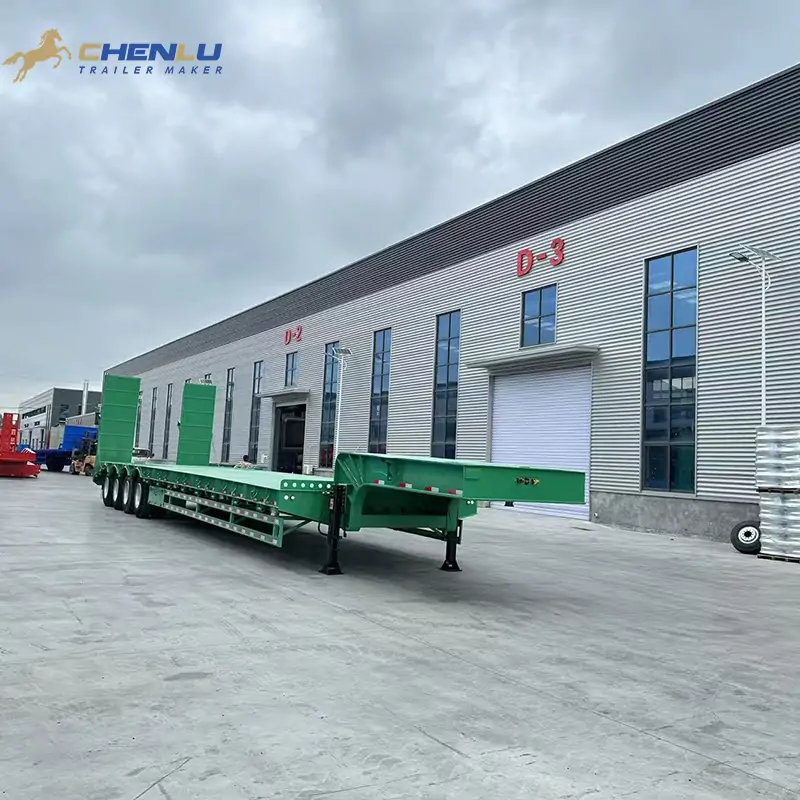
Lowboy vs RGN Trailer: Structural and Loading Differences Between Fixed and Removable Gooseneck Lowbeds
Compare Lowboy vs RGN trailer designs, including fixed and removable goosenecks, loading direction, equipment clearance, site space and maintenance.
Read News ↗
Why are low-platform semi-trailers called “Lowboys”? What is the difference between a “Lowboy,” a “Low Bed,” and a “Low Loader”?
Why is it called a lowboy trailer? Learn how lowboy, low bed, low loader, cama baja and regional terms relate to deck and gooseneck design.
Read News ↗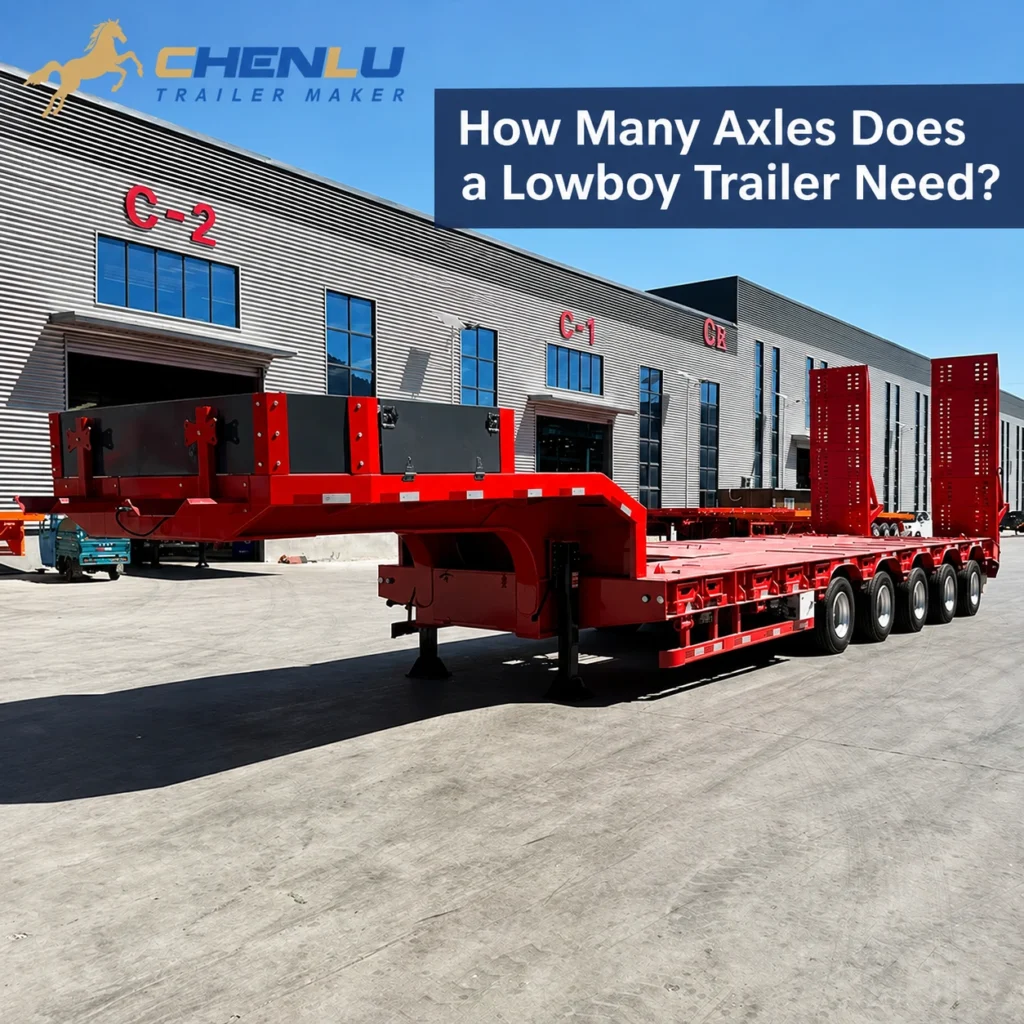
How Many Axles Does a Lowboy Trailer Need? 2-, 3-, 4- and Multi-Axle Configurations
A lowboy trailer may have 2, 3, 4 or more axles. Compare low bed semi trailer axle configurations by cargo weight, axle spacing, tractor and route limits.
Read News ↗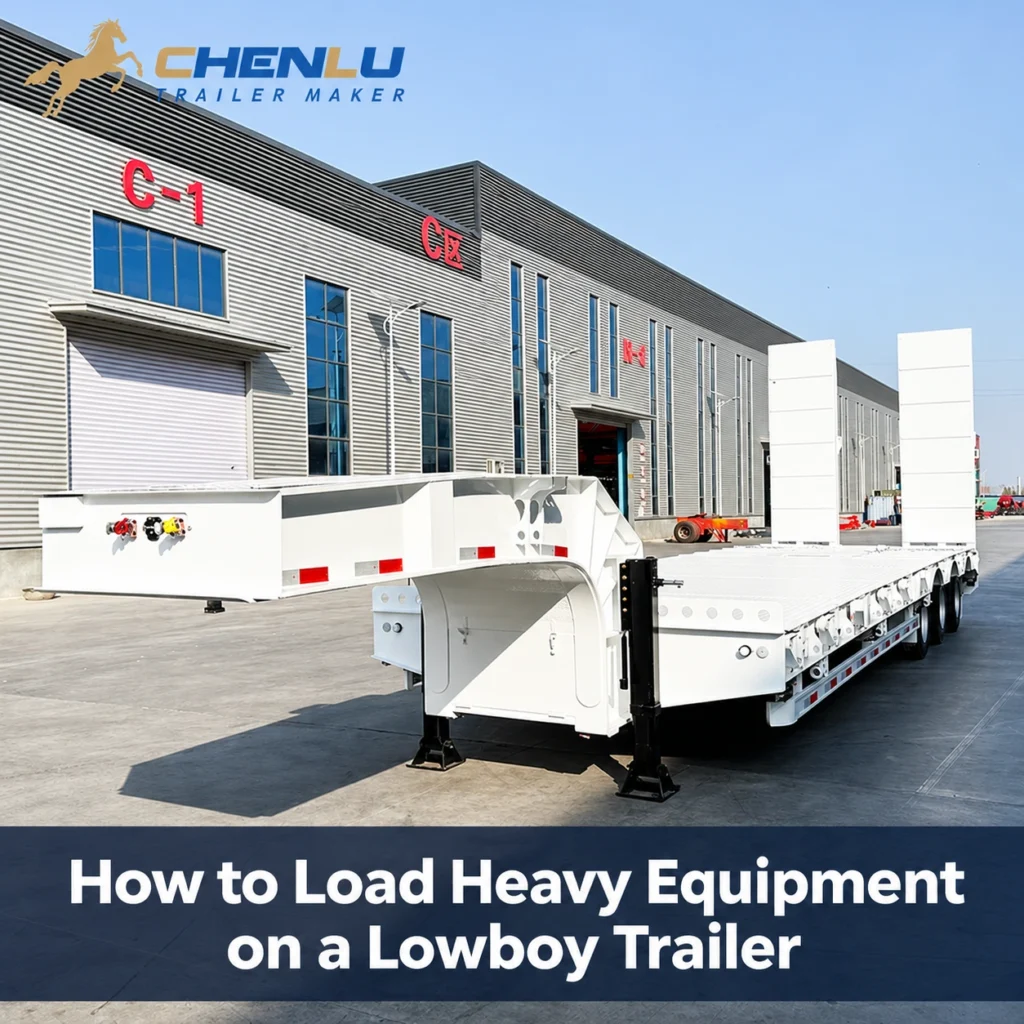
How to Load Heavy Equipment on a Lowboy Trailer: Rear Ramps, Folding Goosenecks and RGN
This lowboy trailer loading guide compares rear ramps, folding and detachable goosenecks for heavy equipment, including loading angle and ground clearance.
Read News ↗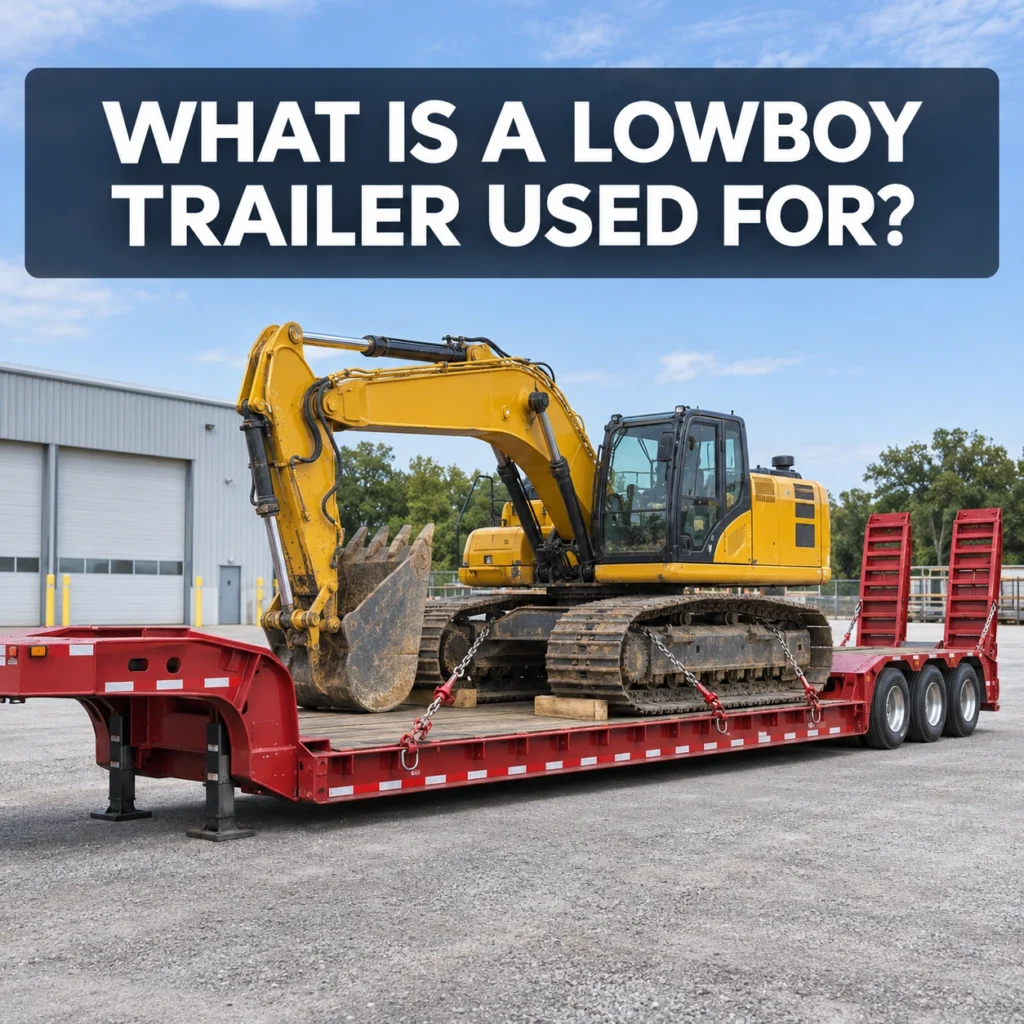
What Is a Lowboy Trailer Used For? Equipment, Loading Methods and Trailer Selection
What is a lowboy trailer used for? See how a heavy equipment lowboy trailer carries excavators, bulldozers, loaders and construction machinery.
Read News ↗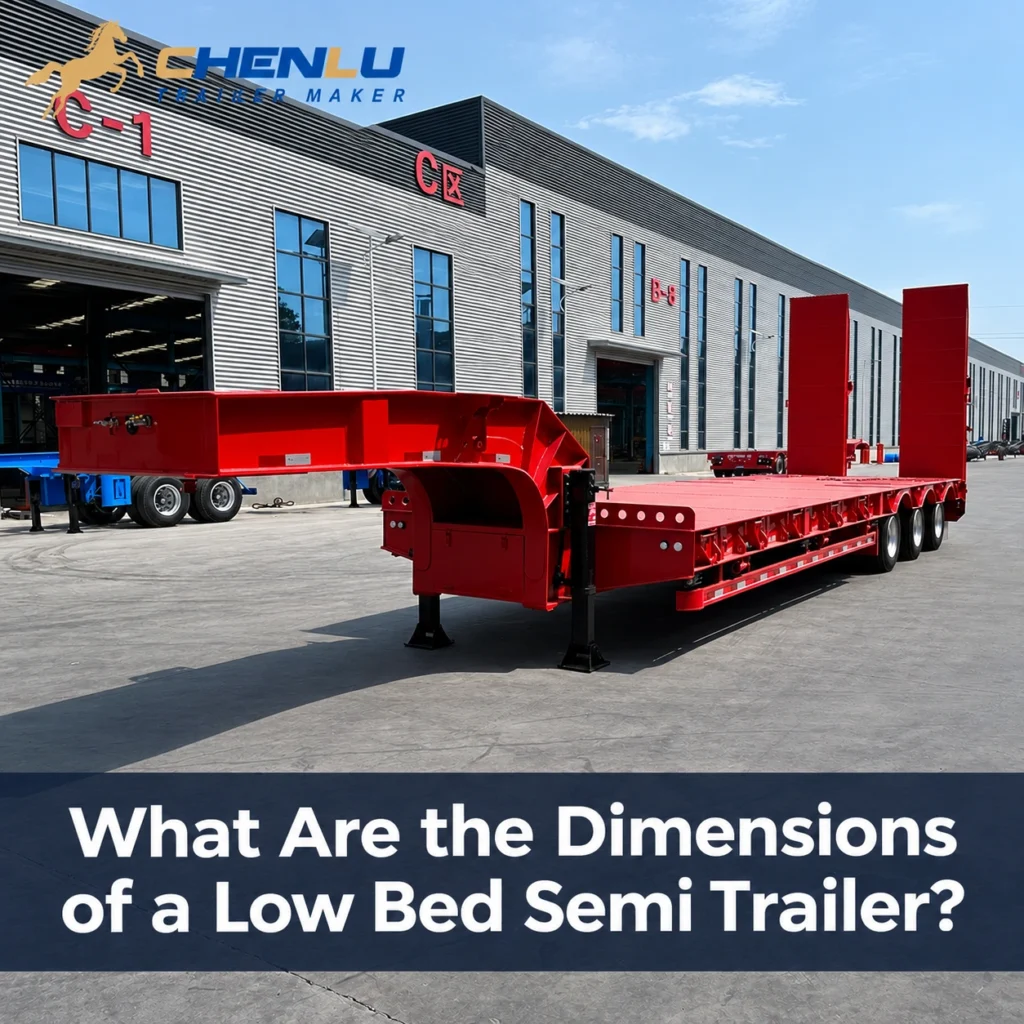
What Are the Dimensions of a Low Bed Semi Trailer? Overall Length, Deck Length, Width and Deck Height
Compare low bed semi trailer length, usable deck length, width and deck height using CHENLU fixed, folding, detachable and extendable gooseneck configurations.
Read News ↗